 LUFS200D1
Liquid VFFS Sachet Filling Machine
Compact piston-pump VFFS platform for sauces, syrups, gels and other flowable products.
5–100 mlPiston pumpBack / 3-side / 4-side
View machine details
Matched to your product and pack
A sachet filling machine combines product dosing with film forming, sealing and cutting to make the finished small pack. Compare liquid, paste, powder, granule or stick-pack routes around the product, dose, film and seal layout, then confirm sustained output and the next packing stage.
Approximate details are fine.
Find your starting point
Start with the options below, then send your product, dose, sachet and output details so the final machine can be matched to real production conditions.
LUFS200D1Compact piston-pump VFFS platform for sauces, syrups, gels and other flowable products.
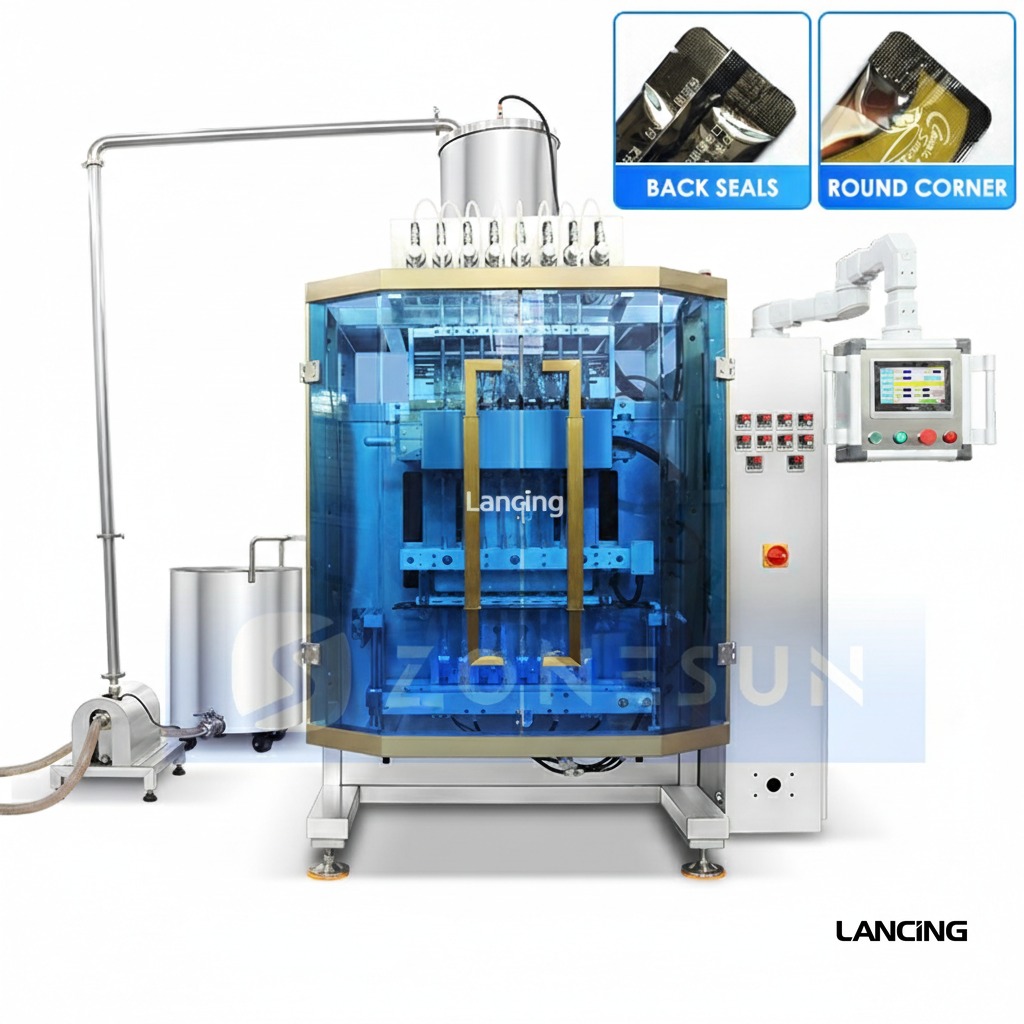 LU-FSMP8
High-output multi-lane VFFS system with independent magnetic-pump dosing for narrow liquid sachets.
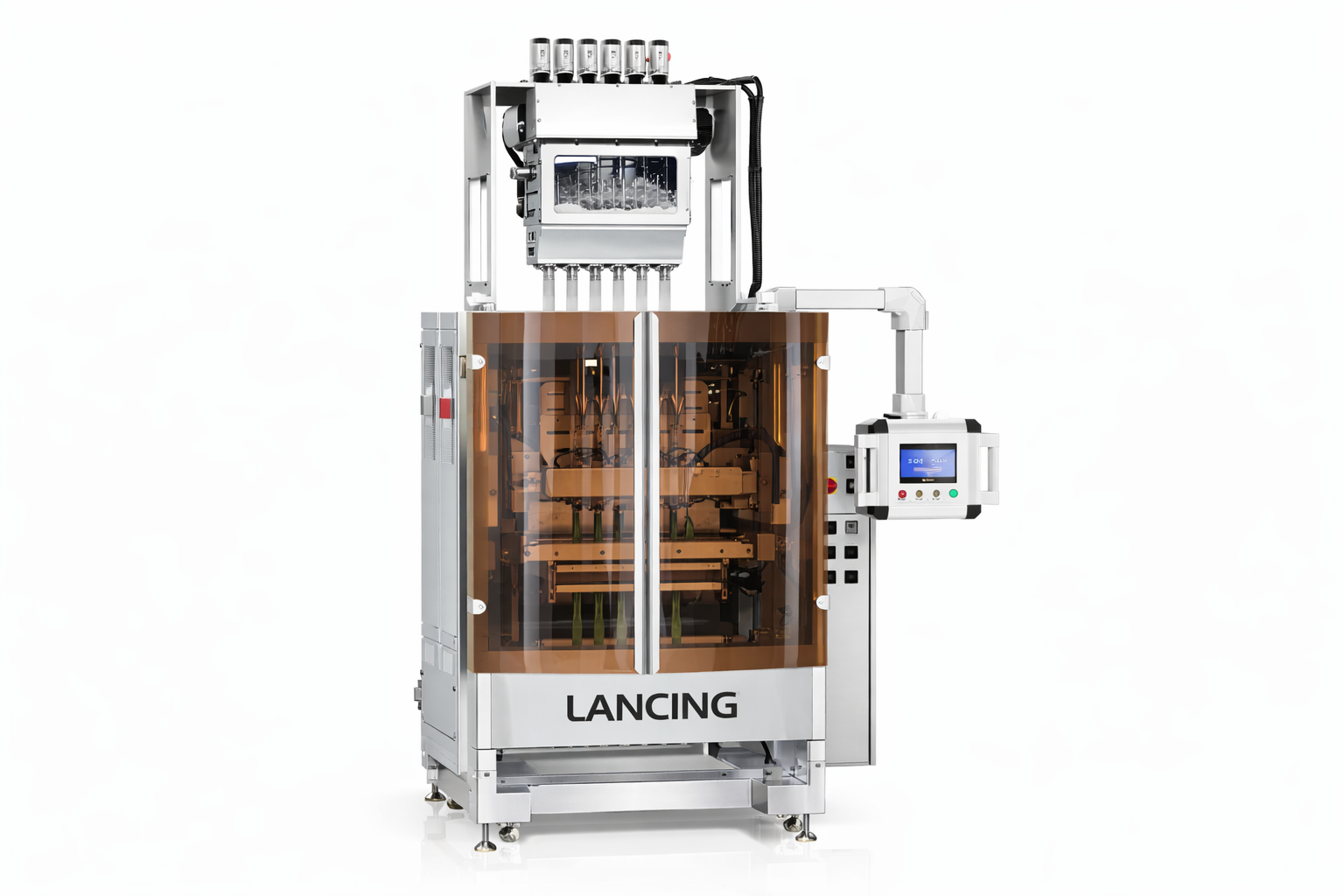 LU-FSFM6
Independent auger dosing across multiple lanes for high-output powder sachet production.
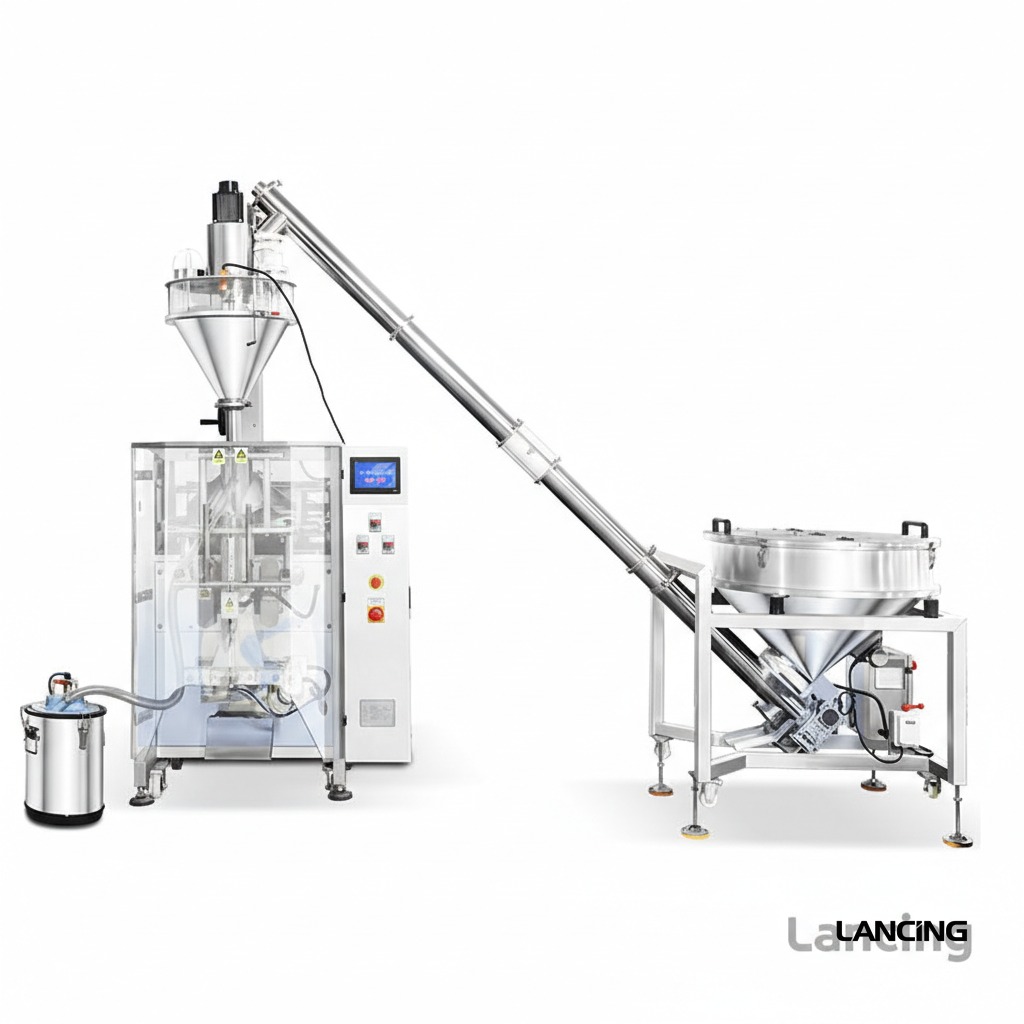 LU-FS06
Flexible single-lane auger VFFS platform for powder packs from small sachets to larger bags.
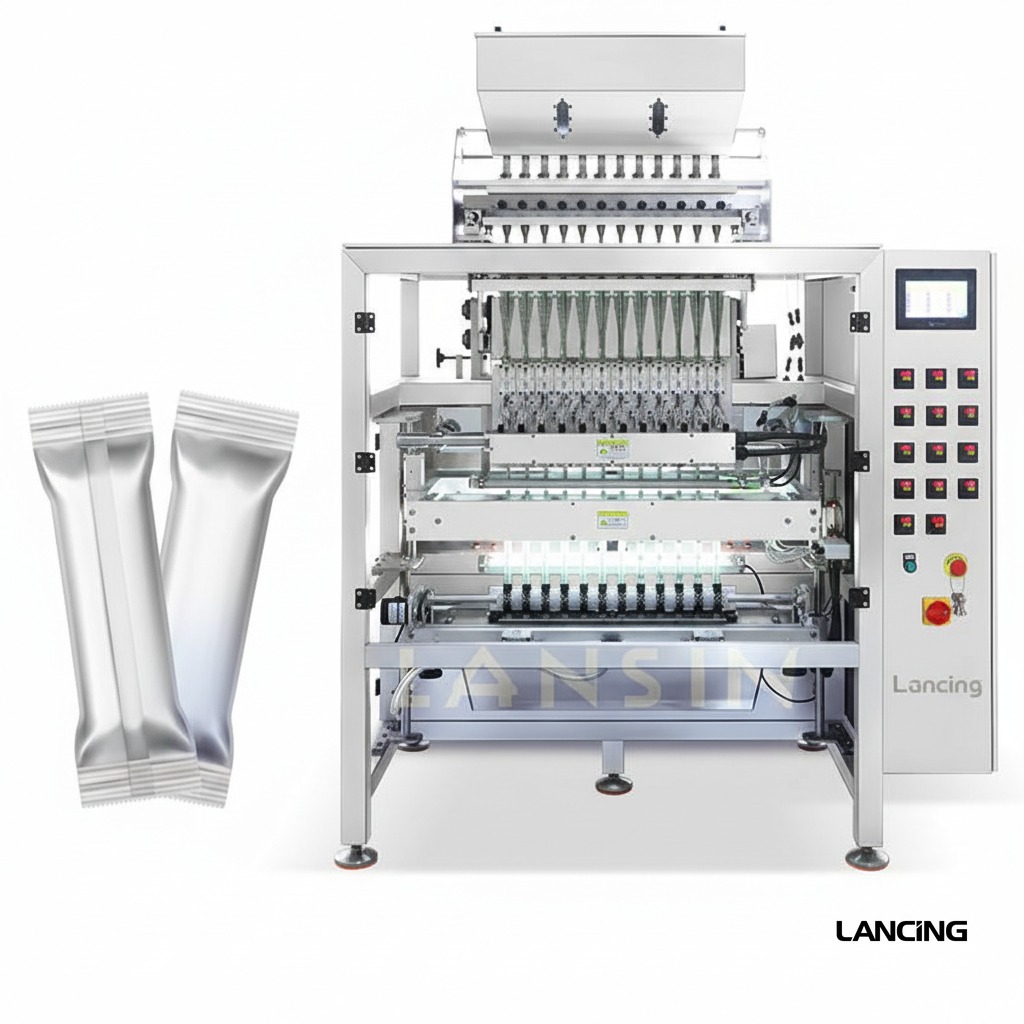 LU-FSL12
Twelve-lane VFFS system for compact, high-volume granule and small particulate sachets.
 LUAFS03
Rotary premade-pouch system with twin piston-pump filling for larger liquid and paste packs.
Choose by product and pack
Choose by product first, then compare the sachet format, film, output and level of automation that best fit your operation.
Piston and magnetic-pump configurations for sauces, gels, lotions and compatible flowable products.
Auger dosing for fine, cohesive, dusty or aerated powders, with trial-led screw and agitation selection.
Weighing and volumetric routes for sugar, salt, seeds, grains and other free-flowing pieces.
Parallel lanes for high total production output of narrow sachets and strip packs.
Roll-stock forming, filling, sealing, cutting and optional coding in one automated process.
Pick, open, fill and seal converted pouches where premium shapes or features are required.
Protect output and pack quality
A machine that looks suitable on paper can still struggle with product flow, dose consistency or seal contamination. Reviewing these details early protects output and pack quality.
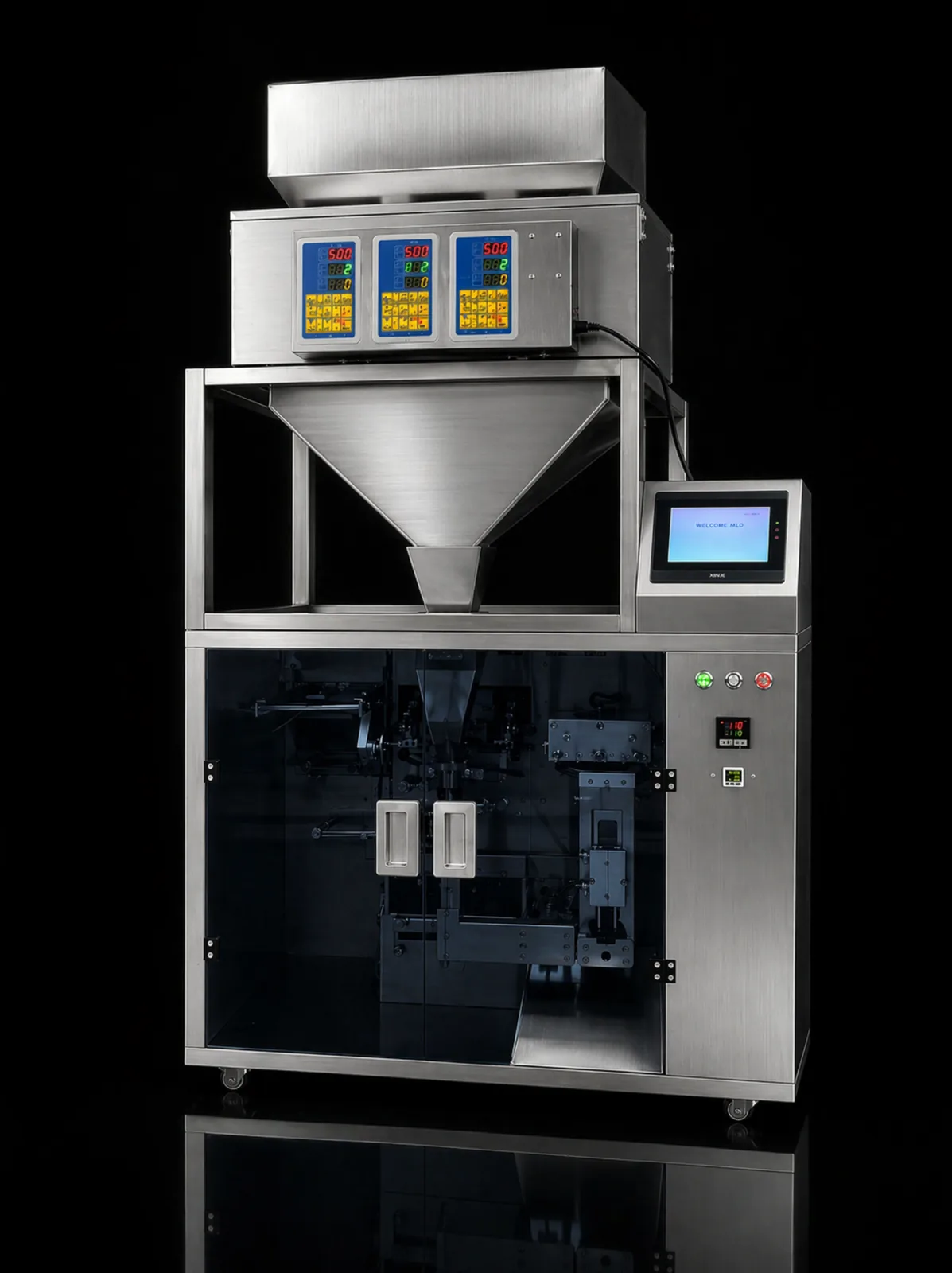
Choose by application
Your sector changes the hygiene, material, validation and quality-control requirements. Choose the application closest to your product to narrow the machine, hygiene and validation requirements.
Single-serve food sachets need accurate dosing, clean seals and materials selected for the product, fill temperature and intended shelf life. The machinery route differs for sauces, powders and free-flowing portions, even when the finished pack looks similar.
View application guidanceCosmetic sample sachets combine tight dose expectations with strong presentation requirements. Viscosity, fragrance, foaming, product sensitivity and film appearance all need to be translated into a machine and validation specification.
View application guidanceNutraceutical and regulated-product sachet lines should be specified against the manufacturer’s quality system, contamination controls and validation plan. The packaging machine is one element in a controlled process that also includes material handling, coding, inspection and batch records.
View application guidanceChemical sachet projects begin with a full product safety and compatibility review. The formulation, hazard classification, vapour, dust, temperature and cleaning method influence materials, enclosure, extraction, electrics and the decision whether automated flexible packaging is appropriate.
View application guidanceSee the process
See machinery movement, filling principles and practical VFFS considerations before you decide which route to investigate.
See an operating fill-and-seal system handling liquid pouches through filling, transfer and sealing.
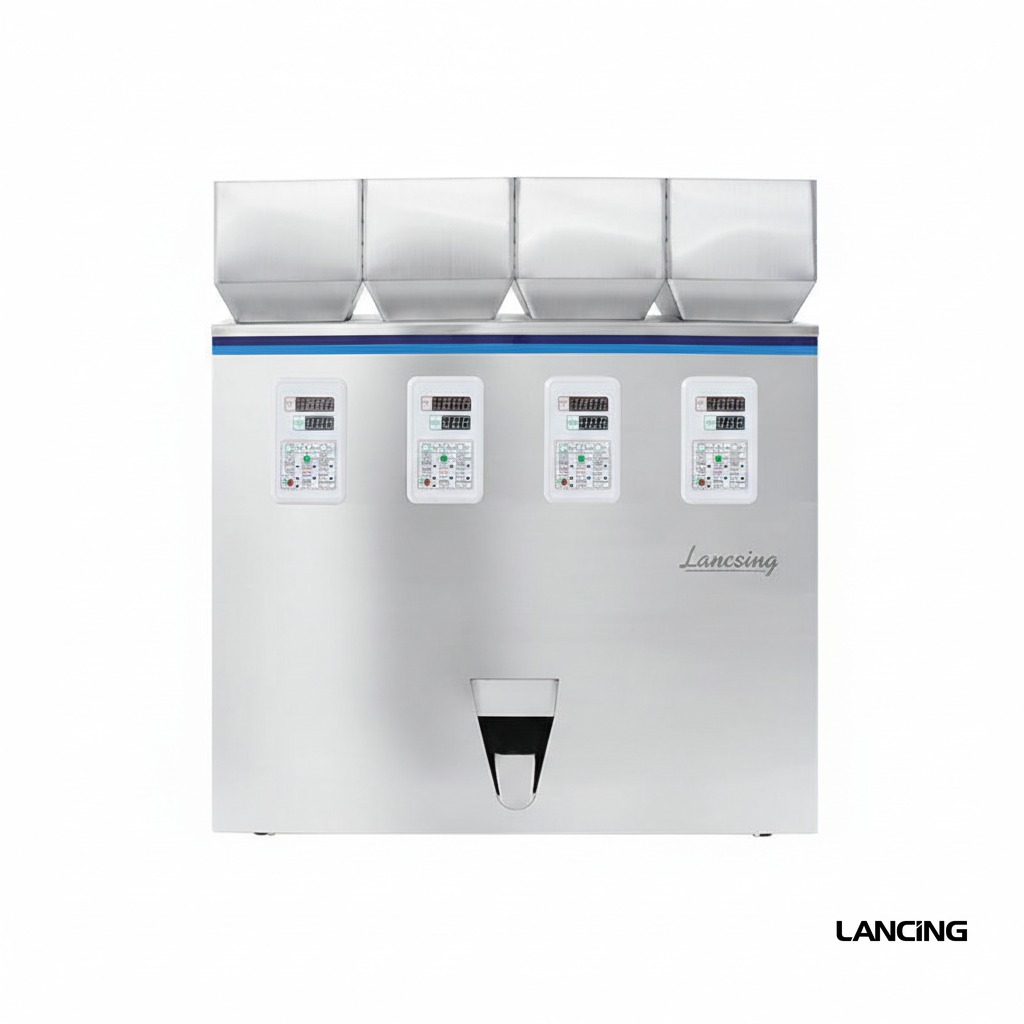
A practical comparison of automation levels and production requirements.
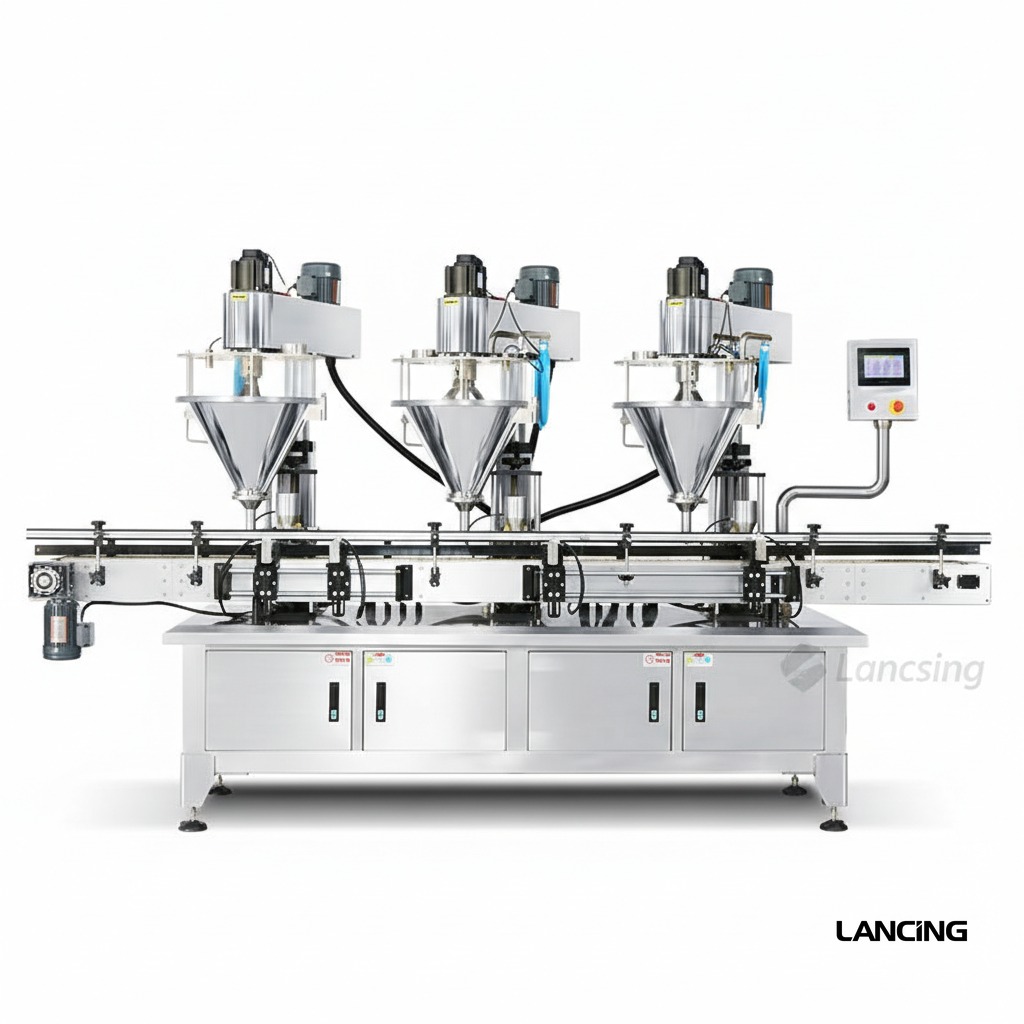
A short demonstration relevant to powder dosing and sachet line selection.
Comparable machinery trials
Two demonstrations can produce different rates because they use different products, doses, film or inspection rules. Define the comparison before the trial so the result explains which configuration fits the job.
Identify the actual product batch and filling condition, target dose, finished dimensions and production-intent film. State the seal layout, opening feature, printed repeat and code position. Record any substitute material used in a demonstration and the question that remains unproven.
Count accepted filled, sealed and cut sachets at the agreed delivery point. If collation, counting or secondary packing is outside the machine scope, say so. A cycle counter, a dose count and a quantity of saleable packs are different measures.
Observe product replenishment, a planned pause and restart, film replenishment and the relevant format change. Identify packs made during setup and those rejected for quantity, sealing, registration or handling. Keep those causes separate rather than presenting a single unexplained efficiency figure.
Agree what happens if the dose is not ready, film registration is lost, a seal check fails or downstream output is blocked. Record whether the system stops, holds product or produces identified rejects. The correct response depends on the application and must be included in the proposed control sequence.
Keep individual results with the product, film, recipe and lane or dosing position where applicable. A result from one easy format should not be treated as proof of every SKU. Use the existing buyer and acceptance guides on this page to record remaining decisions before comparing the complete machinery scope.
Speak to a UK machinery specialist
Send your product, dose, sachet and output target. Samples, film details and a line layout help us give you a more useful recommendation.
Common questions
Configured systems can fill flowable liquids and pastes, powders, granules and small particulate products. The dosing method is selected from the product behaviour, dose and accuracy requirement.
A vertical form fill and seal machine forms sachets from roll stock, meters the product, seals the pack and cuts or perforates it in an automatic sequence.
Multi-lane machinery is evaluated when a high total output of narrow sachets or stick packs is required and product feeding, cleaning and downstream handling can support parallel lanes.
A machine may support a defined range through recipes, tooling and product-contact change parts, but the complete product and format matrix must be reviewed before specification.
Provide the product, target dose and tolerance, sachet dimensions and seal style, film, required accepted output, utilities, hygiene needs, coding, inspection and installation scope.
Use the figures to narrow your options. Final performance is confirmed against your product, film, sachet format and agreed acceptance test.
Complete packaging support
Compare powder dosing, weighing, premade pouches, VFFS systems and wider line automation through Lancing’s specialist machinery sites.
Tell us about your product and pack
Send your product, target dose, sachet dimensions, film and required output. We will help narrow the right dosing and packaging route for your project.
Build a specification that can be tested
A reliable automatic sachet packing machine is not selected from product type alone. The product, dosing method, finished pack, film web, seal pattern, lane arrangement and quality checks interact. Recording these inputs before quotation gives suppliers a common basis for comparing machines and gives your acceptance test something measurable to prove.
| Product and dose | Describe viscosity, flowability, bulk density, particle size, temperature, foaming, dust or settling as relevant. State the nominal dose, permitted tolerance and how production samples will be checked. |
|---|---|
| Sachet dimensions | Provide finished width and length, usable fill space, headspace, seal widths, corner shape and whether connected strips, perforations or individual cut packs are required. |
| Film web and lanes | Supply the laminate construction, reel width, core, print repeat and registration mark. For multi-lane machines, confirm lane pitch, cut pattern and how total accepted output is calculated. |
| Seal and opening features | Define back, three-side or four-side seals, tear notch position, perforation, easy-open requirement and the pack test that will be used to judge seal integrity. |
| Photocell and coding | Confirm whether the film is registered print, where the eye mark sits, the code content and position, and whether code presence or readability must be inspected. |
| Evidence and acceptance | Agree representative product and film trials, retained sample sachets, dose records, seal or leak checks, run video and the operating conditions used for the accepted output figure. |
Keep each packaging route in its correct place
The finished pack format should be fixed before the machinery route. This website concentrates on small roll-stock sachets and stick packs, with selected premade-pouch references only where they help a buyer compare adjacent options.
VFFS sachet machines unwind a film web, form the pack, dose the product, make the longitudinal and cross seals, then cut or perforate the finished sachet. They suit conventional single-serve and sample formats where reel-fed production is appropriate.
A stick pack is a narrow sachet, commonly made on a multi-lane web. Lane pitch, registration, back-seal position, cross-cut accuracy and lane-to-lane dose consistency are central to the specification.
Converted pouches can provide zippers, spouts, gussets and premium shapes, but they use a different pick-open-fill-seal process. For broader premade-pouch selection, use the dedicated Pouch Fillers UK resource.
Ask for evidence, not an isolated headline speed
A trial is most valuable when it reproduces the declared product, film and pack format and records the conditions. The result should make it easier to decide whether the machine is suitable and what must be written into the final specification.
Use production-representative product and the intended laminate, including registered print where a photocell will control pack length.
Keep labelled samples from stable running and from any deliberate challenge conditions so dose, appearance and seals can be reviewed afterwards.
Record recipe, dose setting, sachet size, film, lane count, run duration, stops and accepted output rather than relying on a short unqualified demonstration.
Define dose sampling, seal inspection, leak testing where relevant, coding, registration, cut position and the response to rejected packs.
Define the project around your product and pack
Provide your product, dose, finished sachet, film, lane or output requirement and any coding, inspection or leak-test expectations. Lancing Ltd can use that information to narrow the machine route and define the next technical checks.
Compare like with like
Two sachet machine proposals can appear similar while being based on different product conditions, pack formats, operating periods or supply boundaries. Issue one controlled production case to every supplier so the machinery, options and acceptance evidence can be compared on the same basis.
| Part of the declared case | What to state | What the comparison should reveal |
|---|---|---|
| Product condition | Identify the production product, batch variation, filling temperature and any mixing, settling, aeration, dust, particles or viscosity changes expected before it reaches the dosing system. | Whether the proposed pump, auger, weighing device, hopper and product-feed arrangement are being assessed against the same real input. |
| Dose and format matrix | List every required dose with its finished sachet or stick-pack dimensions, seal pattern, opening feature and permitted tolerance. Separate launch formats from possible future formats. | Which formats use recipes, which need change parts or tooling, and which sit outside the proposed configuration. |
| Film and artwork case | Provide the intended laminate, reel and core data, winding direction, print repeat, registration mark, coding zone and approved pack or web drawing. | Whether film handling, photocell control, code position, seals, tear notch and cut are included in the same production-intent test. |
| Accepted-output period | Define the period over which saleable output will be measured and how normal checks, refilling, reel changes, stopped lanes, rejected packs and downstream interruptions are recorded. | Whether a quoted figure is an instantaneous setting, a theoretical total or accepted packs produced under the declared conditions. |
| Supply boundary | State who supplies product feed, tanks or transfer, film tooling, coding, inspection, discharge handling, guarding interfaces, installation, training and documentation. | Which quotation describes a working production system and which describes only the filling and sealing core. |
| Evidence and acceptance | Agree representative samples, dose records, seal or leak checks, registration and code checks, run-video coverage, retained sachets, deviations and the sign-off route. | Whether the claimed result can be traced to the machine, product, film, pack and operating condition actually proposed. |
Start with the liquid sachet machine comparison, then define start-up, refill, pause and nozzle cut-off conditions in the trial case.
Use the powder sachet route or granule machine guide and reproduce the intended product-transfer and refill method.
Review stick pack machines and multi-lane sachet systems with lane-specific sampling and an approved web drawing.
Technical resource centre
Use the new selection, integration and quality guides to define the product, finished pack, line boundary and acceptance evidence. The aim is a machinery enquiry that describes what must be proven, not only what the machine is called.
Assess low-dose and compact packs through usable fill volume, dosing cut-off, seal protection, registration and coding—not dose alone.
Compare compact sachet routesReview a one-path VFFS route for flexible production, product development and campaigns where changeover and access matter.
Review single-lane machineryCompare accepted output, lane sampling, changeovers, resilience and total installed scope under the same test conditions.
Use the lane-count comparisonMatch pumps, pistons, augers and weighing principles to product behaviour, commercial measure and production feed conditions.
Compare dosing principlesBuild one controlled pack and web drawing covering usable volume, seals, lane pitch, artwork, eye marks and code areas.
Prepare the film-web specificationDefine dose, seal, leak, registration and code checks together with representative sampling and a verified reject route.
Build the quality planCoordinate product feed, coding, inspection, discharge, conveyors and downstream equipment through one interface schedule.
Plan the line interfacesMeasure the real task from the last accepted pack of one run to the first released pack of the next.
Map the changeover boundaryUse product, film, lane, time and retained-pack evidence to isolate dosing, seal, code and web faults systematically.
Open the fault-finding guidePlan changing customer work through a controlled product-and-format matrix, campaign economics, evidence and changeover boundaries.
Plan contract-packing machineryProject-readiness check
| 1. Product condition | State viscosity or bulk-density range, temperature, particles, dust, aeration, foaming, stringing, fragility and the intended product-feed method. |
|---|---|
| 2. Finished pack | Provide dose, dimensioned sachet drawing, seal pattern, tear notch, perforation, code area and whether packs leave individually or in strips. |
| 3. Film web | Provide structure, thickness, web width, reel/core, winding direction, print repeat, eye-mark drawing, artwork and lane map where relevant. |
| 4. Accepted output | Define saleable packs over a stated period, normal refill/reel/check events, reject rules and any lane-specific sampling. |
| 5. Complete line | Show utilities, site layout, product feed, coding, inspection, discharge, downstream equipment, cleaning and acceptance responsibilities. |
Decision questions
Fix the product condition, dose and tolerance, finished pack, film, accepted-output test and supply boundary before treating prices as comparable.
Without those controls, one proposal may include product feed, coding, inspection and commissioning while another covers only the forming and sealing machine. A controlled brief makes the commercial comparison useful rather than merely cheaper on paper.
The same nominal dose can require different pumps, augers, weighers, nozzles, hopper controls and sealing conditions because product behaviour—not the number alone—drives the dosing and handling method.
Viscosity, foaming, particle size, aeration, bulk density, fragility, temperature and cleaning method can change the product path and cycle. Representative samples are therefore more useful than a dose value by itself.
Cycle speed describes machine motion; accepted output counts conforming packs produced under the declared operating conditions.
Accepted output should account for lane availability, dose and seal checks, rejects, normal replenishment and the agreed test period. This prevents a short instantaneous setting from being mistaken for sustained saleable production.
Define counting, strip separation, collation, cartoning and case packing before the sachet machine discharge is finalised.
A sachet can leave flat, curled, charged with static, linked in strips or individually cut. The required presentation affects cutters, discharge conveyors, accumulation, reject handling and the signals exchanged with the next machine.
Turn the answer into a testable machine brief
Include representative product, dose range, sachet dimensions, film or artwork data, required accepted output and any cleaning, coding, inspection or line-integration requirements. Lancing Ltd can then assess the machine route against the real production case.
Verified model and UK project guidance
New resources add a verified 50–500 ml water-sachet model, a drinking-water project route, a three-format comparison and UK safety guidance without changing the existing machine range.
Review the verified roll-fed 50–500 ml machine, PE film, operating sequence, utilities and trial inputs.
Compare roll-stock sachets, narrow stick packs and converted premade pouches before tooling is fixed.
Define guarding, isolation, line interfaces, PUWER duties and site-specific acceptance evidence.
New buyer decision resources
Four practical decisions can change the machine, tooling and line scope even when the product and dose stay the same.
Compare back-, three-side- and four-side-seal formats by film path, presentation, tooling and trial evidence.
Map product temperature, viscosity, heated feed, film sealing, cooling and food-safety boundaries.
Coordinate tear notches, connected strips, individual cuts, registration, coding and downstream handling.
Plan roll data, safe handling, web threading, registration recovery and release checks.
A correct combined average can conceal one lane filling low and another filling high. Keep individual dose results linked to lane, time and production condition, and use the same discipline for seal, code and cutting defects. The trial guide includes a clearly hypothetical two-lane calculation showing why pooled results can mislead, alongside guidance on integrity tests and retained samples.
A sachet project needs a finished-pack specification as well as a dose target. Identify the intended seal layout, printed areas, code position and opening feature with the packaging owner. Ask for those requirements to be reviewed against the proposed machine and dosing route before final film or tooling is ordered. A pack that fills correctly still needs a clear acceptance decision on how it is sealed, cut, identified and opened.
Use production-intent film and product for the agreed trial, keeping their reference numbers with the samples. Where the proposed machine has multiple lanes, identify the lane from which each retained pack came. This allows the trial team to compare the finished results without losing the connection to the dosing, film and cutting setup that produced them.
Include the operation after individual sachets leave the machine. They may be counted, collated, inspected, cartoned or placed into another retail pack. Ask which of these tasks is included and what condition the downstream equipment expects. The accepted output should be stated at the agreed handover so a comparison of single-lane and multi-lane machinery reflects the complete packing task.
Agree the product, dose, film, sachet dimensions, seal and cut layout, code position and downstream handover. Ask the supplier to identify remaining trial questions before those decisions become fixed tooling assumptions.