 LUFS200D1
Liquid VFFS Sachet Filling Machine
Compact piston-pump VFFS platform for sauces, syrups, gels and other flowable products.
5–100 mlPiston pumpBack / 3-side / 4-side
View machine details
Machine category
Liquid sachet machinery must control the product before it controls the pack. Viscosity, temperature, foaming, stringing, suspended particles and chemical compatibility determine the pump, valve, hopper and cleaning arrangement. The film and seal design then protect the dose in distribution and use.
Machine options
Choose the closest starting point below. We will confirm the final model against your product, sachet, film and required output.
LUFS200D1Compact piston-pump VFFS platform for sauces, syrups, gels and other flowable products.
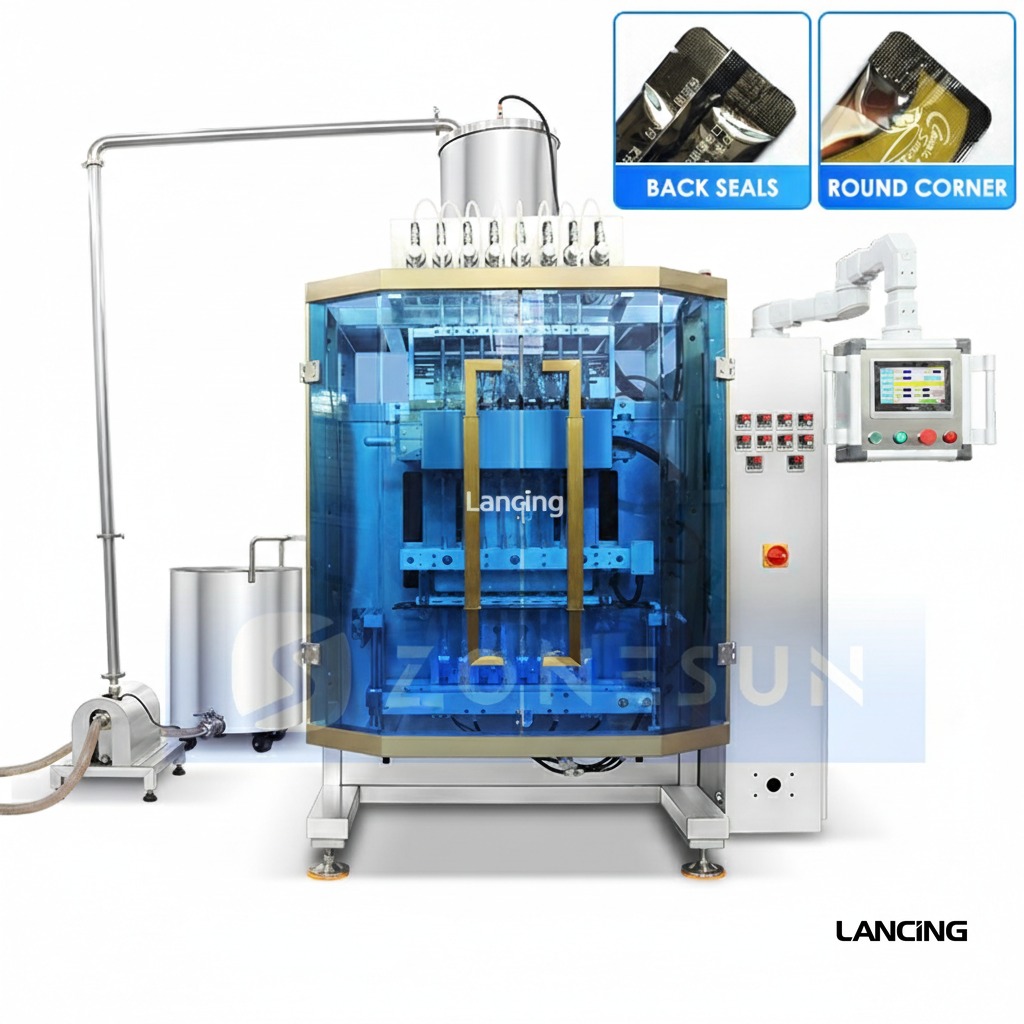 LU-FSMP8
High-output multi-lane VFFS system with independent magnetic-pump dosing for narrow liquid sachets.
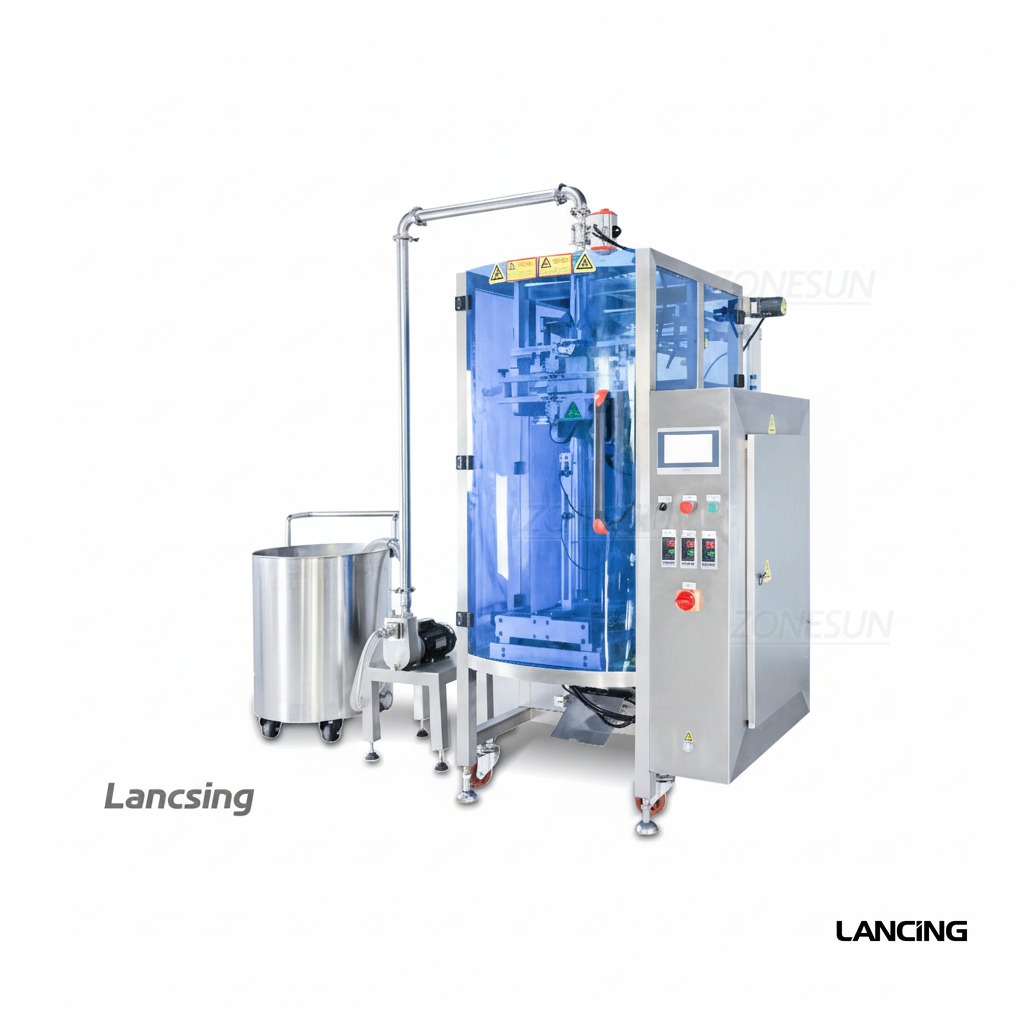 LU-420GSY
Automatic pump-fed VFFS machine for larger liquid and paste sachets or bags.
 LUAFS03
Rotary premade-pouch system with twin piston-pump filling for larger liquid and paste packs.
Piston pumps are widely used for repeatable small volumes and viscous products. Magnetic pumps can suit compatible low-viscosity liquids in multi-lane systems. Other applications may call for gear, lobe, peristaltic or timed-flow dosing. The correct choice is based on product trials rather than a generic liquid label.
Liquid on the seal path can create weak or leaking packs. Nozzle cut-off, suck-back, controlled fill timing and sufficient headspace help keep the sealing jaws clean. For sauces or gels, the nozzle and sachet geometry should be evaluated together.
Food, cosmetic and chemical projects have different hygiene and compatibility requirements. Product-contact metals, seals, hoses, tank finish, drainability and strip-down access should be documented before manufacture.
Specification checklist
Common questions
Typical applications include sauces, syrups, oils, gels, lotions and compatible detergents. Product chemistry, viscosity, temperature and particles determine the final machine specification.
A production plan normally defines a sampling or checkweighing method, target tolerance and corrective action. Performance should be confirmed with the actual product and pack.
It may be possible with change parts or a flexible pump system, but a wide viscosity range can compromise cleaning, speed or accuracy. Declare every product during specification.
Tell us about your product and pack
Send the product, target dose, sachet dimensions, film and required output. Lancing Ltd will review your application and recommend a practical machinery route before a detailed quotation.
Liquid sachet specification
The product path and sealing cycle have to be considered together. A stable dose is not enough if the nozzle leaves product in the seal area, and a strong laboratory seal is not enough if the film moves differently at production speed.
State the filling temperature and describe viscosity, foaming, surface tension, stringing, suspended particles, abrasiveness and any tendency to separate or settle. A sauce, gel or lotion can change significantly with temperature or shear. Representative samples should therefore be supplied in the condition expected at the machine.
Also identify whether the product is gravity fed, pumped from a vessel or supplied through a heated or agitated tank. Product head and feed stability can affect both dose repeatability and clean nozzle cut-off.
Drips, tails and splashes can contaminate the cross seal. Nozzle diameter, closing action, suck-back, fill timing, headspace and sachet geometry should be reviewed together. For products containing particles, the largest particle and its concentration matter because valves and nozzles must pass the product without creating an unreliable cut-off.
Film trials should establish a usable sealing window and show whether the pack remains clean while the machine is running at the proposed conditions.
| Dose and tolerance | State nominal volume or weight, permitted variation and the sampling or checkweighing method. Confirm whether tolerance applies to individual packs, a sample average or both. |
|---|---|
| Pack and film | Provide finished width and length, seal style, laminate, print repeat, eye mark and tear-notch position. State whether the pack is cut individually or supplied in strips. |
| Cleaning | Describe changeover frequency, allergen or colour-change requirements, temperature control and whether product-contact parts must be removed, flushed or cleaned in place. |
| Output test | Define accepted packs over a stated period using the declared product, dose, sachet, film and inspection settings. Record stops and rejected packs. |
| Pack checks | Agree dose measurement, seal inspection, leak test where appropriate, code and registration checks, cut position and visual acceptance. |
Choose the closest liquid route
A starting point for smaller liquid doses where piston selection, valve geometry and seal format can be matched to the product.
Use the paste guide when viscosity, stringing, particles or product feed make the application materially different from a water-thin liquid.
Consider a converted pouch where a zipper, spout, gusset or larger premium format is required rather than a conventional roll-stock sachet.
Additional buyer questions
Potentially, but the product-contact components, tank, hoses, valves, film and sealing conditions must be assessed at the actual filling temperature. A hot-fill requirement should be declared before the machine and laminate are specified.
Nozzle closure, valve design, suck-back, product pressure, temperature and fill timing all affect cut-off. The practical solution is selected from product trials rather than from viscosity alone.
Provide the maximum particle size, typical particle distribution, concentration and whether particles settle. The valve, nozzle, hose and piston path must pass the product without blockage or an unreliable seal area.
The appropriate method depends on the product, laminate, seal design and distribution risk. Agree the test method, sample condition and pass criteria with the pack owner before acceptance testing.
Define the project around your product and pack
Send a representative product, filling temperature, target dose, sachet drawing, film, required accepted output and cleaning expectations. Include particles, foaming or stringing details so the proposed pump and nozzle can be assessed properly.
Test more than steady running
A liquid sachet line can produce acceptable packs once stable yet behave differently during warm-up, vessel refill, a short production stop or the end of a batch. Include these normal transient conditions in the trial so dosing, nozzle cut-off, seal cleanliness and accepted output reflect the intended operating routine.
| Operating condition | What can change | Evidence to retain |
|---|---|---|
| First production start | Product temperature, hose condition, pump priming, trapped air, machine warm-up and the first nozzle cut-off may differ from stable running. | Identify and inspect first-off packs, record any purge or setup quantity and state when the process was judged stable. |
| Stable run | Product head, temperature, mixing and pump cycle should represent the normal production condition rather than a short demonstration. | Dose results, seal-area checks, rejected packs and accepted output over the agreed run period. |
| Feed-vessel refill | Refilling can introduce air, alter temperature or concentration, disturb settled particles and change the pressure presented to the dosing system. | Samples before and after refill, the refill method, vessel level, mixing state and any adjustment made. |
| Short pause and restart | Product can drip, string, cool, thicken, separate or remain at the nozzle while the film and sealing area stop. | The first packs after restart, video of the nozzle and seal area, stop duration and the agreed restart procedure. |
| End of batch | Low vessel level, product recovery and air entering the feed path can change dosing or leave incomplete packs. | The defined low-level response, final accepted pack, segregated material and the point at which production stops. |
| Product or colour change | Residual material, cleaning fluid and re-priming can affect the next batch and the number of packs required before release. | Changeover steps, contact-part inspection, first-off approval and any retained samples required by the customer’s quality system. |
Confirm whether the machine receives product by gravity, pump, heated line, agitated vessel or another system. State who supplies the tank, transfer, controls and cleaning interface. For larger-container filling rather than flexible sachets, use the specialist Liquid Fillers UK resource.
Use the compact LUFS200D1 liquid VFFS page, the LU-420GSY liquid and paste route or the LU-FSMP8 multi-lane system as the starting point, then apply the full trial evidence plan.
Liquid-project control plan
A liquid sachet machine is selected around the formulation and the conditions presented to the filler. The test should show more than a short steady run at one hopper level.
State viscosity and temperature range, density, particles, foaming, stringing, chemical compatibility and whether the product separates or settles. Define the production feed tank, pump, agitation, recirculation and minimum/maximum level.
Include start-up, normal running, refill, a planned pause, restart and end-of-batch operation in the trial where they change feed pressure, product temperature or nozzle behaviour.
Use the intended sachet size and headspace. Check nozzle cut-off, drips, strings, mist and product movement before the jaws close. A dose can be numerically correct but commercially unacceptable if product enters the seal.
Retain accepted and rejected packs and record the agreed visual and integrity test. If several lanes are used, identify every sample by lane.
| Dosing evidence | Declared product batch/condition, feed arrangement, target dose, measurement method, time/lane results and refill/restart observations. |
|---|---|
| Pack evidence | Dimensioned sachet, film, code and registration, clean seals, agreed integrity checks and retained samples. |
| Line evidence | Coder/inspection interfaces, product-low response, downstream stop/restart and accepted saleable output under the declared case. |
Liquid-process questions
Foam occupies pack volume, delays settling and can be carried into the transverse seal, so the dose and timing must be assessed with the product in its real aerated condition.
The feed pressure, return flow, agitation, nozzle position and acceleration of the dose can all create or release air. A stable-looking bulk sample may behave differently after pumping and repeated hopper replenishment.
Reproduce the intended refill method while the machine is running and check the first packs before, during and after the level or pressure change.
A refill can alter head pressure, temperature, air entrainment or agitation. Lane-specific dose and seal samples should be retained so a transient problem is not hidden by later stable running.
Product can reach the seal after dosing through dripping, stringing, foaming, splash, overfill, inadequate settling time or movement of the sachet before the jaws close.
The investigation should follow the product from nozzle cut-off to jaw closure. Increasing sealing temperature does not remove product from the interface and can disguise the real process fault.
Include the tank and transfer arrangement when level, temperature, agitation, pressure, recirculation or cleaning affect dosing repeatability.
Leaving the tank outside the scope can create an unowned interface between the customer’s process and the filler. Define capacity, replenishment method, product-low logic, access and cleaning responsibilities with the machine.
Turn the answer into a testable machine brief
Include representative product, dose range, sachet dimensions, film or artwork data, required accepted output and any cleaning, coding, inspection or line-integration requirements. Lancing Ltd can then assess the machine route against the real production case.
Verified drinking-water route
The LU-GJH1000 extends the liquid range with a defined roll-fed PE-film application for drinking water and other approved free-flowing liquids.
Review fill range, film width, finished dimensions, back-seal format, nominal speed conditions, utilities and the automatic operating sequence.
Define potable-water feed, upstream treatment boundary, film approval, quantity and seal checks, drainage, collection and secondary packing.
Temperature-dependent liquid behaviour
For hot, warm or temperature-sensitive liquids, the useful specification is the condition at the nozzle across start-up, steady operation, replenishment, pauses and restart. Temperature can change viscosity, foaming, drip control and seal contamination.