Tell us what you need to pack — product, dose, sachet size and target output.

Sachet machinery buyer guide

What Determines the Price of a Sachet Filling Machine?

There is no single useful list price for sachet machinery because the dosing system, pack format and compliance scope can change the engineering substantially. A credible budget separates the base machine from tooling, options, integration and operating cost.

What Determines the Price of a Sachet Filling Machine?

Base machine architecture

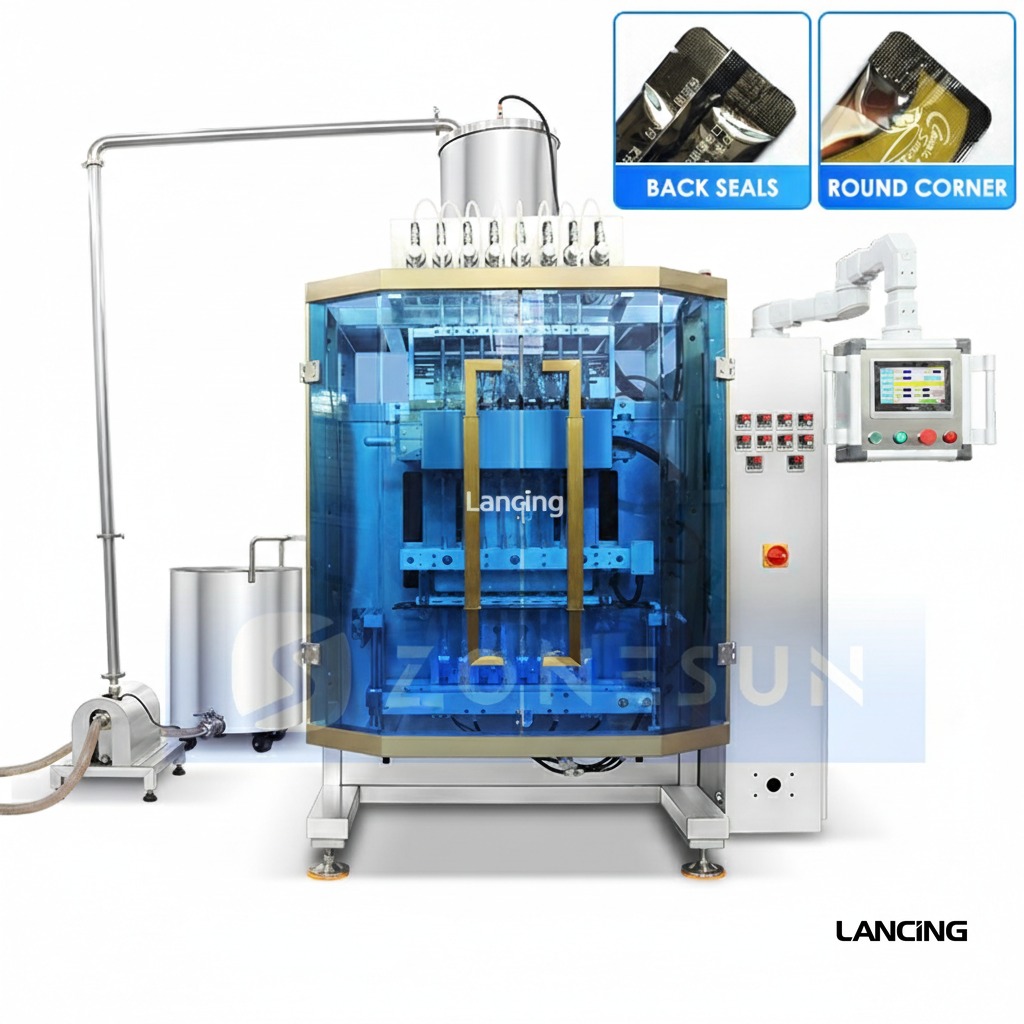
A compact single-lane VFFS machine is fundamentally different from an eight- or twelve-lane platform. Frame size, sealing stations, drives, controls and product channels all scale the equipment cost. Premade pouch rotary systems add pick-up, opening and indexing stations that are not required on a roll-stock bagger.

Product and dosing complexity

A free-flowing granule can use a simpler weighing or volumetric system than an aerated powder, stringy sauce or corrosive liquid. Agitation, heating, extraction, special contact materials, pump selection and fast-clean tooling add engineering and fabrication.

Several products or a wide dose range can require multiple pistons, augers, forming sets or product-contact assemblies. Price them as defined changeover packages rather than assumed flexibility.

Pack format, film and tooling

Tooling cost is influenced by sachet width, seal pattern, tear features, corner shape and cutting method. Printed film may require registration control. Multiple pack widths can require dedicated forming tubes or shoulders, while special seal patterns may require additional jaw sets.

Speed, lane count and downstream handling

Higher output demands faster motion control, more lanes or parallel machines. The budget must also cover product feeding and equipment after the sachet machine. A line producing several hundred small packs per minute may need counting, collating, conveying and cartoning with substantial additional cost.

Coding, inspection and data

Date coding, checkweighing, metal detection, vision, seal inspection and reject verification are separate cost centres. Regulated production may also need user access, recipe controls, audit functions and documentation. Define the quality risk each option addresses.

Delivery, installation and commissioning

Include crating, freight, insurance, offloading, positioning, utilities, installation, commissioning, training and production support. Site works such as electrical distribution, compressed air, extraction or platforms are normally outside the machine supply unless listed.

Lifetime cost matters more than purchase price

Film yield, product giveaway, labour, changeover time, cleaning, spares, energy, rejects and downtime affect total cost of ownership. A cheaper machine can be more expensive over its life when it consumes more film or is difficult to maintain.

Build a comparable budget request

Ask suppliers to show the base machine, dosing system, tooling, options, documentation, delivery, installation, training and recommended spares separately. State what is included in performance acceptance and which products and films will be used for testing.

Budget principle: compare quotations against the same written requirement. A low figure that excludes the filler, tooling or commissioning is not comparable with a complete line proposal.

Common questions

Frequently asked questions

Can I get a price without product samples?

An indicative budget may be possible, but a firm specification usually requires product and film information and may require trials.

Is a multi-lane machine always more expensive per sachet?

It often lowers capital cost per unit of output, but cleaning, tooling, downstream equipment and utilisation determine the real economics.

What should be included in a machine quote?

The quote should state scope, performance assumptions, utilities, tooling, options, documentation, warranty, delivery, installation, training and exclusions.

Tell us about your product and pack

Get my machine recommendation for your application

Send the product, target dose, sachet dimensions, film and required output. Lancing Ltd will review your application and recommend a practical machinery route before a detailed quotation.

Compare equivalent scope

Separate the base machine from the complete installed sachet line

A quotation can look lower because it excludes dosing, tooling, product feed, coding, inspection, guarding, installation or acceptance testing. Compare the same functional boundary and record every exclusion before judging price.

Forming and sealing machineFrame, film unwind, registration, forming set, longitudinal and cross seals, cutting or perforation and controls.
Dosing systemPump, piston, auger, weigher or other filler, including hopper or tank, valves, nozzles, agitation, heating and product-level controls where required.
Format and change partsForming collars, tubes, funnels, augers, pistons, jaws, cutters, guides and recipes for every quoted product and sachet combination.
Coding and inspectionCoder, mounting, data interface, print consumables, code verification, checkweighing, metal detection or other agreed inspection and reject handling.
Product and film feedTransfer pumps, conveyors, vacuum loaders, hoppers, tanks, reel handling and low-level or empty-reel controls.
Site and compliance scopeGuarding, electrical standard, extraction interfaces, documentation, delivery, lifting, installation, commissioning, training and site acceptance.
Evidence and supportTrials, sample packs, acceptance records, run video, manuals, spares, warranty terms, service response and software backup arrangements.

Compare cost per accepted pack, not only capital price

Film and pouch material, product giveaway, rejects, labour, cleaning time, format change, maintenance and utilities can outweigh a small difference in purchase price. Use realistic annual production and record the assumptions behind each cost.

For multi-lane machinery, calculate the commercial output after lane rejects and normal quality checks. For premade pouches, include converted pouch cost and failed pickup or opening. For roll-stock VFFS, include reel waste, setup and splice handling.

Use trials to reduce expensive uncertainty

A supplier should not be expected to guarantee performance against an undefined product or film. Conversely, a buyer should not accept an unqualified catalogue speed as the basis of a business case. A defined trial can expose dose, seal, registration, dust, drip, refill and downstream constraints before the final scope is fixed.

Plan the evidence needed for price and performance comparison

Additional buyer questions

Sachet machine price comparison questions

Why can two sachet machine quotations differ substantially?

They may include different dosing systems, lane counts, controls, materials, tooling, coding, product feed, guarding, documentation, trials, delivery and installation. Compare the scope line by line.

Should film and product trials be included in the quotation?

The trial scope, sample quantities, location, methods, retained evidence and any repeat testing should be stated. A vague promise to test is not the same as an agreed acceptance programme.

How should change parts be priced?

List every product-dose-format combination and identify the parts needed for each. Ask for individual pricing, storage and identification so future changeover cost is visible.

What ongoing costs are easy to miss?

Film or pouch material, coding consumables, wear parts, product giveaway, cleaning labour, extraction, utilities, planned service and downtime during format changes are common omissions.

Define the project around your product and pack

Request a quotation with a clearly defined functional boundary

Send the full product and pack matrix, accepted output, utilities, coding, inspection, product feed, installation and test requirements. Lancing Ltd can return a proposal that identifies included scope, assumptions and options.

Comparable quotation scope

Separate the bagger price from the installed production system

Two quotations can appear far apart because one includes the product feed, coder, inspection, discharge, change parts and acceptance evidence while another prices only the core machine.

Core forming and sealingLane count, web/forming arrangement, seal and cut/perforation functions, controls and standard guards.
Dosing and product feedPump/piston/auger/weighing arrangement, hopper/tank, agitation, feeder, transfer, low-level and cleaning boundary.
Format scopeDeclared products, doses and pack families; forming, seal, nozzle or auger parts; recipes, tools and storage.
Coding and qualityCoder, registration, verification, checkweighing or inspection, reject device, challenge tests and records.
Line integrationConveyors, counting/collation, upstream/downstream interfaces, controls, guarding, utilities and network/data scope.
Project deliveryTrials, sample packs, FAT/SAT, documentation, installation, commissioning, training, spares and support boundary.

Compare like with like: give every supplier the same product/format matrix, accepted-output definition and evidence plan. Ask each to state exclusions and assumptions rather than relying on a single headline price.

Call 01494 623015 Get my machine recommendation