 LUFS200D1
Liquid VFFS Sachet Filling Machine
Compact piston-pump VFFS platform for sauces, syrups, gels and other flowable products.
5–100 mlPiston pumpBack / 3-side / 4-side
View machine details
Machine category
Vertical form fill and seal machinery converts a flat reel of heat-sealable laminate into finished packs. Film passes around a forming shoulder, the longitudinal seam is created, product is dosed through the forming tube, and transverse jaws seal and cut each sachet.
Machine options
Choose the closest starting point below. We will confirm the final model against your product, sachet, film and required output.
LUFS200D1Compact piston-pump VFFS platform for sauces, syrups, gels and other flowable products.
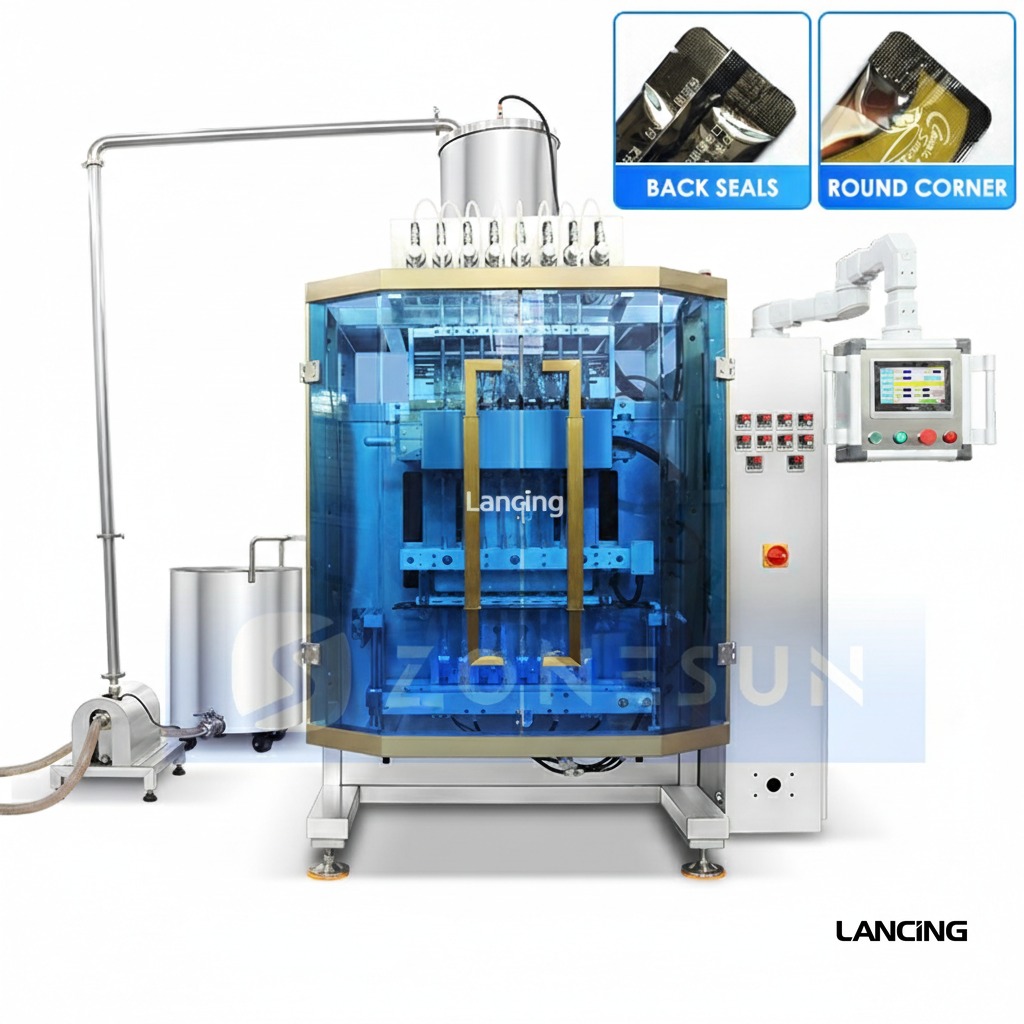 LU-FSMP8
High-output multi-lane VFFS system with independent magnetic-pump dosing for narrow liquid sachets.
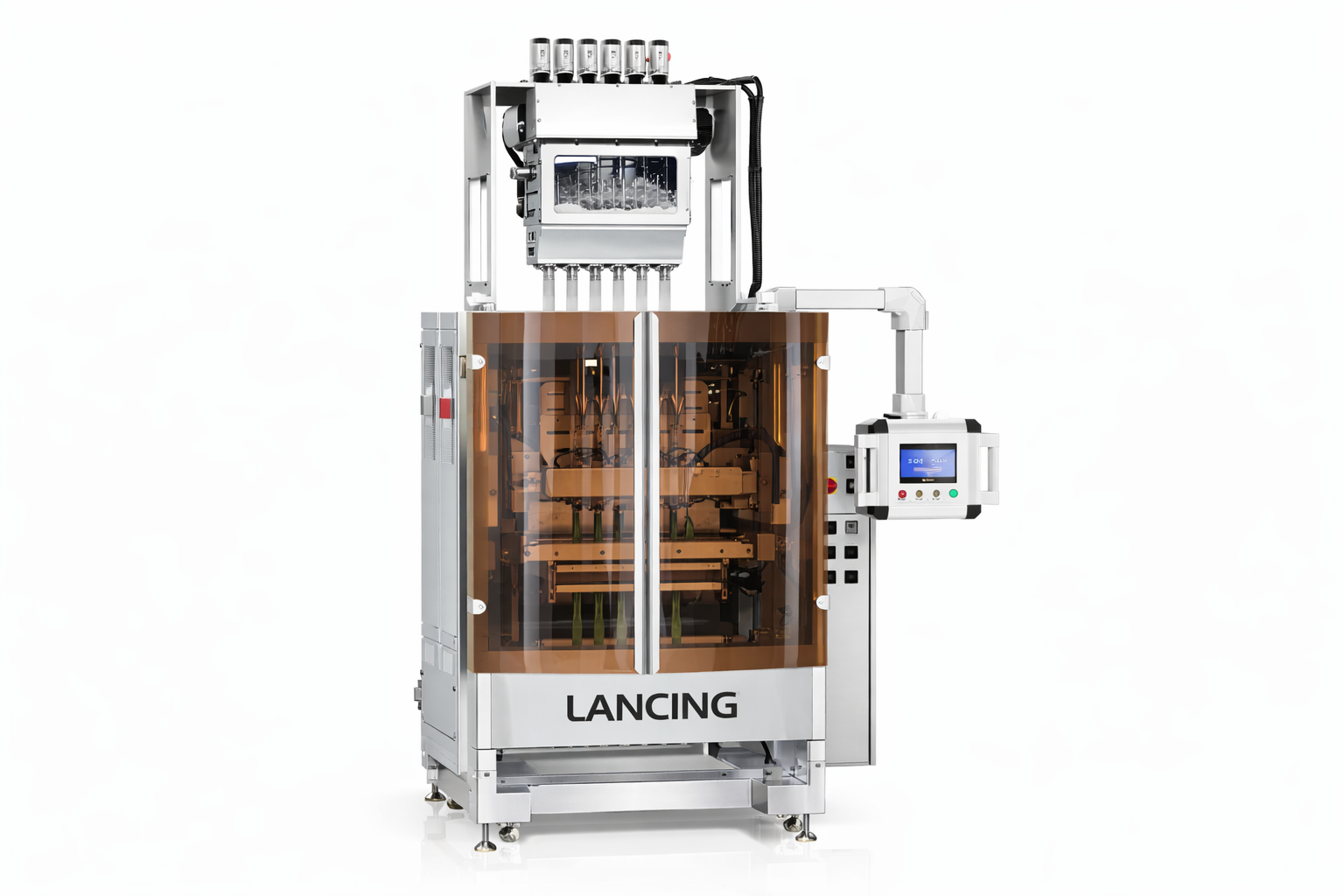 LU-FSFM6
Independent auger dosing across multiple lanes for high-output powder sachet production.
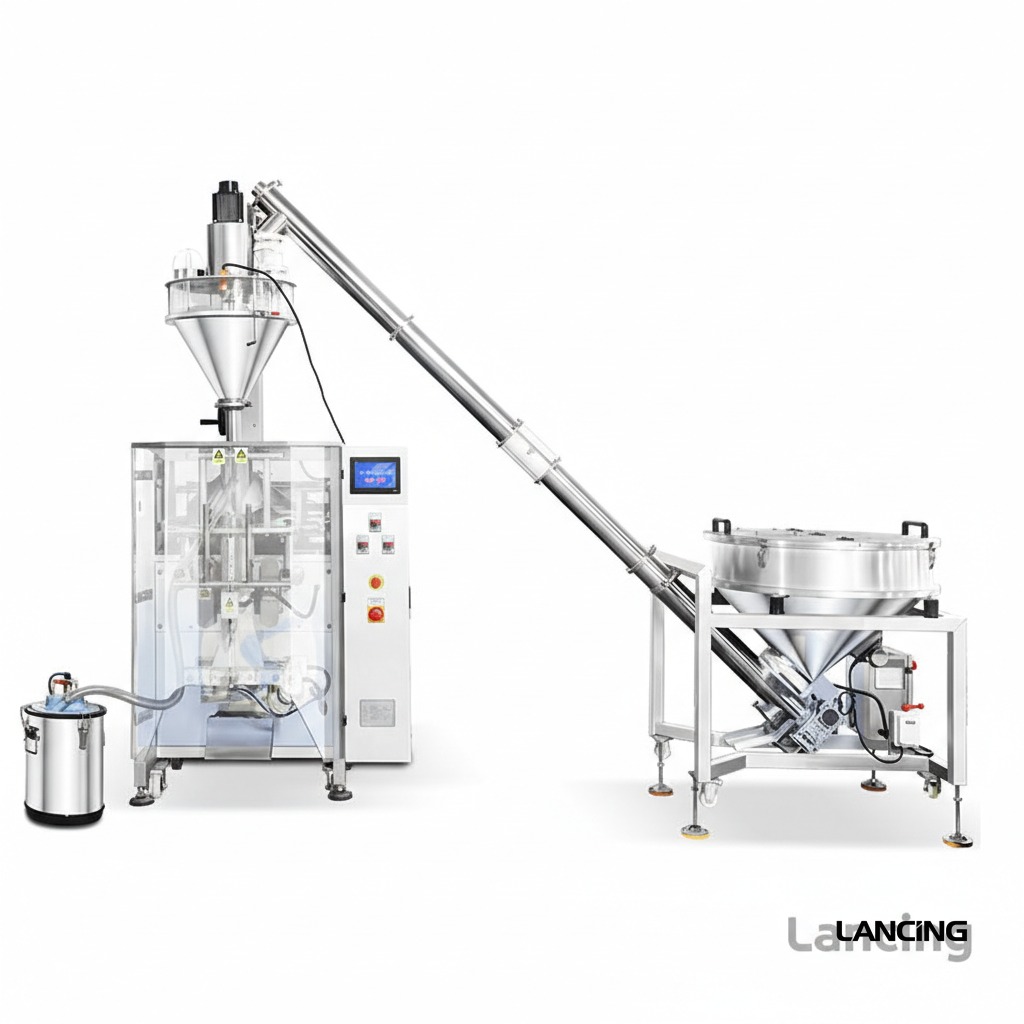 LU-FS06
Flexible single-lane auger VFFS platform for powder packs from small sachets to larger bags.
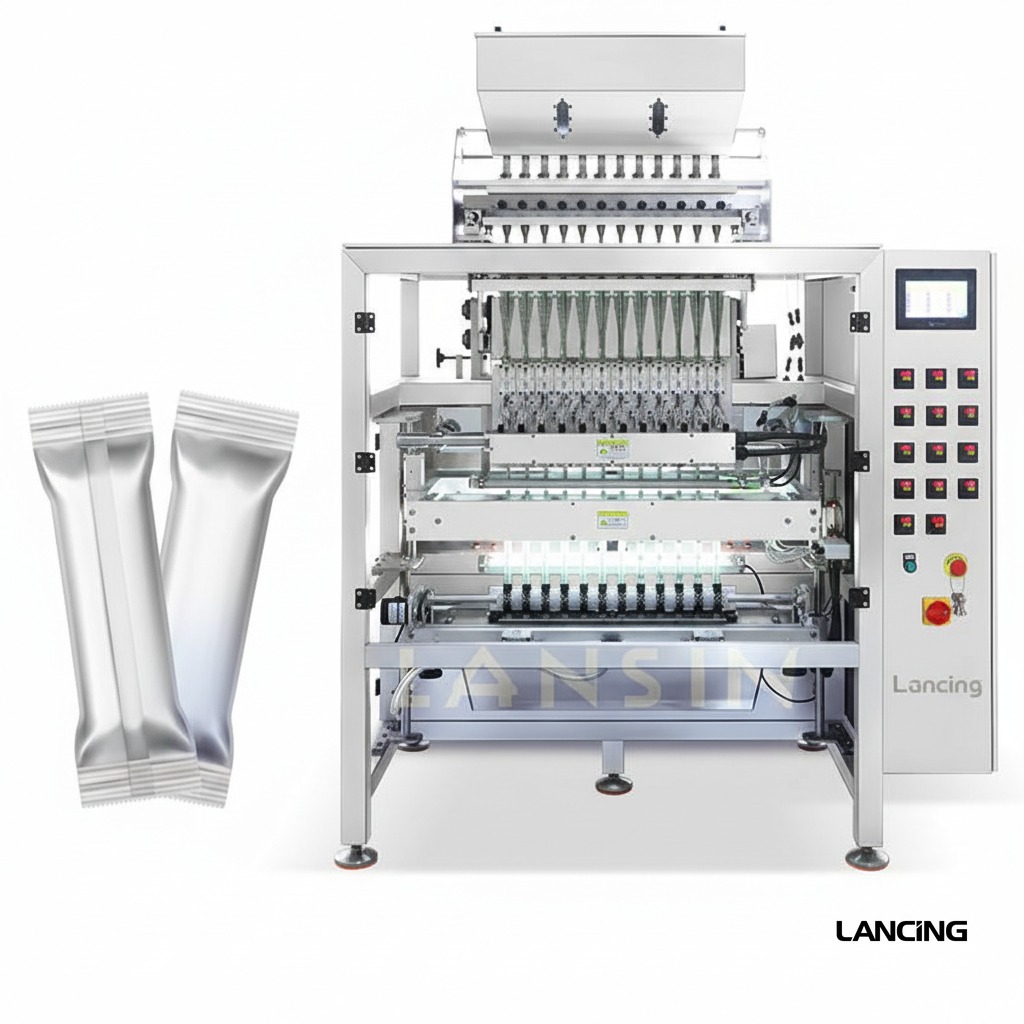 LU-FSL12
Twelve-lane VFFS system for compact, high-volume granule and small particulate sachets.
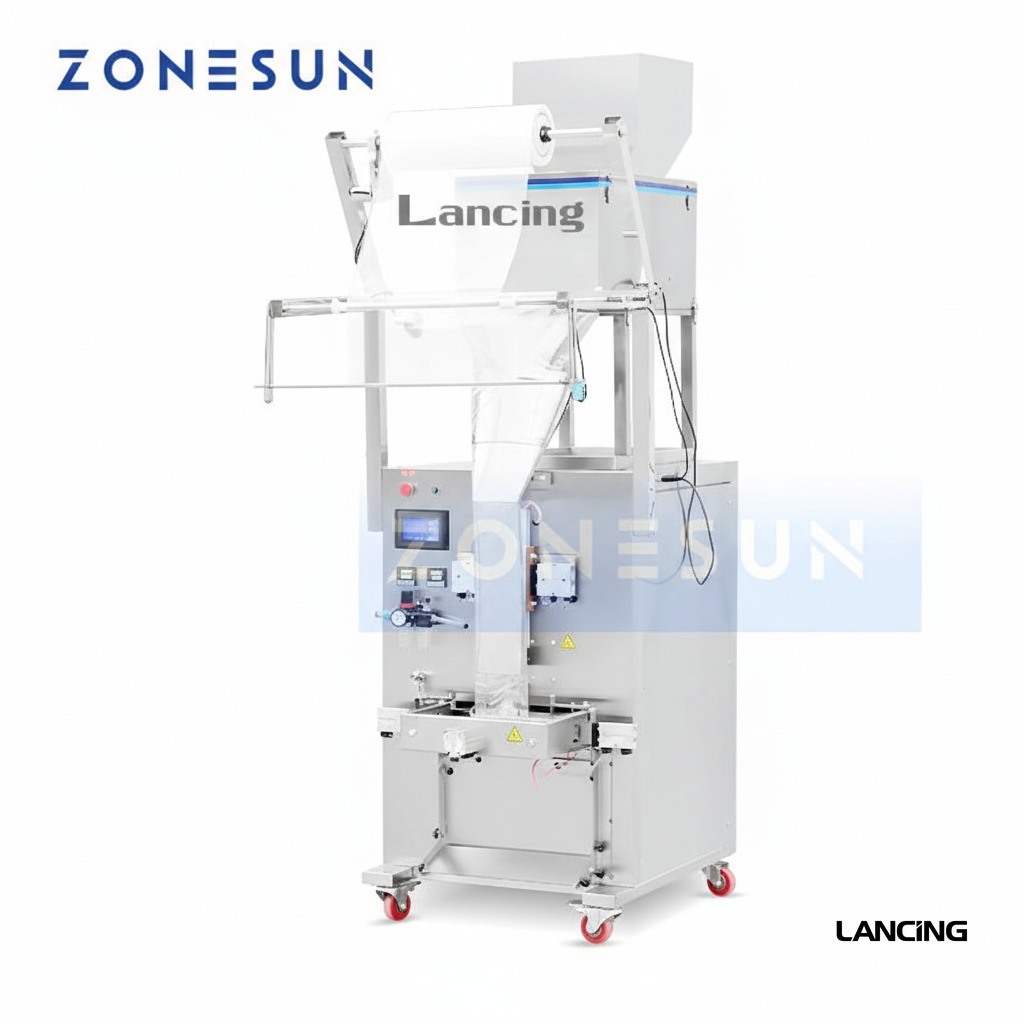 LU-FSK1000
Compact weigh-fill-seal machine for free-flowing granules and small production environments.
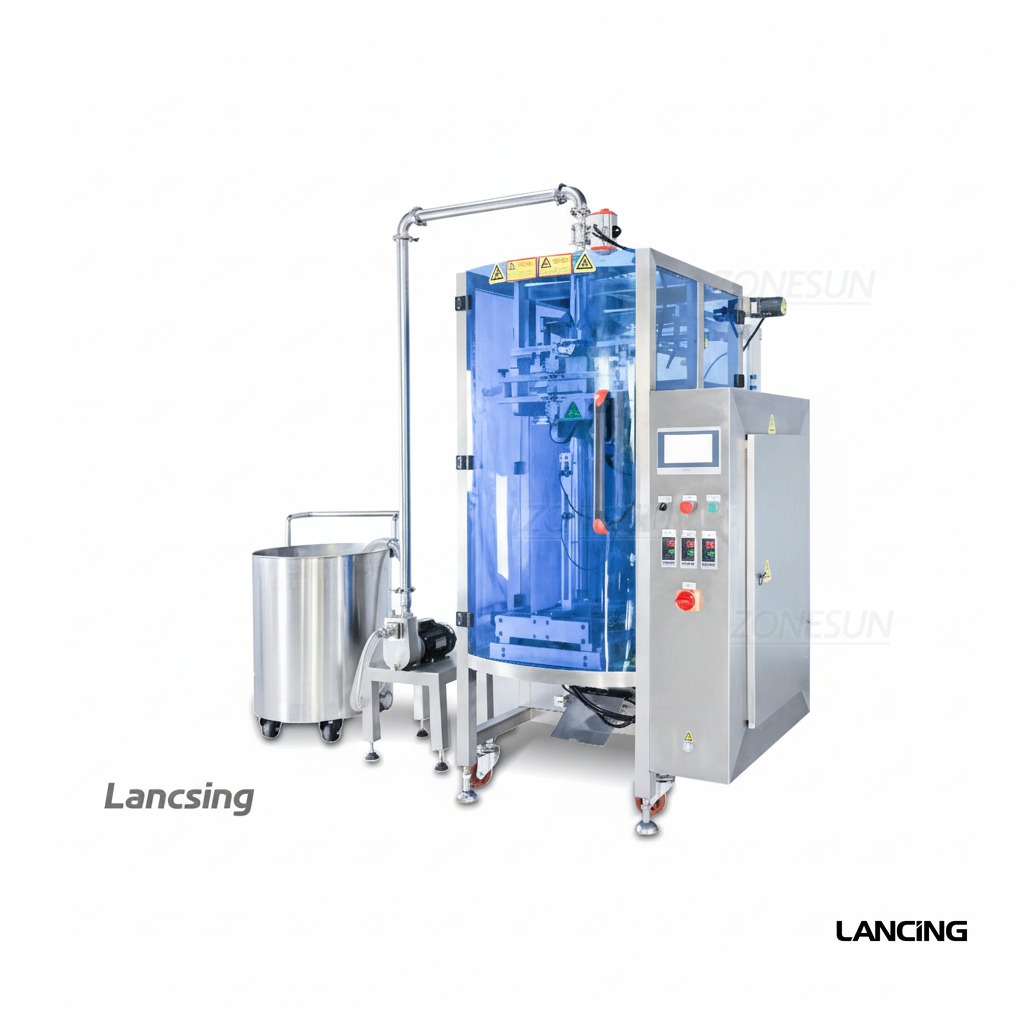 LU-420GSY
Automatic pump-fed VFFS machine for larger liquid and paste sachets or bags.
 LUFM1000
Space-efficient vertical form fill and seal machine for measured powder or granule packs.
The VFFS frame controls film and seals, while the dosing module controls the product. They must exchange timing, ready and fault signals so neither section compromises accuracy or seal integrity.
Reel width, core, winding direction, registration marks, coefficient of friction, thickness and seal window all affect performance. Production film should be trialled before final acceptance.
A machine may cover several pack sizes, but each format can require a forming set, sealing recipe, dosing tooling and film reel. Changeover frequency should shape the machine and tooling package.
Specification checklist
Common questions
VFFS moves film vertically around a forming tube. Horizontal systems move the web through horizontal sealing stations and are often used for very flat or shaped packs. Product and format determine the better route.
Some compact sachet platforms can be configured for these formats, while many standard VFFS machines make a back or fin seal. The required seal layout must be specified.
Roll stock is often economical compared with premade pouches, but total cost also includes tooling, film waste, labour, maintenance, quality control and production volume.
Tell us about your product and pack
Send the product, target dose, sachet dimensions, film and required output. Lancing Ltd will review your application and recommend a practical machinery route before a detailed quotation.
Roll-stock engineering
Vertical form fill and seal machinery combines several processes in one cycle. The film converter, forming geometry, dosing system, sealing jaws, registration control, coding and downstream handling therefore need one coordinated specification.
| Film web | Confirm laminate construction, thickness range, coefficient of friction, reel width, core, winding direction, splice method and print repeat. |
|---|---|
| Forming collar and tube | Match the forming set to the finished width, product drop, seal style and film behaviour. Multiple sizes may need separate collars, tubes or other change parts. |
| Longitudinal seal | Define back or fin seal position, overlap and appearance. The seal must be compatible with the heat-seal layer and must not obstruct coding or tear features. |
| Cross seal and cut | Specify seal width, pattern, corner shape, cut position, perforation and tear notch. Product fall must be complete before the jaws close. |
| Photocell registration | Provide the eye-mark colour, size and location and the permissible variation between print and cut. Trials should use production-representative registered film. |
| Coding and inspection | Confirm code content, print area, data source, inspection requirement and the reject response for missing or unreadable codes. |
| Product feed | Coordinate the upstream tank, hopper, auger, weigher or pump with the bagger so product supply remains stable through refill and normal speed changes. |
List every product, dose, sachet width and length, seal style and film. Identify which changes use recipes and which require forming sets, jaws, funnels, augers, pumps or other parts. Access, lifting and storage of change parts affect the practical time and repeatability of changeover.
A visual seal alone may not demonstrate pack integrity. The pack owner should select an appropriate test method and acceptance criteria for the product, laminate and distribution risk. The machine trial can then record sealing conditions and retain samples for review.
Additional buyer questions
The collar and forming tube control how a particular film becomes a tube around the product path. Pack width, film stiffness, seal style and product drop can require dedicated forming parts.
It detects a printed eye mark so the machine can correct film position and place the cross seal and cut relative to the artwork. The actual mark, print repeat and film variation should be tested.
A notch may be possible, but its position must avoid the product area, code and critical seal geometry. The cutting or punching arrangement and the laminate response must be confirmed.
Define the code content, print area, line speed, substrate and whether presence or readability is inspected. The coder position must account for intermittent or continuous film movement.
Record the film batch, jaw settings, running speed, pack size, product condition and any seal contamination. Retain labelled samples and apply the agreed inspection or leak-test method.
Define the project around your product and pack
Provide the product and dose, every sachet size, seal style, film structure, eye mark, coding position, tear notch, required output and changeover expectations. Lancing Ltd can use the complete matrix to define the VFFS route and trial scope.
VFFS as a complete production system
The VFFS bagger forms and seals the pack, but accepted output depends on the product feed, film web, coder, inspection, discharge and downstream equipment operating as one line.
Issue the dimensioned sachet, web/reel data, seal pattern, artwork, registration mark, code area and cut/perforation requirement.
Define ready, demand, product-low, dose-complete, coder, inspection and downstream stop/restart states with clear ownership.
Confirm layout, access, utilities, product feed, safe interfaces and the representative integrated test before delivery.
Finished-pack architecture
VFFS is a process family, not one universal sachet format. The pack drawing should show the rear or perimeter seals, code area, eye mark, notch, perforation and cut—and state whether output is individual sachets or connected strips.
Check whether the requested back-, three-side- or four-side-seal format matches the actual web and sealing architecture.
Coordinate finishing features with registration, coding, seals and downstream handling.