 LUFS200D1
Liquid VFFS Sachet Filling Machine
Compact piston-pump VFFS platform for sauces, syrups, gels and other flowable products.
5–100 mlPiston pumpBack / 3-side / 4-side
View machine details
Compact weigh-fill-seal machine for free-flowing granules and small production environments.
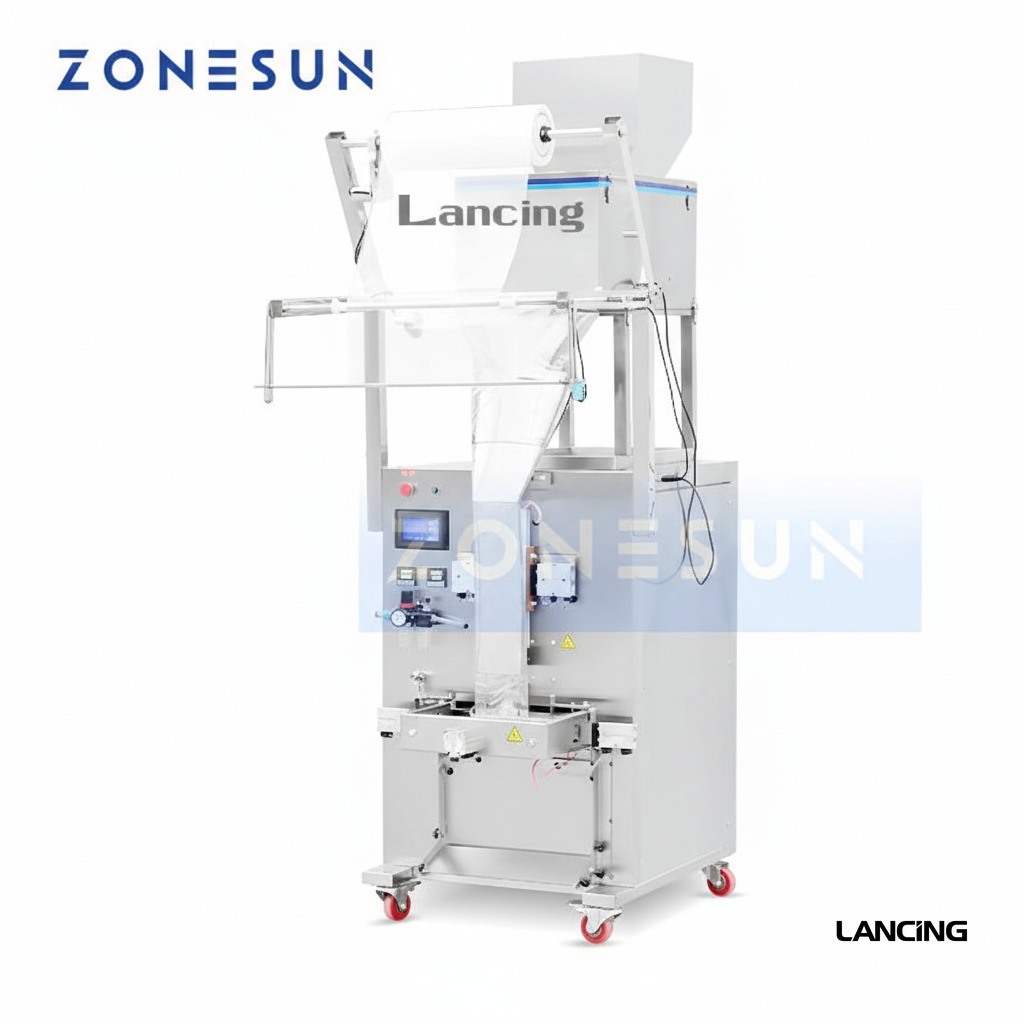
Machine overview
The LU-FSK1000 provides a compact route into automatic weighing, bag forming and sealing. It is intended for products that can be metered by weight and flow predictably through the hopper and discharge path.
Published specification
| Reference fill range | Approximately 50–1000 g, configuration dependent |
|---|---|
| Indicative output | Approximately 5–15 bags per minute |
| Dosing method | Integrated weighing system |
| Electrical supply | 220 V or 110 V, 50–60 Hz |
| Power | Approximately 1000 W |
| Typical products | Seeds, grains, beans, rice, small hardware and similar free-flowing pieces |
Reference figures are configuration-dependent and must be confirmed for the product, pack and utilities.
Configure the line
Performance validation
Target output and dose repeatability are affected by product flow, environmental conditions, sachet length, film sealing window, changeover and quality-control settings. Supply representative product and production film for a meaningful test.
Related machinery
LUFS200D1Compact piston-pump VFFS platform for sauces, syrups, gels and other flowable products.
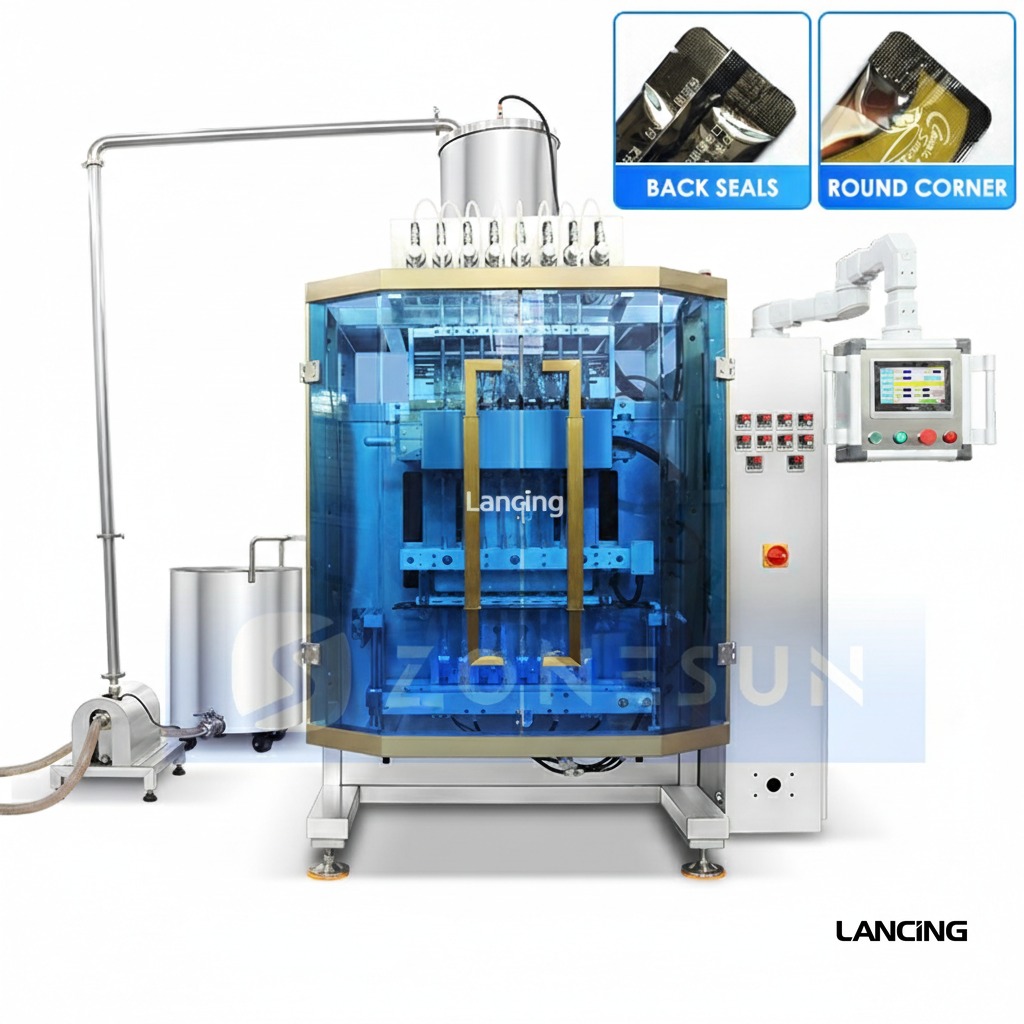 LU-FSMP8
High-output multi-lane VFFS system with independent magnetic-pump dosing for narrow liquid sachets.
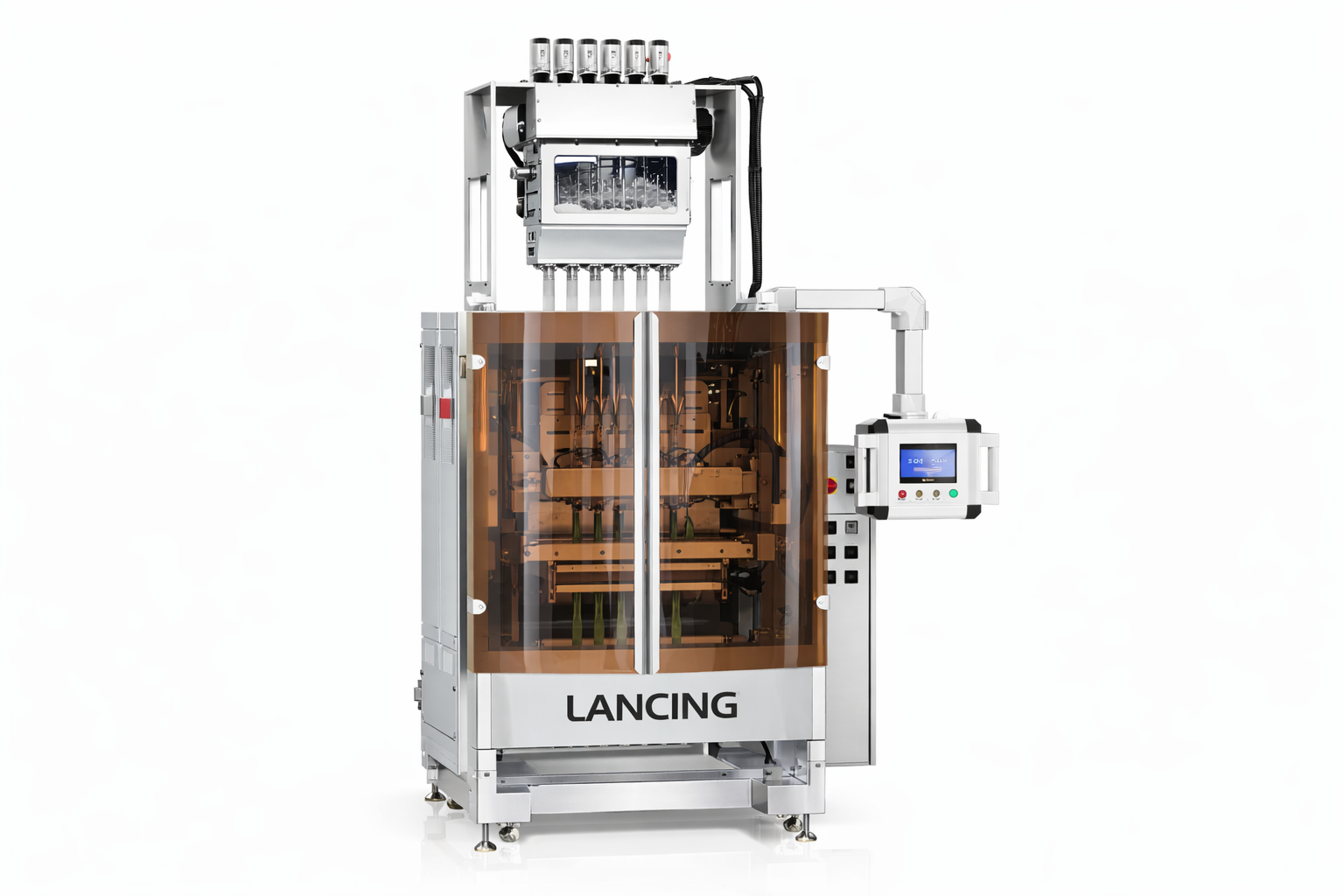 LU-FSFM6
Independent auger dosing across multiple lanes for high-output powder sachet production.
Common questions
It can produce compact bags or larger sachet-style packs within its format range. The required pack dimensions determine whether it is suitable.
Weighing can accommodate density variation better than a fixed volume, although product flow, target tolerance and speed still influence performance.
This model is primarily positioned for granules. Powders generally require an auger or another dosing method designed to control dust and bulk-density variation.
Tell us about your product and pack
Send the product, target dose, sachet dimensions, film and required output. Lancing Ltd will review your application and recommend a practical machinery route before a detailed quotation.
Production specification for LU-FSK1000
The integrated weighing principle is relevant where the commercial requirement is a controlled weight and the product can feed consistently into the weighing system. Particle size, breakage, target weight and bag formation should be tested as one process.
A weigher needs a repeatable flow of product into its weighing section. Surges, bridging or segregation can increase cycle time or create out-of-tolerance packs. The trial should use the normal product mix and should include refill rather than only a carefully hand-fed sample.
Pack geometry should provide enough opening for the largest pieces and enough headspace for the cross seal to close without trapping product. Fragile granules should be inspected for breakage at the outlet and in the finished sachet or bag.
| Weight performance | Test the lowest and highest required weights with the normal particle distribution and agreed sample method. |
|---|---|
| Product quality | Inspect for breakage, segregation, scuffing or loss of coatings through feeding, weighing and dropping. |
| Pack formation | Run the intended film and bag dimensions and check headspace, seal contamination, code and cut position. |
| Refill behaviour | Reproduce upstream product feed and record any effect on cycle time and weight results. |
| Accepted output | Count conforming packs over a stated period and include overweight, underweight, seal and presentation rejects. |
Small uniform crystals in high-volume single-serve sachets may justify a dedicated multi-lane system. Powders or cohesive products may require an auger rather than a general weighing route.
A useful trial record identifies the product and film batches, dose setting, sachet dimensions, forming and sealing parts, coding setup, operating speed, stops, rejected packs and quality checks. Retained samples should be labelled so results can be traced to the lane, recipe or test condition where relevant.
The final quotation and acceptance schedule should distinguish indicative catalogue references from the values that will be demonstrated with the agreed product, pack and utilities.
Additional buyer questions
It is presented as a compact weighing route for a broader fill range. Narrow high-output sticks may be better assessed on a dedicated multi-lane machine.
Potentially, but segregation and variation in individual piece weight can affect the commercial result. The production mixture should be tested and the acceptance method agreed.
Inspect input and finished-pack samples for breakage and fines. The trial should reproduce the normal transfer and drop path rather than hand-feeding directly into the final stage.
Use the actual product, target weights, normal feed, film and operating conditions. Agree the sample size, scale resolution and treatment of start-up or rejected packs.
Define the project around your product and pack
Provide representative product, every required dose and sachet size, film details, accepted output, utilities, cleaning and inspection requirements. Lancing Ltd can then confirm whether the LU-FSK1000 is the correct starting point and define the trial scope.