 LUFS200D1
Liquid VFFS Sachet Filling Machine
Compact piston-pump VFFS platform for sauces, syrups, gels and other flowable products.
5–100 mlPiston pumpBack / 3-side / 4-side
View machine details
Independent auger dosing across multiple lanes for high-output powder sachet production.
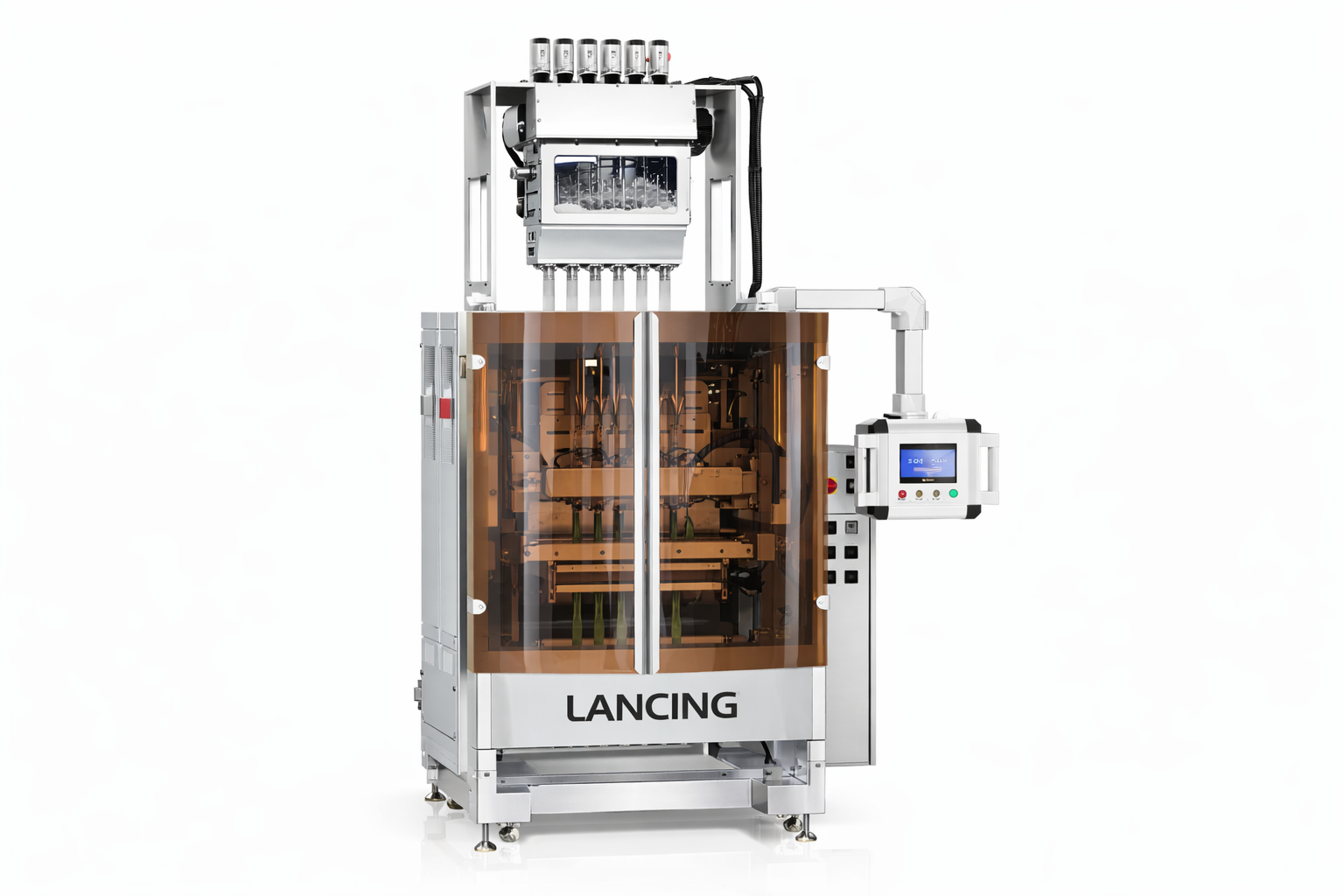
Machine overview
The LU-FSFM6 combines multi-lane film conversion with separate auger metering channels. This architecture suits powdered products where volumetric control, repeatability and lane-by-lane adjustment matter.
Published specification
| Dosing system | Independent auger dosing across lanes |
|---|---|
| Electrical supply | AC 220 V or 380 V, 50–60 Hz |
| Power | Approximately 5.5 kW |
| Indicative output | Approximately 20–40 sachets per minute per lane |
| Reference bag length | 50–180 mm |
| Reference bag width | 20–95 mm |
| Maximum film width | Approximately 600 mm |
| Approximate machine size | 1685 × 1300 × 2005 mm |
Reference figures are configuration-dependent and must be confirmed for the product, pack and utilities.
Configure the line
Performance validation
Target output and dose repeatability are affected by product flow, environmental conditions, sachet length, film sealing window, changeover and quality-control settings. Supply representative product and production film for a meaningful test.
Related machinery
LUFS200D1Compact piston-pump VFFS platform for sauces, syrups, gels and other flowable products.
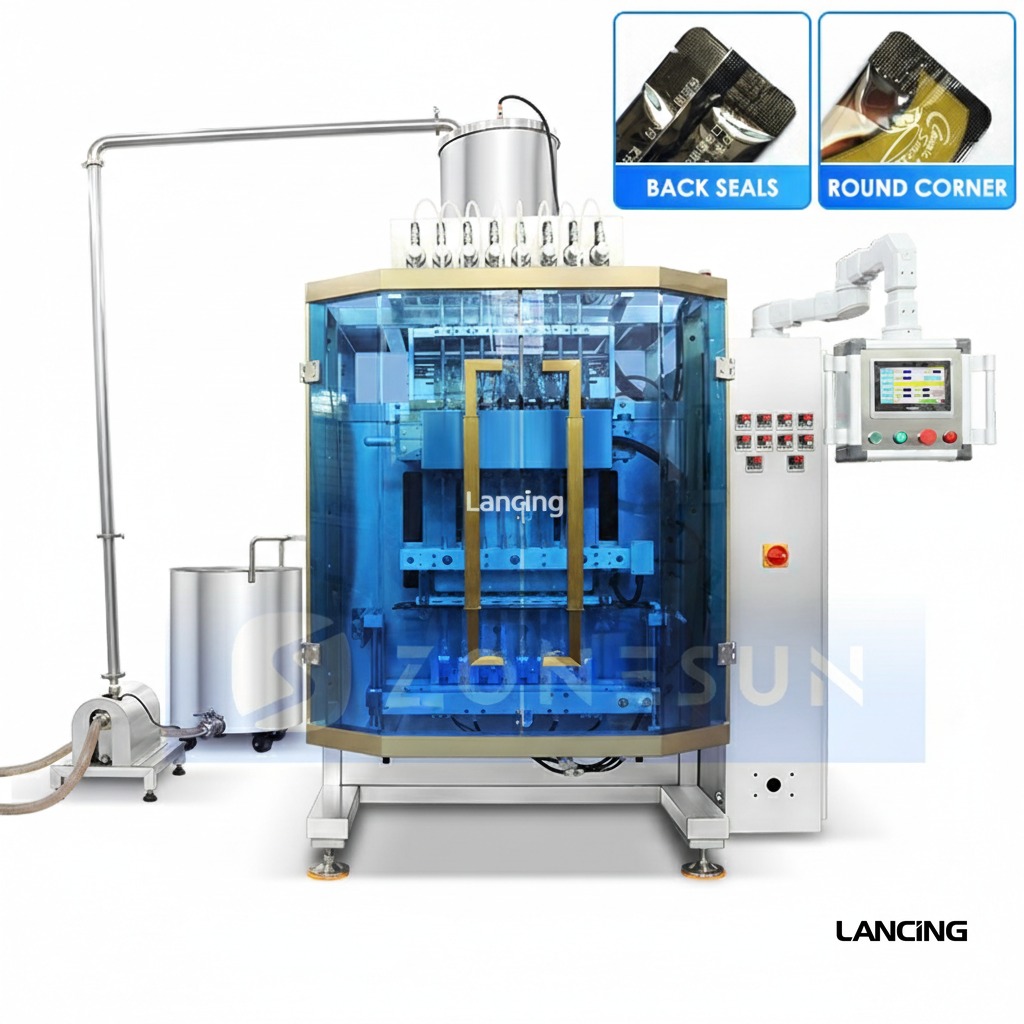 LU-FSMP8
High-output multi-lane VFFS system with independent magnetic-pump dosing for narrow liquid sachets.
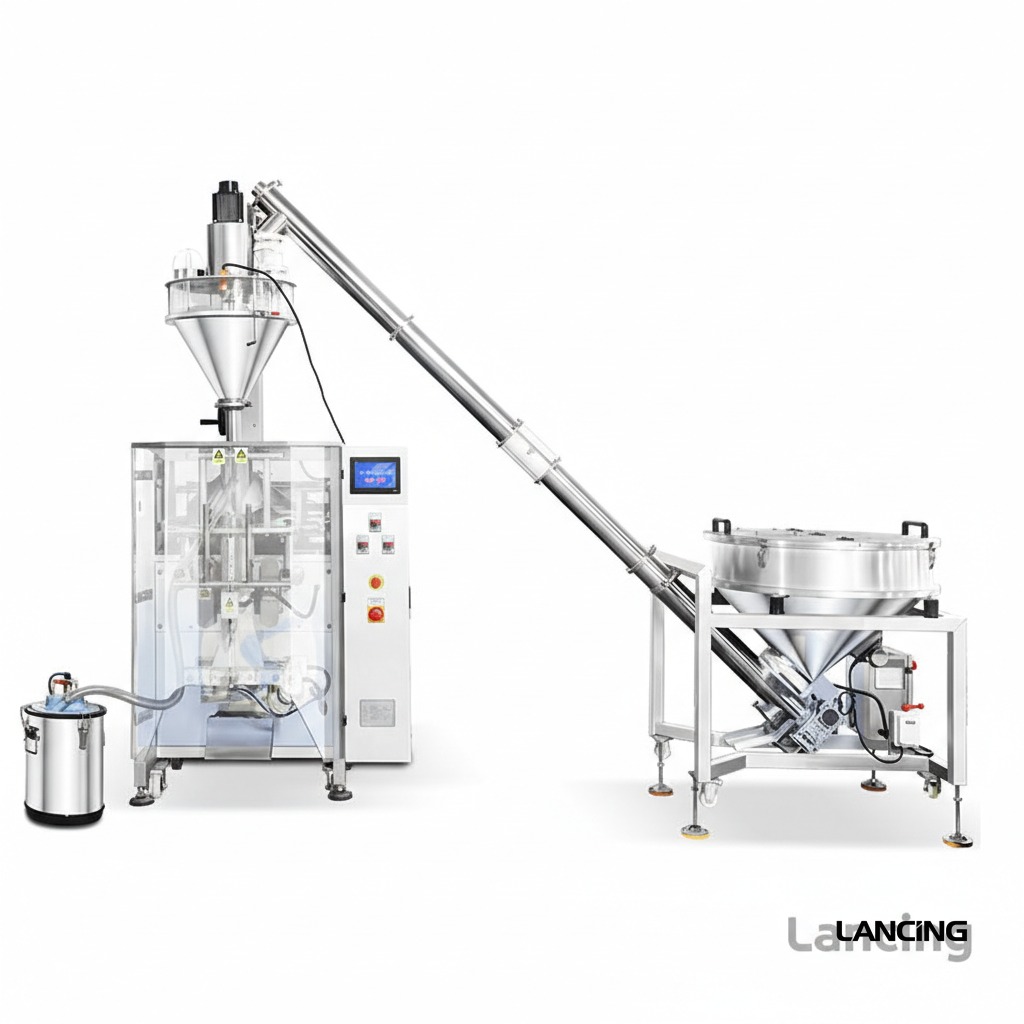 LU-FS06
Flexible single-lane auger VFFS platform for powder packs from small sachets to larger bags.
Common questions
Independent augers allow dosing to be adjusted and monitored by lane, supporting better balance across a multi-lane web.
Auger geometry, agitation and hopper design can be adapted, but trials are important because bulk density, aeration and cohesion affect dose repeatability.
A practical line may use enclosed transfer, extraction points, controlled drop distances and cleaning access. The final arrangement depends on the powder and workplace requirements.
Tell us about your product and pack
Send the product, target dose, sachet dimensions, film and required output. Lancing Ltd will review your application and recommend a practical machinery route before a detailed quotation.
Production specification for LU-FSFM6
Independent augers can support parallel powder dosing, but every lane needs suitable screw geometry, stable product supply and traceable quality checks. Bulk density, aeration and dust can change the result as the hopper is replenished.
Each auger can be tuned to its channel, but powder arriving with different compaction or aeration can create lane variation. The trial should reproduce the intended refill method and should include samples before and after product replenishment.
Dust control is also a pack-quality issue. Powder falling after the dose can enter the cross seal, while extraction that is too aggressive can disturb the fill. Drop timing, funnel geometry, static, extraction pickup and headspace should be set as one system.
| Auger development | Confirm screw, tube, agitation and cutoff using the lowest and highest dose and the normal powder condition. |
|---|---|
| Lane comparison | Label and measure packs from every lane through the run, including after refill and stop-start events. |
| Seal cleanliness | Inspect cross seals for trapped powder and apply the agreed integrity check to a defined sample from each lane. |
| Web and cutting | Verify print registration, lane pitch, longitudinal seals, cross seals, cut and any tear or perforation feature. |
| Accepted output | Count conforming sachets while recording lane rejects, dust-related stops, normal sampling and downstream handling. |
Frequent product changes, a very broad dose range, difficult cleaning or modest output may favour a single-lane auger machine. Free-flowing granules can require a weighing or volumetric route rather than an auger designed for powders.
A useful trial record identifies the product and film batches, dose setting, sachet dimensions, forming and sealing parts, coding setup, operating speed, stops, rejected packs and quality checks. Retained samples should be labelled so results can be traced to the lane, recipe or test condition where relevant.
The final quotation and acceptance schedule should distinguish indicative catalogue references from the values that will be demonstrated with the agreed product, pack and utilities.
Additional buyer questions
Not automatically. Each channel should be checked and adjusted against the agreed dose method because mechanical and product-flow differences can create lane variation.
Enough material is needed to fill and stabilise the feed system, run all required doses, reproduce refill and collect samples from every lane. The amount should be agreed from the test plan.
Yes. Dust or delayed product fall can contaminate the cross seal. The trial should assess drop timing, extraction, static and headspace at the proposed speed.
Document cleaning and line-clearance steps, inspect contact areas and demonstrate that the next recipe and auger setup return to the approved dose and pack quality.
Define the project around your product and pack
Provide representative product, every required dose and sachet size, film details, accepted output, utilities, cleaning and inspection requirements. Lancing Ltd can then confirm whether the LU-FSFM6 is the correct starting point and define the trial scope.
Model-specific lane assurance
Independent augers allow lane-specific control, but common hopper refill, film movement and sealing conditions can affect the whole web. Acceptance evidence should preserve both lane and time.
Record the powder condition and feed method, then label samples from every lane at start-up, stable running, after refill and after a normal stop/restart. Identify screw, tube, agitation and settings for the accepted configuration.
Issue a numbered lane map showing pitch, back seals, transverse seals, artwork, registration, codes and cuts. Retain lane-identified dose and integrity samples and record the response to an isolated weak lane.