Tell us what you need to pack — product, dose, sachet size and target output.

Sachet machinery buyer guide

How to Choose the Right Sachet Filling Machine

A reliable sachet line starts with a complete application definition. Machine selection should follow the product and finished pack, not the other way around. Use this guide to turn your initial requirement into a clear engineering specification.

How to Choose the Right Sachet Filling Machine

1. Define the product in engineering terms

Product name alone is not enough. For liquids, record viscosity across the operating temperature range, foaming, stringing, particles, density and chemical compatibility. For powders, record bulk density, flowability, aeration, cohesion, dust and moisture sensitivity. For granules, include particle-size distribution, fragility, density and whether blends segregate.

Supply representative production samples. Water, flour or plastic beads rarely predict how the real formulation will behave. Where the product is hazardous, allergenic or commercially sensitive, agree safe sample handling and confidentiality before trials.

2. Define dose, tolerance and test method

State the nominal weight or volume, the acceptable range and how it will be measured. A volumetric filler can be repeatable while product weight changes because density has changed. A weighing system can achieve a mass target but still need enough pack volume for product settling.

Decide whether quality will be verified by routine sampling, an in-line checkweigher, flow monitoring or another method. Agree the test method, sample frequency and reject rules before factory acceptance.

3. Fix the pack format and film

Define finished width, length, seal style, tear notch, corner shape, perforation, coding area and required headspace. Back-seal packs are common on VFFS machinery, while three-side and four-side formats may suit compact samples. Premade pouches support gussets, zippers and other features but add handling stages.

The film supplier should provide the laminate structure, thickness, seal layer, reel width, core, winding direction, print repeat and registration-mark drawing. Barrier performance must suit the product and declared shelf life.

4. Set a realistic production output

Separate instantaneous machine speed from required saleable output. Include shifts, efficiency, changeovers, cleaning, reel changes, maintenance and rejects. A multi-lane machine can deliver high output, but downstream counting and cartoning must also handle the flow.

Where demand varies, compare one high-output line with multiple smaller lines. Redundancy, labour, floor space, changeover frequency and maintenance capability may change the commercial answer.

5. Choose the dosing technology

Typical starting points are piston or positive-displacement pumps for liquids and pastes, augers for powders, and weighing or volumetric systems for granules. These are not absolute rules. Product trials may reveal that another pump, screw, cup or weighing architecture is more stable.

The filler and bagger should be treated as one control system. Ready, dose-complete, low-level and fault signals must be integrated so the machine does not make empty packs or contaminate seals.

6. Add quality controls that address real risks

Options include print registration, date and batch coding, code verification, checkweighing, metal detection, vision inspection, seal monitoring and automatic reject. Select controls from the actual failure risks rather than installing features without a defined purpose.

Every reject device needs a confirmed reject path and a method to detect that the reject occurred. Where traceability matters, define batch records, user access and data retention at the quotation stage.

7. Confirm utilities, layout and access

Record voltage, frequency, phase, compressed-air pressure and quality, extraction, product supply, drainage and environmental conditions. Provide a scaled layout showing columns, doors, ceiling height, traffic routes and operator access.

Allow space for loading film, removing contact parts, opening guards, servicing electrical cabinets and moving finished packs. A machine that fits the floor plan but cannot be maintained is not a workable installation.

8. Plan trials and acceptance

Agree the factory acceptance test before build completion. Define product, film, run duration, target speed, dose checks, seal checks, changeover tests, alarms and documentation. Installation and site acceptance should then verify utilities, integration and production operation.

A robust quotation package normally includes the user requirement, product data, pack drawing, film data sheet, target rate, line layout, options, documentation list, training, spares and service expectations.

Common questions

Frequently asked questions

What information is needed for a first quotation?

At minimum: product, dose, sachet dimensions, film, target output, electrical supply, compressed air, cleaning needs and any coding or inspection requirements.

Should I choose VFFS or premade pouches?

Choose VFFS for roll-stock efficiency and conventional sachets; choose premade pouches for premium formats and features. Production volume and total pack cost should be compared.

Why are product trials important?

They reveal flow, dosing, seal contamination, settling and speed effects that cannot be predicted reliably from a product name or data sheet alone.

Tell us about your product and pack

Get my machine recommendation for your application

Send the product, target dose, sachet dimensions, film and required output. Lancing Ltd will review your application and recommend a practical machinery route before a detailed quotation.

Decision matrix

Translate product behaviour into the first practical dosing route

The table is a screening tool, not a substitute for trials. It helps a buyer ask the right first questions and recognise when a product sits between conventional categories.

Water-thin compatible liquidReview magnetic, timed-flow or other suitable pump systems. Check chemical compatibility, foaming, pressure, temperature and clean cut-off.
Viscous liquid, paste or gelReview piston or another positive-displacement route. State viscosity range, stringing, particles, fill temperature, nozzle closure and product-feed method.
Fine or cohesive powderReview auger dosing. Provide bulk density, aeration, dust, moisture sensitivity, desired dose range and product-transfer method.
Free-flowing granuleReview weighing, cup or other volumetric principles. State particle-size range, fragility, segregation and whether the commercial requirement is weight, count or volume.
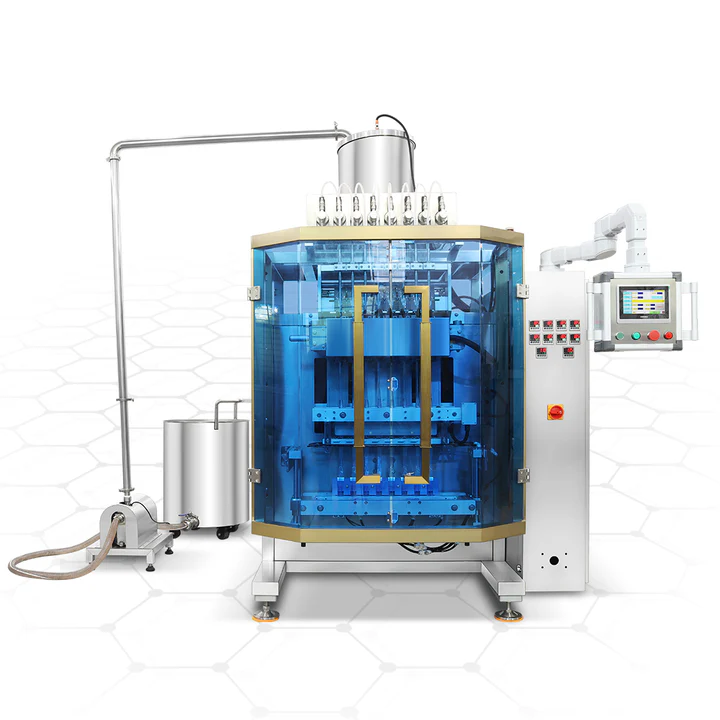
Narrow high-volume packReview multi-lane sachet or stick-pack machinery. Define lane pitch, total web, lane-to-lane sampling, strip or single-pack output and downstream handling.
Premium converted pouchReview a premade-pouch filler only where zipper, spout, gusset or shape justifies the pick-open-fill-seal process and higher pouch handling complexity.

From shortlist to purchase specification

Write acceptance criteria before the final machine is ordered

Define test conditions

Name the product batch or representative characteristics, dose, sachet dimensions, laminate, print registration, coding, utilities and operating environment. State whether the test includes normal product refill, film change, quality sampling and downstream equipment.

An output value is meaningful only when the accepted pack is defined. Record which dose, seal, code, registration, appearance and leak or integrity checks a pack must pass before it is counted.

Define evidence and ownership

List who supplies product, film, artwork, utilities, test equipment and approved methods. Request labelled retained samples, dose data, rejected-pack records and a run video showing the declared configuration.

Separate supplier factory testing from the checks repeated after delivery. Site conditions, upstream feed and downstream handling can change performance, so responsibilities for installation and site acceptance should be unambiguous.

Additional buyer questions

Machine-selection questions to resolve early

Should output be stated as machine cycles or accepted sachets?

Use accepted saleable packs over a defined period and record rejects, normal checks, refills and stops. Cycle rate can be useful, but it does not replace the commercial output definition.

Why should every product and pack format be declared before ordering?

The full matrix determines pumps, augers, forming sets, jaws, nozzles, recipes, cleaning and change parts. An undeclared extreme can sit outside the practical machine configuration.

What is the difference between a sachet and a premade pouch project?

A roll-stock sachet is formed and sealed on the machine; a premade pouch arrives already converted and must be picked and opened. The material supply, handling, cost and format options are different.

When should a stick pack be considered?

Consider it when a narrow single-serve format suits the dose and presentation. Lane pitch, back seal, print registration, cut or perforation and downstream strip handling should be defined.

Define the project around your product and pack

Ask Lancing Ltd to review the product and format matrix

Send all products, doses, sachet dimensions, films, required output and site constraints in one brief. The review can identify which machine route should be trialled and which assumptions need to be fixed before quotation.

Detailed selection path

Resolve the machine architecture, dosing method and line boundary in that order

A strong shortlist separates three decisions that are often mixed together: how the pack is made, how the product is dosed, and how the complete line is supplied and accepted.

1

Pack architecture

Choose roll-stock sachet, stick pack or premade pouch from the finished format, film supply and presentation. Then compare single-lane and multi-lane production.

Call 01494 623015 Get my machine recommendation