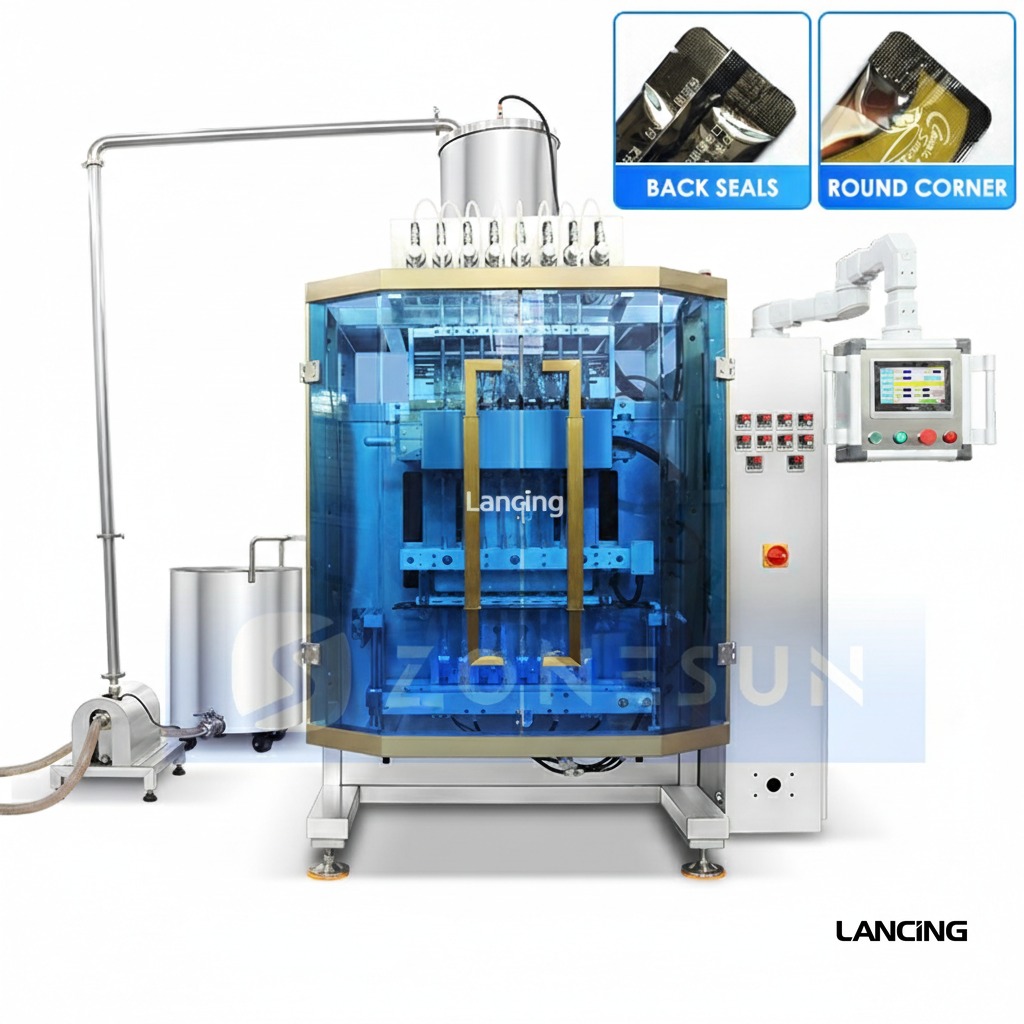
 LU-FSMP8
Eight-Lane Liquid Sachet Filling Machine
High-output multi-lane VFFS system with independent magnetic-pump dosing for narrow liquid sachets.
825–40/min/lane500 mm
View machine details
Machine category
A multi-lane sachet machine divides a wide web of film into several parallel packs. It can deliver a high total output from one machine footprint, but demands tighter control of film tracking, lane balance, dosing repeatability and seal quality.
Machine options
Choose the closest starting point below. We will confirm the final model against your product, sachet, film and required output.
LU-FSMP8High-output multi-lane VFFS system with independent magnetic-pump dosing for narrow liquid sachets.
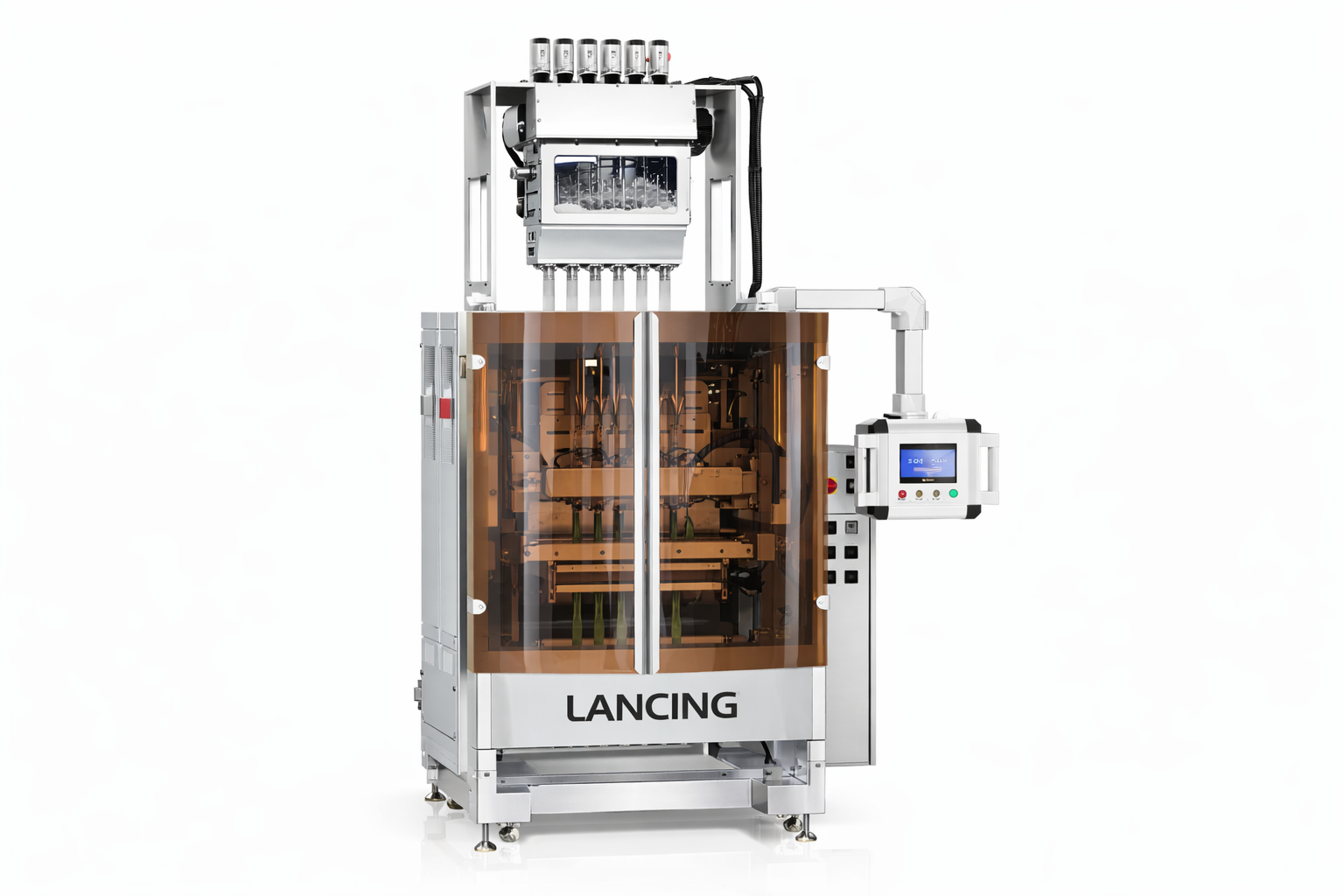 LU-FSFM6
Independent auger dosing across multiple lanes for high-output powder sachet production.
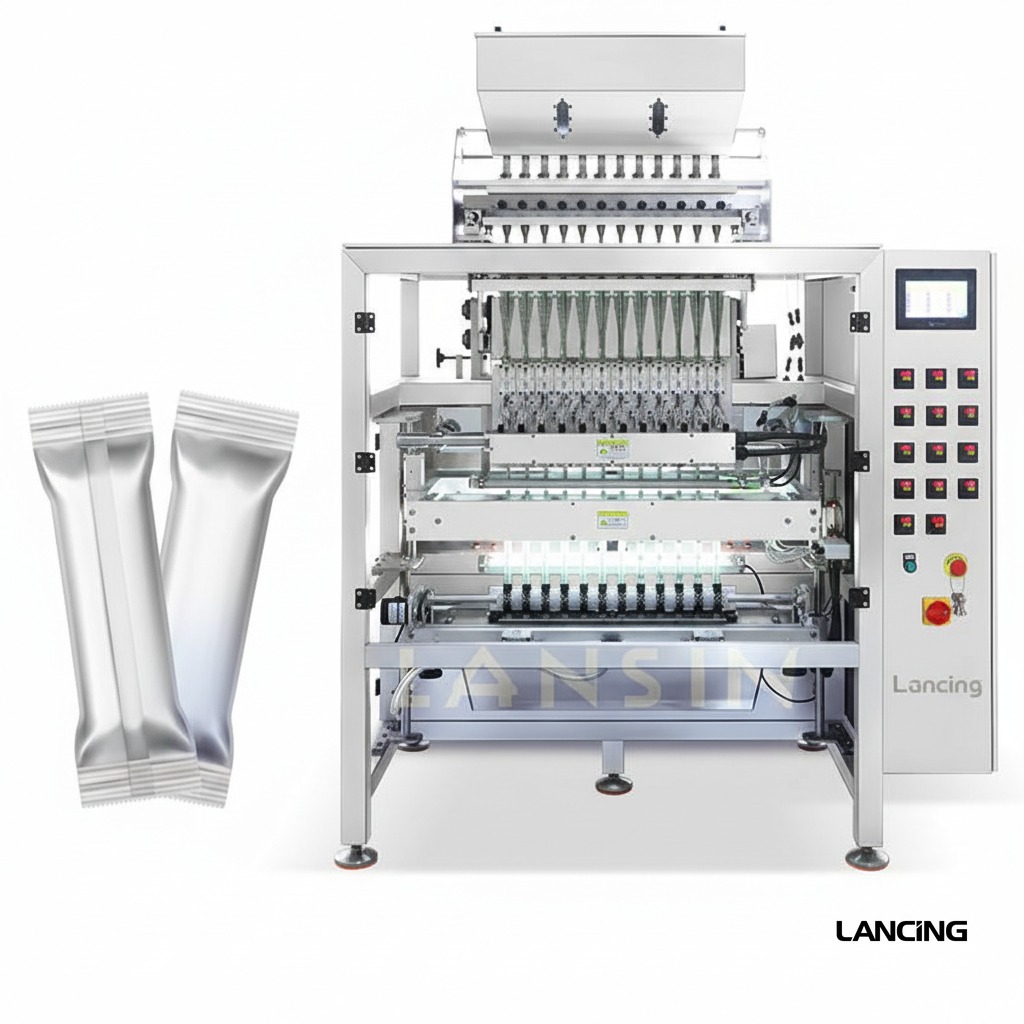 LU-FSL12
Twelve-lane VFFS system for compact, high-volume granule and small particulate sachets.
Per-lane speed is not the same as saleable output. Allow for active lanes, rejects, reel changes, cleaning, product replenishment and downstream collection. Overall equipment effectiveness is more useful than headline cycles.
Each lane should be commissioned and verified. Independent adjustment is valuable for powders and liquids because small mechanical or flow differences can accumulate across the web.
Several lanes can discharge hundreds of sachets per minute. Counting, collating, cartoning or bulk collection must keep pace without damaging seals or losing traceability.
Specification checklist
Common questions
The answer comes from required output, sachet width, film width, product dosing time, maintenance access and downstream capacity. More lanes are not automatically more economical.
Many systems can be designed to isolate or disable a lane, but the exact control and film implications should be confirmed before purchase.
They contain more dosing channels and seal interfaces, so cleaning effort can be higher. Tool-free removal, access and documented procedures are important.
Tell us about your product and pack
Send the product, target dose, sachet dimensions, film and required output. Lancing Ltd will review your application and recommend a practical machinery route before a detailed quotation.
Parallel production
A headline packs-per-minute figure can hide the engineering work required to keep every lane dosed, registered, sealed and cut consistently. The specification should state how each lane is checked and how rejected packs affect the claimed accepted output.
Finished pack width, longitudinal seal width, cutting allowance and edge trim determine the lane pitch and total film web. Printed film must match the actual lane layout, eye marks and repeat length. A film drawing should be approved before reels are ordered.
Independent pumps or augers need a verification method that identifies each lane. Average results across all packs can hide a consistently high or low channel. The trial plan should sample every lane after start-up, refill and normal adjustments.
Confirm whether the web is cut into individual packs, perforated strips or another arrangement. Downstream collection, counting, cartoning and inspection may limit the usable output even when the forming and filling section runs faster.
| Lane count | State the required total accepted output and the proposed number of lanes. Record per-lane output and the effect of an isolated or rejected lane. |
|---|---|
| Film artwork | Provide lane pitch, print repeat, eye marks, cross-cut position, back-seal location, tear notch and perforation requirements. |
| Product distribution | Define how product reaches each pump, auger or dosing channel and how equal supply is maintained across the machine. |
| Cleaning and changeover | Assess access to every lane, product-contact parts, manifolds, hoppers and sealing areas. Record the intended product and format change sequence. |
| Acceptance test | Sample every lane for dose and pack quality, record lane-specific faults and calculate accepted output after rejected packs and planned checks. |
Additional buyer questions
State both the indicative cycle rate per lane and the total accepted packs over a defined period. The result should identify rejects, stopped lanes, normal checks and the product, film and sachet configuration used.
Label samples by lane and test every channel using the agreed method. Sampling only mixed output can conceal a lane that is consistently outside the required tolerance.
Major changes to lane count usually affect the web path, dosing channels, forming and sealing tooling, cutting and controls. Future formats should be declared before the machine is designed.
Provide the laminate, total web width, lane pitch, print repeat, eye marks, longitudinal seal position, cross-cut, perforation and tear-notch details. An approved artwork and film drawing reduce commissioning risk.
The required response should be agreed in the controls and acceptance specification. Depending on the design, production may stop, the lane may be isolated or affected packs may need a defined reject method.
Define the project around your product and pack
Send the product, dose, finished stick or sachet drawing, total web and print information, required lane count, accepted output and downstream pack-handling method. Lancing Ltd can then review whether a multi-lane route is practical.
Define line behaviour before acceptance
Multi-lane output depends on more than the combined cycle rate. The controls specification should state what happens when one lane, the film web, coding, inspection or downstream handling cannot continue normally. The acceptance test can then prove that affected packs are identified and that production restarts in a controlled way.
| Event to define | Control and production decision | Acceptance evidence |
|---|---|---|
| Lane dose outside the agreed check | Decide whether the machine stops, the lane is isolated, settings can be corrected during a controlled hold, or packs from a defined period are segregated. | A deliberate or simulated fault showing the alarm, affected-lane identity, pack control and authorised restart. |
| Registration mark not read | Define the permitted correction, stop response and treatment of packs produced while artwork, seal, notch or cut position is uncertain. | Photocell fault demonstration and labelled samples before, during and after recovery. |
| Seal or cut fault on one lane | State whether the fault can be detected by lane, whether the complete web stops and how suspect strips or individual packs are prevented from joining accepted output. | Lane-labelled defect samples, alarm history and the agreed segregation or reject response. |
| Product feed or refill interruption | Define low-level warnings, refill sequence and whether dosing continues while product distribution to all lanes is restored. | Samples by lane around the refill, feed-status record and accepted-output calculation including the interruption. |
| Downstream blockage | Agree ready, running, blocked, fault and reset signals between the sachet machine and conveyors, counters, collators, checkweighers or cartoners. | An integrated stop-and-restart test showing that packs are not crushed, mixed, lost or counted twice. |
| Emergency or guarded stop | Define the safe stop, product and film state, restart checks and the first packs that must be inspected or segregated. | A documented restart sequence and traceable first-off samples after the stop. |
Record start and finish times, lane count, produced packs, rejected or segregated packs, stopped lanes, refill and reel events, normal quality checks and downstream stops. This makes the total traceable instead of relying on a displayed instantaneous rate.
Review the LU-FSMP8 liquid system, LU-FSFM6 powder platform or LU-FSL12 granule route, then use the trial guide to identify lane-specific samples and deviations.
Parallel-lane assurance
A multi-lane total is commercially useful only when every active lane produces an accepted pack. The web layout, dosing channels and quality evidence should retain lane identity.
| Lane map | Number lanes and show pitch, finished width, longitudinal seals, slit/cut/perforation, print, eye marks and variable-code areas. |
|---|---|
| Product distribution | Define common feed and lane-specific pumps, nozzles or augers; challenge refill, low level and a lane fault. |
| Dose sampling | Measure each lane separately across start-up, steady run and relevant operating events. Do not accept only a combined average. |
| Seal and registration | Retain lane-identified packs showing seal, cut and artwork position across the full web width. |
| Coding | Map print heads or code positions to lanes and confirm content, position and verification after stop/restart. |
| Disabled-lane response | Agree what the machine, film and downstream process do when one lane is unavailable or outside acceptance. |
| Accepted output | Count saleable packs under declared product, film, active-lane, refill, inspection and downstream conditions. |
Balance parallel output against campaign flexibility, sampling, changeover and resilience.
Control web width, pitch, seals, artwork, registration, code and cut positions in one drawing.
Define sample identity, integrity tests, inspection, pack tracking and rejection.
Lane-control questions
Report the active lane count, reason for the stopped lane, duration and accepted packs produced rather than presenting only the theoretical full-lane total.
The acceptance plan should state whether production may continue with a disabled lane, how missing positions are handled downstream and when the condition becomes a failed test.
Lane balance means comparing dose, seal, registration, code and reject performance by lane so one weak channel is not hidden by a combined average.
Samples and records must retain lane identity. The test should also cover common events such as refill, reel change, stop and restart because distribution can shift during transients.
The line design should preserve or recreate lane identity until the quality decision and reject action are complete.
Depending on the discharge pattern, that may require lane-separated chutes, timed tracking, vision or a controlled collation sequence. The method must be agreed before sachets are mixed in a common conveyor or counting system.
Additional lanes add little saleable output when the discharge, counting, cartoning or manual packing process cannot accept the pack pattern reliably.
Assess the whole line at the intended strip or single-pack presentation. Include accumulation, reject recovery and restart behaviour rather than comparing only the sachet machine’s nominal cycles.
Turn the answer into a testable machine brief
Include representative product, dose range, sachet dimensions, film or artwork data, required accepted output and any cleaning, coding, inspection or line-integration requirements. Lancing Ltd can then assess the machine route against the real production case.