
The direct answer
Sachet filling machine output is controlled by the slowest reliable part of the complete process: product feed, dosing, film advance, sealing, coding, inspection, cutting or downstream handling. A useful output figure counts conforming packs over an agreed period and records the conditions, rather than quoting only the fastest instantaneous machine setting.
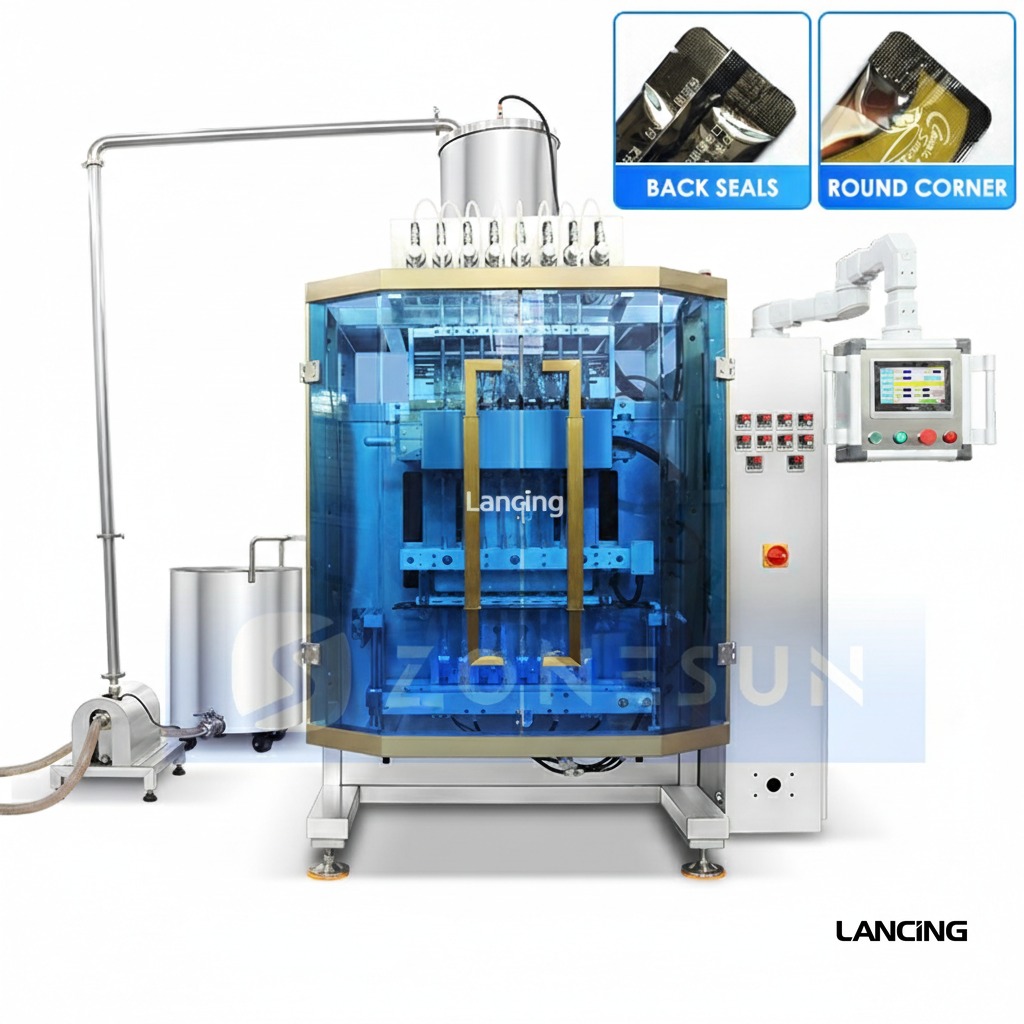
For multi-lane equipment, total potential output is the result of active lanes and the stable lane rate, but accepted output must also account for lane imbalance, disabled lanes, rejects and the way finished packs are counted or collated. The test method should be written before quotations are compared.
What is accepted output?
Accepted output is the number of finished sachets that meet the agreed dose, seal, registration, code, cut and appearance criteria during the declared test period.
The definition should state how start-up packs, planned samples, normal replenishment, reel changes, rejects, stopped lanes and downstream interruptions are treated. It may be reported per minute, per hour or per batch, but the time basis and acceptance rules must be clear. Counting every machine cycle can overstate production when packs are later rejected or held.
How is total output calculated on a multi-lane machine?
The theoretical total is active lanes multiplied by the stable per-lane production rate, but the accepted total is the number of conforming packs that actually leave the agreed line boundary.
Record lane count, lane identity, any disabled lane and the downstream presentation. A combined weight or quality average can hide one weak lane, so dose, seal, registration and code evidence should be reviewed by lane before the totals are combined.
Why is cycle speed not the same as saleable packs per minute?
A cycle can produce an empty, underweight, contaminated, poorly registered or unverified sachet, so machine movement is not the same as released product.
Cycle rate may also be limited by the dosing system or by seal dwell, film control, coding and inspection. Downstream counting or cartoning may force controlled pauses. Compare the complete system at the intended product and pack condition, and state whether the result is gross cycles, discharged packs or accepted saleable packs.
Which planned activities belong in an output test?
Include the normal activities that materially affect production during the period being represented, such as product refill, film reel change, quality sampling, code checks and expected downstream stops.
A short factory demonstration may reasonably exclude a long cleaning change, but the exclusion should be explicit. For a campaign or shift capacity estimate, changeover, cleaning, line clearance and start-up waste may be commercially significant. Use separate figures where one test cannot represent every operating horizon.
When can a slower setting produce more accepted packs?
A slower setting can produce more accepted output when it gives the product time to dose and settle, keeps seals clean, stabilises registration, improves code quality or prevents downstream jams.
The fastest setpoint is not useful if it creates rejects, repeated stops or manual rework. Test a controlled range and compare accepted packs, product giveaway, waste and interventions. The selected operating point should have process margin, not sit at the edge of failure.
Output-test worksheet
| Test field | What to record | Why it matters |
|---|---|---|
| Inputs | Product batch/condition, film reel, sachet, code and recipe | Links the result to the proposed production case |
| Line state | Active lanes, filler, inspection, discharge and downstream equipment | Prevents a partial-line result being presented as full-line capacity |
| Time basis | Start/end time, warm-up, planned exclusions and interruptions | Makes calculations repeatable |
| Gross output | Total packs or cycles produced | Shows machine activity |
| Rejects/holds | Count by reason and lane where relevant | Converts activity into accepted production |
| Accepted output | Packs meeting all agreed criteria | Provides the commercial comparison |
Information to provide
- Accepted packs required over the relevant minute, hour, campaign or shift period.
- Product, dose and pack combinations that must achieve the result.
- Normal refill, reel, sample, code-check and downstream operating pattern.
- Whether packs leave as singles, strips, counted batches or directly into a secondary packer.
- The quality criteria that determine accepted, rejected and held packs.
- How disabled lanes, changeovers and start-up production will be reported.