 LUFS200D1
Liquid VFFS Sachet Filling Machine
Compact piston-pump VFFS platform for sauces, syrups, gels and other flowable products.
5–100 mlPiston pumpBack / 3-side / 4-side
View machine details
Sachet machinery range
Compare liquid, paste, powder and granule machines by dosing method, sachet format and output. Send your product details when you are ready for a focused shortlist.
Use the machine options below to narrow the field, then send your product, dose, sachet and output target for a practical recommendation.
LUFS200D1Compact piston-pump VFFS platform for sauces, syrups, gels and other flowable products.
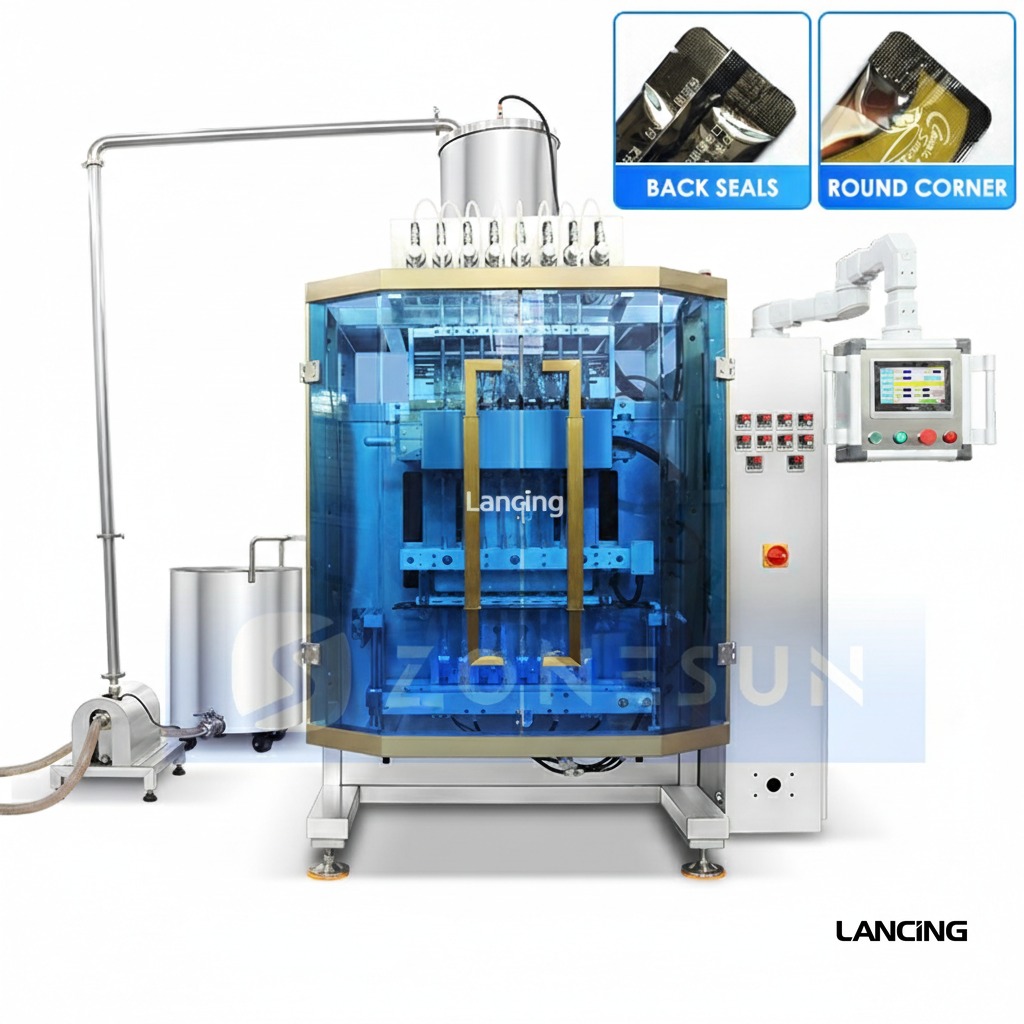 LU-FSMP8
High-output multi-lane VFFS system with independent magnetic-pump dosing for narrow liquid sachets.
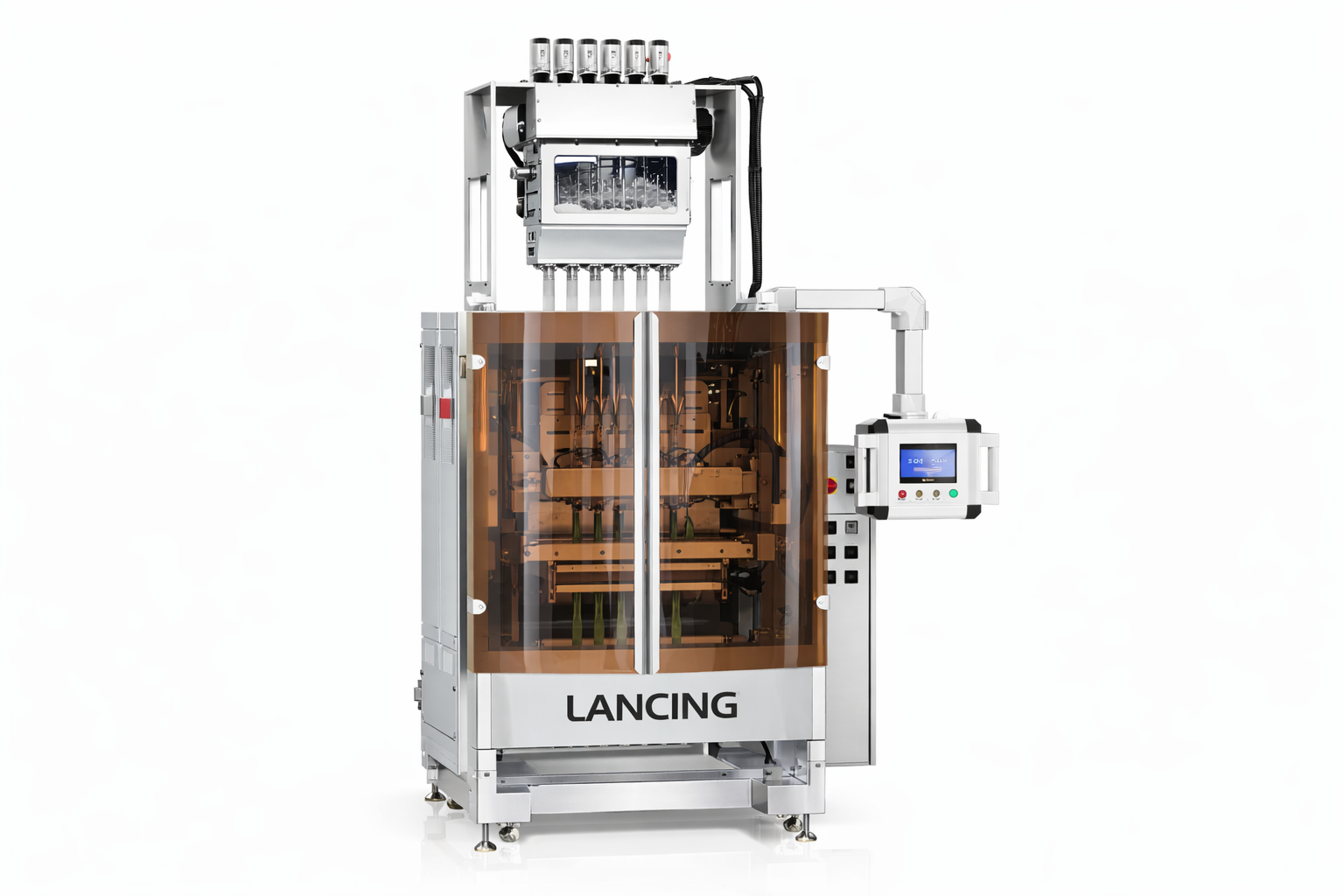 LU-FSFM6
Independent auger dosing across multiple lanes for high-output powder sachet production.
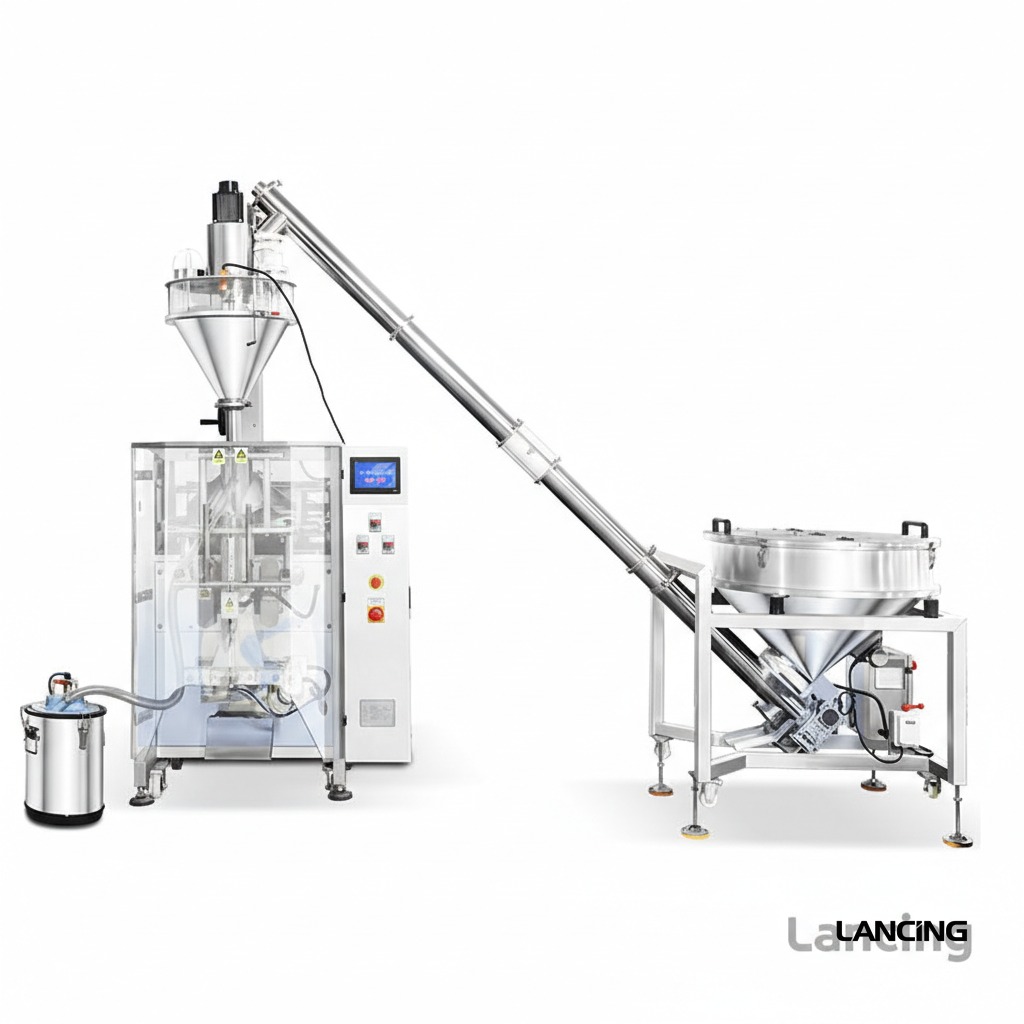 LU-FS06
Flexible single-lane auger VFFS platform for powder packs from small sachets to larger bags.
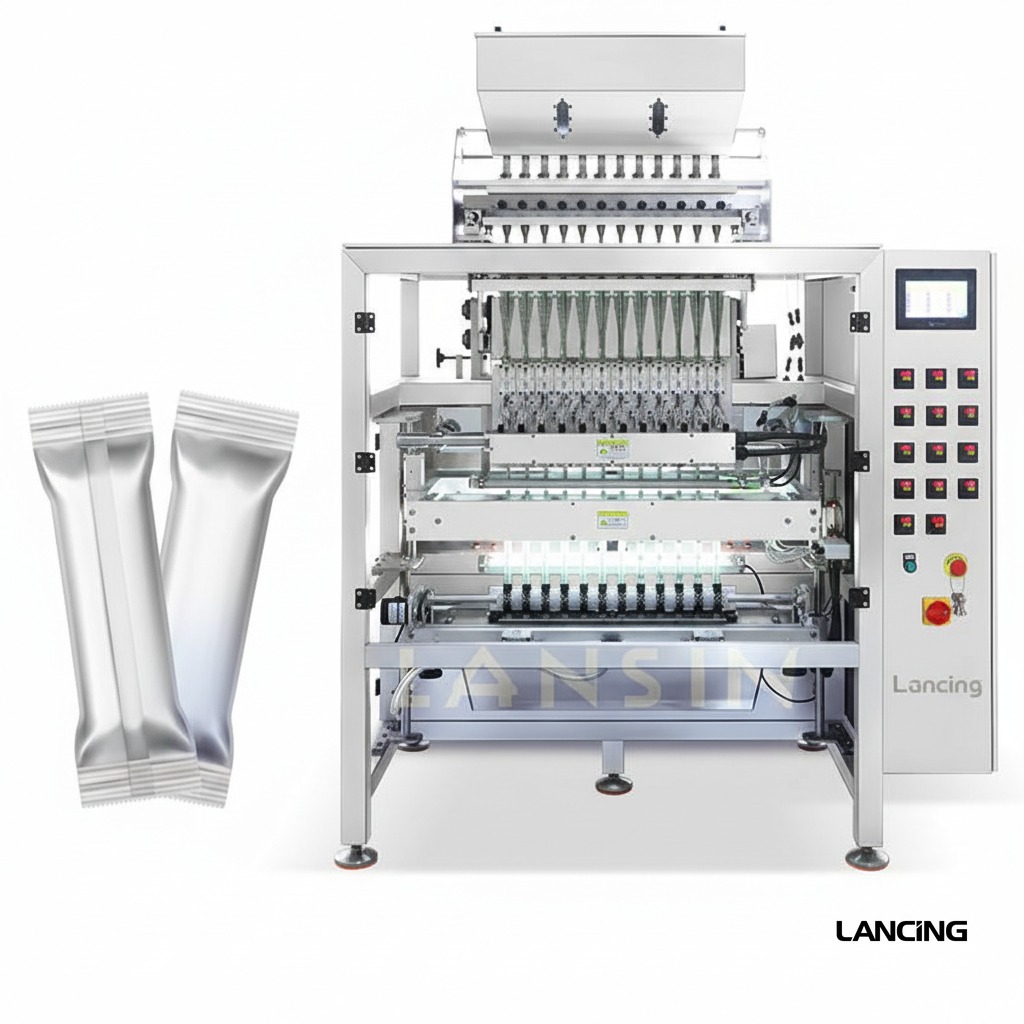 LU-FSL12
Twelve-lane VFFS system for compact, high-volume granule and small particulate sachets.
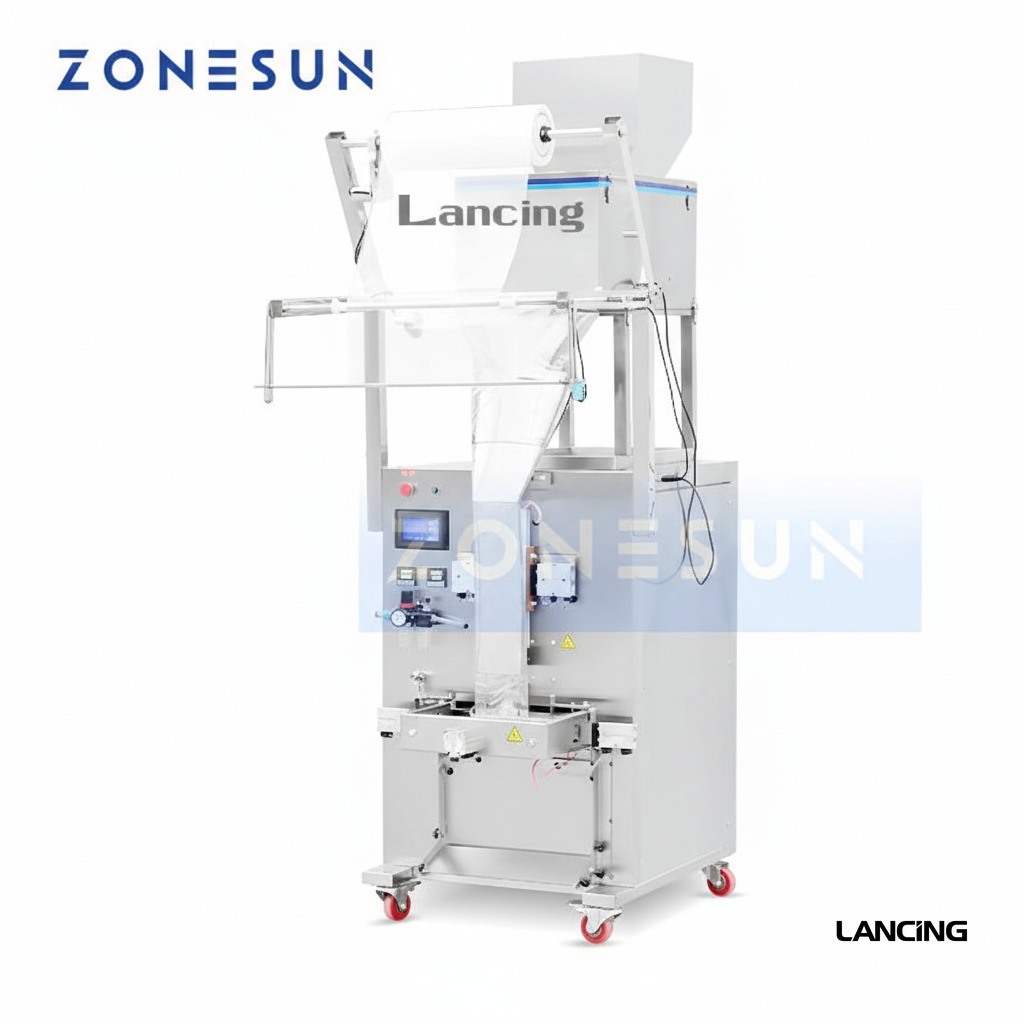 LU-FSK1000
Compact weigh-fill-seal machine for free-flowing granules and small production environments.
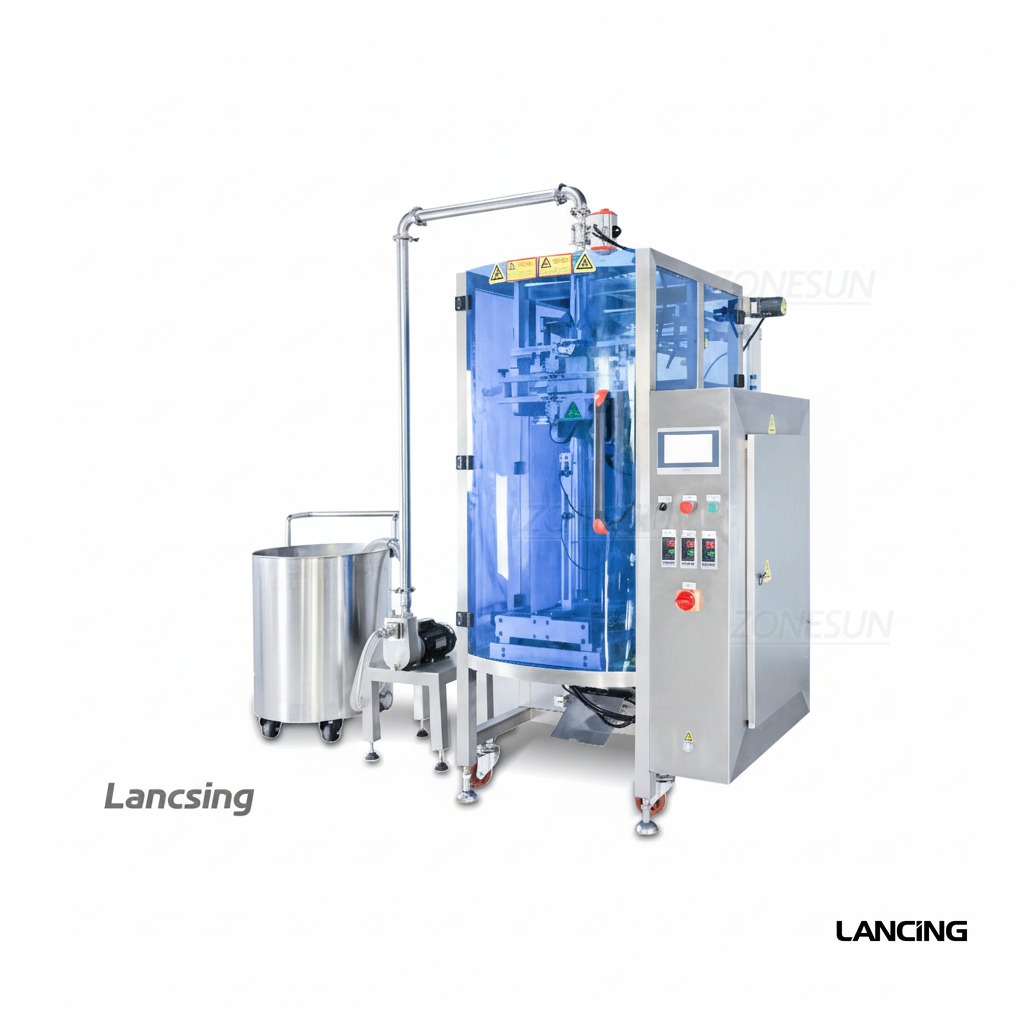 LU-420GSY
Automatic pump-fed VFFS machine for larger liquid and paste sachets or bags.
 LUAFS03
Rotary premade-pouch system with twin piston-pump filling for larger liquid and paste packs.
 LUFM1000
Space-efficient vertical form fill and seal machine for measured powder or granule packs.
Piston and magnetic-pump systems for flowable products.
Auger dosing for cohesive, aerated and dusty products.
Weighing and volumetric routes for free-flowing pieces.
Parallel dosing lanes for high total production output.
Roll-stock forming, filling, sealing and cutting in one line.
Pick, open, fill and seal converted pouches.
Common questions
The main groups are liquid and paste, powder, granule, multi-lane VFFS, compact VFFS and premade pouch equipment. Dosing technology is the key distinction.
Sachet dimensions, dosing range, product-contact parts, coding, inspection and line integration can often be configured around a defined application.
Published speeds are starting points. Your confirmed output should be agreed against the actual product, film, sachet format and acceptance test.
Tell us about your product and pack
Send the product, target dose, sachet dimensions, film and required output. Lancing Ltd will review your application and recommend a practical machinery route before a detailed quotation.
Machine selector
Two products that share the same sachet size may need very different filling equipment. Use the table to identify the engineering questions that separate liquid, paste, powder, granule, stick-pack and premade-pouch projects.
| Free-flowing liquid | Confirm viscosity at filling temperature, foaming, chemical compatibility and required cut-off. Compare a single-lane VFFS route with a liquid sachet machine or multi-lane system. |
|---|---|
| Viscous paste or gel | Check pressure, stringing, particles, nozzle closure, product feed and cleaning. Start with the paste sachet filling machine guide. |
| Fine or cohesive powder | Measure bulk density and describe aeration, dust and flow. Auger selection, agitation and seal-area control are covered under powder sachet machines. |
| Free-flowing granule | State particle-size range, fragility, segregation and target weight. Compare weigh and multi-lane routes under granule sachet machines. |
| Narrow single-serve pack | Define stick width, length, back-seal position, tear notch, print repeat and whether packs leave as strips or singles. Review stick pack machines. |
| Converted premium pouch | Provide actual pouch samples and identify zipper, gusset, spout or shape. Compare the adjacent premade pouch route without treating it as the same process as roll-stock sachets. |
State the saleable packs required over a defined period and whether the figure includes normal film changes, product refilling, cleaning, coding checks and downstream handling. For multi-lane equipment, record both per-lane and total accepted output.
Request representative product and film trials, sample packs, dose records, seal and leak checks where relevant, and a run video showing the declared configuration. Use the trial and acceptance guide to make the evidence comparable.
Define the project around your product and pack
Send one representative product description, the target dose, finished pack dimensions, film information and required accepted output. Include all formats you expect the machine to run so the shortlist reflects real changeover requirements.
Compare the complete working scope
A model comparison is incomplete until the product feed, film tooling, coding, inspection, discharge handling and commissioning scope are defined. These interfaces can decide whether the quoted equipment arrives as a usable production system or as a base machine that still needs substantial project work.
| Supply boundary | Questions to settle before order | Evidence to request |
|---|---|---|
| Product supply | How does product reach the dosing unit, what working level or pressure is required, and who supplies transfer pumps, hoppers, agitation, heating, extraction or level control? | A line sketch, interface list and trial using the proposed feed condition rather than a manually maintained demonstration setup. |
| Film and tooling | Which forming parts, lane tooling, seal jaws, cutters, notch or perforation tools and reel-handling items are included for each approved format? | A format matrix that identifies recipe changes, change parts, separate tooling and any format that has not been proven. |
| Coding and registration | What coder is proposed, where is the print zone, how is the registration mark read, and are code presence, readability or artwork position checked? | An approved artwork or web drawing plus samples showing the code, seal, notch and cut in their intended positions. |
| Inspection and reject handling | Which dose, seal, code, registration or metal-detection checks are included, and how are suspect packs segregated without mixing them with accepted output? | A functional description and an acceptance test that deliberately demonstrates the agreed fault and reject response. |
| Discharge and downstream | Do packs leave individually, connected, perforated or in strips, and can conveyors, counters, collators, checkweighers or cartoners accept the presentation? | A timed integrated run that includes the actual discharge arrangement rather than testing the packer in isolation. |
| Site and handover | Who provides utilities, guarding interfaces, installation, commissioning, operator training, spares, manuals and the records needed for the customer’s quality system? | A responsibility schedule tied to the quotation and the trial and acceptance record. |
This website owns roll-stock sachet and stick-pack selection. Broader vertical bag machinery belongs on Form Fill and Seal UK, standalone powder dosing on Powder Fillers UK, and converted premade-pouch projects on Pouch Fillers UK.
Use one controlled schedule and require included, optional, customer-supplied and excluded items to be identified. The sachet machine quotation checklist provides a practical structure for the comparison.
Configuration selector
The same dose can be packed by different architectures. Use the product, format, campaign and accepted-output requirement to decide which route deserves a representative trial.
| Small sachet packing machine | Use when compact finished dimensions or a low dose drive the project. Confirm usable internal volume, seal protection, printed repeat and coding space. |
|---|---|
| Single-lane VFFS | One pack path can suit flexible campaigns, product development and formats where access and changeover matter more than parallel output. |
| Multi-lane sachet system | Parallel lanes can support higher total output where demand is stable. Define lane pitch, individual-lane dosing and sampling, slit/cut layout and downstream flow. |
| Stick-pack system | A narrow back-seal format can suit single-serve presentation. Confirm dose geometry, longitudinal seal, lane layout, cut/perforation and strip handling. |
| Roll-stock VFFS | Forms and seals packs from a film web. Define reel, web, forming, seal pattern, registration, code and material runnability. |
| Premade pouch filler | Uses converted pouches rather than forming from roll stock. Consider when shape, zipper, spout or premium presentation justifies separate pouch handling. |
Use the same product, film, accepted-pack definition, operating period and line boundary on both quotations.
Connect product behaviour and feed conditions to the pump, piston, auger, weighing or other route that needs testing.
Give the converter and machine supplier one approved drawing for dimensions, seals, lane pitch, artwork and registration.
Machine-selection questions
Select the product-dosing route and the finished pack as one system rather than treating either as an isolated first decision.
The dose must fit inside the usable pack volume without contaminating the seals, while the forming and sealing route must accommodate the dosing device, product drop and required headspace. A trial may show that the original pack size or filler assumption needs adjustment.
Campaign length changes the value of output, changeover time, cleaning access, start-up waste and redundancy.
A flexible single-lane machine may suit frequent short runs even when a multi-lane platform has greater theoretical capacity. For long stable campaigns, parallel lanes can be valuable if product feed and downstream handling sustain them.
A modular line can be preferable when dosing, inspection or secondary packing must change independently, or when a fault in one function should not force replacement of the whole system.
An integrated machine can simplify footprint and controls, but the supply boundary, access, safe interfaces, spare strategy and future format changes still need to be defined. The right answer depends on the real process rather than a general preference.
A useful recommendation should identify the assumed product and film, dosing principle, pack geometry, line boundary, test conditions and any points that still need trials.
Reference images or headline speeds are not enough. Ask which sample, drawing, material data and acceptance checks support the proposed route and which claims remain conditional on testing.
Turn the answer into a testable machine brief
Include representative product, dose range, sachet dimensions, film or artwork data, required accepted output and any cleaning, coding, inspection or line-integration requirements. Lancing Ltd can then assess the machine route against the real production case.
New verified liquid model
The Lancing LU-GJH1000 is a verified roll-fed route for 50–500 ml drinking-water sachets and other approved free-flowing liquids using single-layer PE film and a back/centre seal.
Review the model against the real water feed, finished sachet, film, coding, output and downstream collection plan rather than relying on the range alone.
Choose by pack and process
Confirm the finished drawing and web architecture before assuming a machine family can make the requested format.
Declare the temperature at the nozzle and how the product changes through transfer, pauses and cooling.
Define notch, perforation, cut and downstream presentation as part of the machine specification.