 LUFS200D1
Liquid VFFS Sachet Filling Machine
Compact piston-pump VFFS platform for sauces, syrups, gels and other flowable products.
5–100 mlPiston pumpBack / 3-side / 4-side
View machine details
Automatic pump-fed VFFS machine for larger liquid and paste sachets or bags.
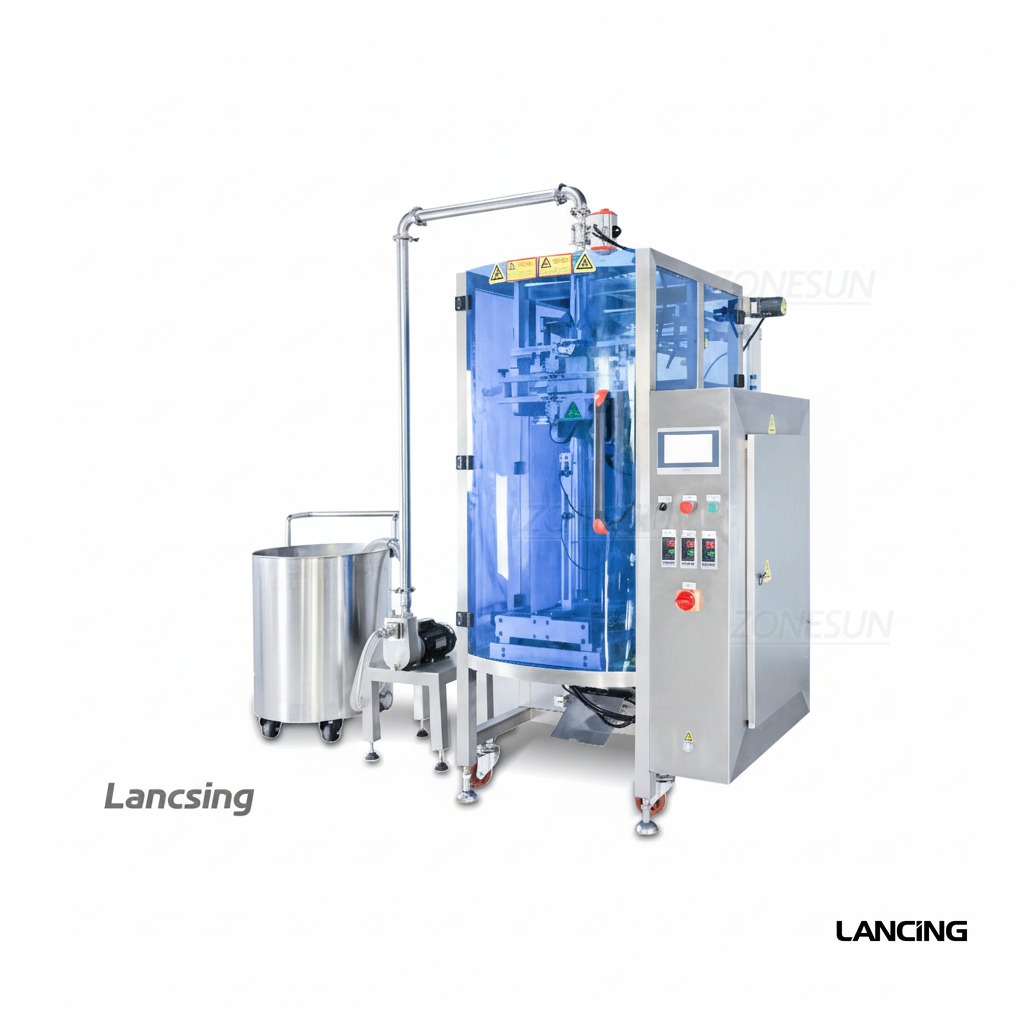
Machine overview
The LU-420GSY addresses liquid and paste packs above the smallest single-dose format. A product tank and feed pump supply the dosing system while the VFFS section forms, fills and seals the pack from roll stock.
Published specification
| Electrical supply | 380 V, 50–60 Hz |
|---|---|
| Power | Approximately 5 kW |
| Reference fill range | Approximately 100–1000 ml, customisable |
| Indicative output | Approximately 30–45 bags per minute |
| Reference bag length | 50–400 mm |
| Reference bag width | 60–200 mm |
| Approximate machine weight | 450 kg |
| Typical products | Sauces, oils, gels, cosmetics and compatible chemical liquids |
Reference figures are configuration-dependent and must be confirmed for the product, pack and utilities.
Configure the line
Performance validation
Target output and dose repeatability are affected by product flow, environmental conditions, sachet length, film sealing window, changeover and quality-control settings. Supply representative product and production film for a meaningful test.
Related machinery
LUFS200D1Compact piston-pump VFFS platform for sauces, syrups, gels and other flowable products.
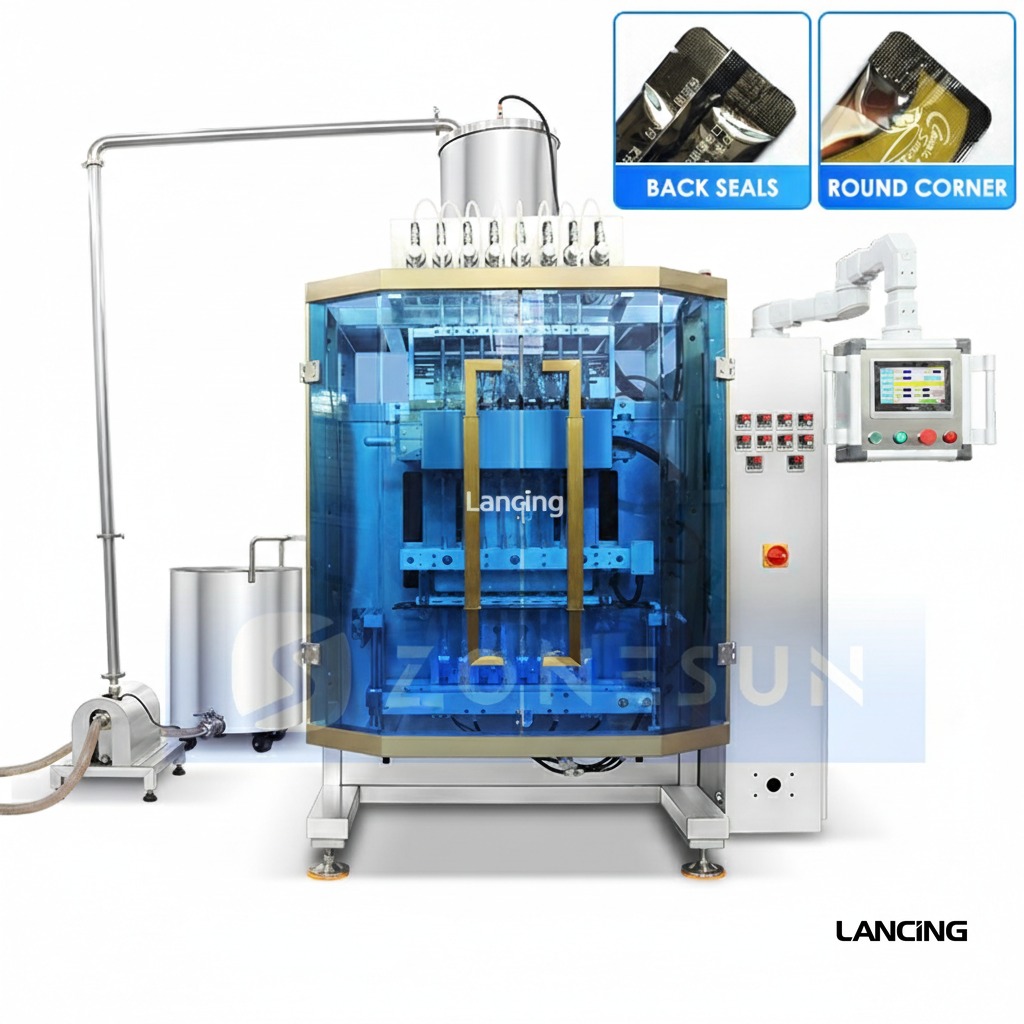 LU-FSMP8
High-output multi-lane VFFS system with independent magnetic-pump dosing for narrow liquid sachets.
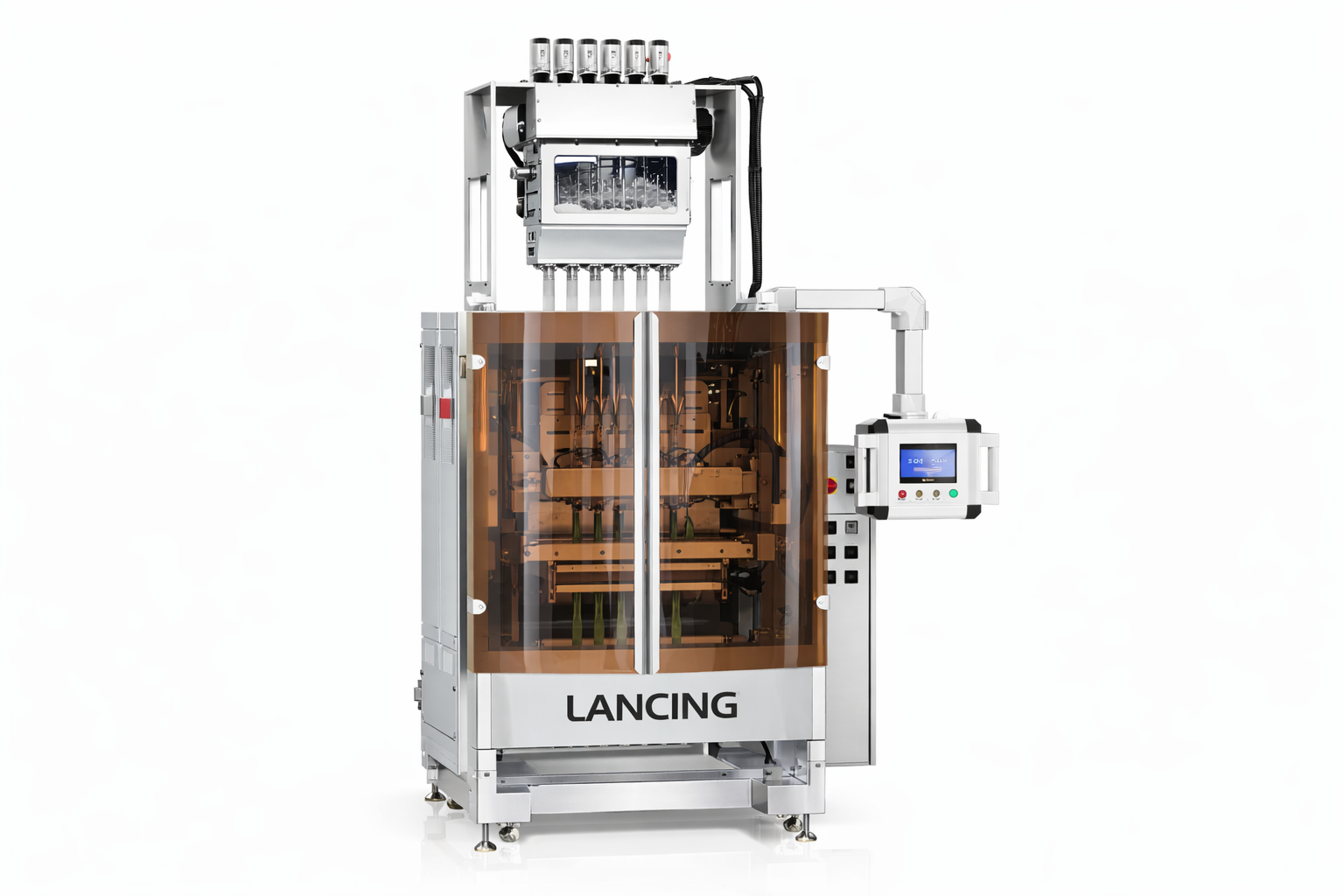 LU-FSFM6
Independent auger dosing across multiple lanes for high-output powder sachet production.
Common questions
The LU-420GSY is positioned for larger reference doses and wider packs, while the LUFS200D1 focuses on compact 5–100 ml sachets.
Potentially, subject to product temperature, film, seals, tank and hose specification. Hot-fill duty must be declared during engineering review.
Temperature and batch variation can change product flow. Agitation, heating, pump selection and recipe control may be needed to maintain repeatability.
Tell us about your product and pack
Send the product, target dose, sachet dimensions, film and required output. Lancing Ltd will review your application and recommend a practical machinery route before a detailed quotation.
Production specification for LU-420GSY
The published 100–1000 ml reference places this configuration in a larger liquid and paste pack range. Product pressure, temperature, particles, nozzle cut-off and the forming path must be balanced so the dose enters the pack cleanly and leaves an uncontaminated cross seal.
Viscous products can change with temperature, residence time and shear. A feed pump and tank that appear adequate in a short test can behave differently during a longer run or after a pause. The trial should therefore record product condition and should include normal start-stop and refill behaviour.
Larger doses also need enough time and headspace for product to settle below the cross seal. Nozzle placement, fill profile and bag support should prevent splash, smear or product pressure from distorting the pack while the jaws close.
| Product-feed test | Run the intended tank and transfer arrangement and record pressure, temperature and behaviour through normal stops and replenishment. |
|---|---|
| Dose matrix | Test the lowest, typical and highest commercial doses using the agreed measurement method. |
| Pack geometry | Run the critical width and length combinations and verify fill level, headspace, bag support, cut and presentation. |
| Seal integrity | Inspect for smear or trapped product and apply the agreed integrity or leak-test method after any required conditioning. |
| Accepted output | Count saleable bags under declared product-feed, coding and inspection conditions, including normal reject handling. |
Small doses and flat sample packs can favour a compact piston VFFS machine. A zipper, spout, gusset or premium converted shape may justify a premade-pouch filler instead of a reel-fed bag.
A useful trial record identifies the product and film batches, dose setting, sachet dimensions, forming and sealing parts, coding setup, operating speed, stops, rejected packs and quality checks. Retained samples should be labelled so results can be traced to the lane, recipe or test condition where relevant.
The final quotation and acceptance schedule should distinguish indicative catalogue references from the values that will be demonstrated with the agreed product, pack and utilities.
Additional buyer questions
It may be possible if the pump, valves, hoses and nozzle pass the largest pieces reliably. Provide particle dimensions and concentration and prove cut-off and seal cleanliness with the actual product.
Temperature can change viscosity, pressure, dose behaviour, cut-off and film sealing. The intended operating range should be included in trials and the final specification.
The reference range does not mean every product covers both extremes with one set of parts. Piston, pump, nozzle, bag format and cycle time must be checked for each commercial dose.
The pack owner should choose a method appropriate to the product, laminate, seal and distribution risk. The trial then records test conditions and retains traceable samples.
Define the project around your product and pack
Provide representative product, every required dose and sachet size, film details, accepted output, utilities, cleaning and inspection requirements. Lancing Ltd can then confirm whether the LU-420GSY is the correct starting point and define the trial scope.