Tell us what you need to pack — product, dose, sachet size and target output.

Machine category

Paste Sachet Filling Machines for Creams, Gels and Sauces

Paste sachet projects are governed by product behaviour at the pump, nozzle and seal. Viscosity, temperature, particles, stringing, aeration and cleaning determine whether the product can be dosed cleanly into a reel-fed sachet and sealed without contamination.

Verified machinery starting points

Compare paste-compatible VFFS configurations

These machines are starting points from the current Lancing range. The final dosing system, product feed, sachet and accepted output must be confirmed against representative product and film.

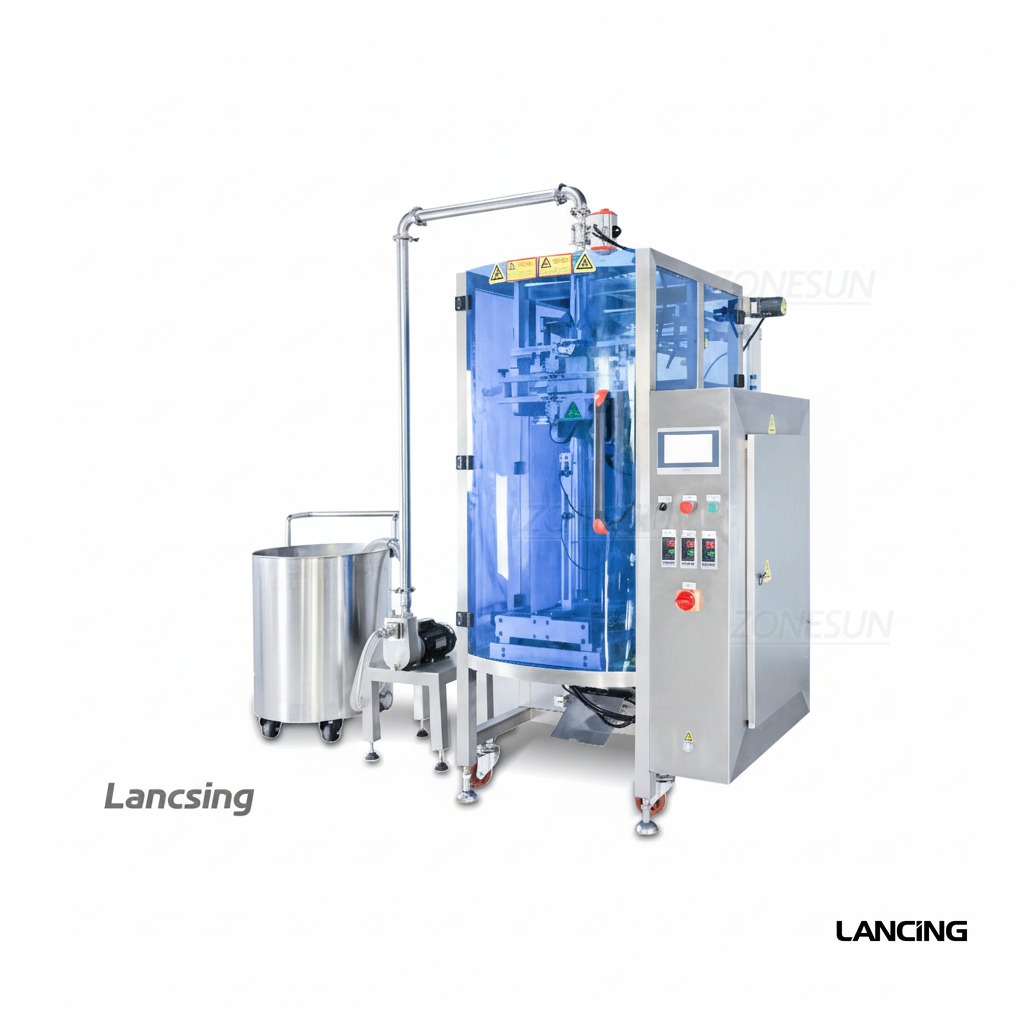
Automatic pump-fed vertical form fill seal machine for larger liquid and paste packsLU-420GSY

Liquid and Paste VFFS Machine

A pump-fed VFFS option for larger compatible liquid and paste packs, subject to confirmation of product feed, film, seal and finished-pack requirements.

100–1000 mlPump-fedLarger VFFS packs
View machine details

Engineer the dose and the seal together

Control product tails, headspace and seal contamination

A paste can be accurately displaced by the pump yet still make an unacceptable sachet if the nozzle strings, the pack has insufficient headspace or product reaches the cross seal. The complete fill cycle needs to be tested rather than considering the dosing unit in isolation.

Define rheology and temperature

State viscosity at the intended filling temperature, whether the product is shear-sensitive, aerated, thixotropic or liable to separate, and whether particles or fibres can obstruct the valve or nozzle. Product name alone is not a sufficient specification.

Choose feed and cut-off controls

Confirm how product reaches the machine, how hopper level or pressure is controlled and how the nozzle stops the dose. Suck-back, shut-off geometry, nozzle height and timing may be needed to prevent drips or strings.

Design for cleaning and access

Document product-contact materials, strip-down points, drainability, flushing or clean-out method, changeover boundary and safe access. Where several formulations run, include cross-contamination and allergen requirements.

Quotation and trial inputs

Information needed before a paste sachet machine can be selected

ProductRepresentative sample, density, viscosity at operating temperature, particles, fibres, foaming, aeration, stringing, separation and material compatibility.
Dose and controlNominal dose, permitted range, how it will be measured, sample frequency and whether product temperature or density must be recorded with each test.
Sachet and filmFinished dimensions, headspace, seal style and width, tear notch, laminate, reel data, print repeat, registration mark and code position.
Product feedSource vessel, transfer distance and height, temperature control, agitation, level sensing, hose route and the boundary between site and machine supply.
Acceptance evidenceRecorded trial settings, labelled dose samples, packs from start-up and stable operation, seal or leak checks, print and code checks and a run video tied to the test record.

Buyer questions

Paste sachet filling machine FAQs

What information is needed to assess a paste sachet application?

Provide representative product, viscosity over the operating temperature range, particles, stringing or aeration, nominal dose, finished sachet, film, output, cleaning method and the test used to judge dose and seal integrity.

Why can paste contaminate the sachet seal?

A viscous tail, drip, string or overfilled pack can reach the cross-seal area. Nozzle cut-off, suck-back, fill timing, headspace and pack geometry should be assessed together with the actual product.

Can one paste sachet machine run products with different viscosities?

It may be possible, but pump, nozzle, feed, temperature and cleaning requirements can change substantially. Every intended formulation and operating condition should be declared and the demanding products included in trials.

How is a paste dose checked?

Agree whether production control is by weight, volume or another validated method, then define sample size, tolerance and test conditions. Density, temperature and entrained air can affect the relationship between volume and weight.

What should be checked during a paste sachet film trial?

Check dose repeatability, nozzle behaviour, product on the seal, seal appearance and integrity, print registration, code, cut, opening feature and finished-pack handling under recorded settings.

When is a premade pouch route more appropriate?

A premade pouch may be preferable for larger packs, gussets, zippers or premium pack features. For small reel-fed sachets, VFFS normally remains the more direct comparison.

Define the project around your product and pack

Send your paste, dose and finished-sachet requirement

Provide representative product, operating temperature, dose and tolerance, sachet dimensions, film, output, feed, cleaning, coding and integrity-test requirements. Lancing Ltd can define the machinery and trial route around the real application.

Paste and gel trial plan

Control viscosity, product feed and nozzle cut-off—not only nominal dose

Creams, gels, sauces and other viscous products can string, trap air, carry particles or change flow with temperature. Those behaviours determine the filling and cleaning arrangement.

Define the full flow range

Provide viscosity or a practical flow description at minimum, normal and maximum operating temperature. State particles, fibres, foaming, settling, shear sensitivity and whether the product needs agitation or recirculation.

Trials should reproduce tank level, pump pressure and refill. A warm production product may fill differently after a pause or as it cools in the feed path.

Evaluate cut-off and cleanability

Check the nozzle at dose completion, including strings, tails or drips that can enter the seal. Confirm contact-part materials, dismantling, drain-down, cleaning agents and drying against the actual formulation.

Use retained packs to assess dose, visible seal contamination and the agreed integrity method after representative stop and restart conditions.

Paste-filling questions

Questions to answer for creams, gels and stringy products

What is stringing and why does it matter in sachet filling?

Stringing is the formation of a product filament after the nominal dose has ended, which can pull material from the nozzle into the seal area.

The effect depends on formulation, temperature, shear history, nozzle geometry, closure action and suck-back. It must be observed through repeated cycles because a single hand-dispensed sample may not show the production behaviour.

Review thick-product cut-off and trial planning.

How can product temperature change paste filling?

Temperature can change viscosity, pressure drop, dose response, tailing and the time needed for product to settle clear of the seal.

Declare the production temperature range and how it is controlled. A trial at an easier ambient condition may select the wrong nozzle, valve or timing for routine operation.

Compare dosing systems using real product conditions.

When is a larger nozzle not the answer?

A larger nozzle may reduce restriction, but it can also increase product drop, require more headspace and worsen cut-off or seal contamination.

Nozzle size must be considered with valve closure, dose volume, pack opening, particles and the time between dosing and cross sealing. Trial geometry should represent the intended sachet rather than an open container.

Connect nozzle cut-off to seal protection.

What should be checked after a paste product changeover?

Confirm line clearance, cleaning completion, correct product-contact parts, recipe, priming, dose, nozzle cut-off and seal cleanliness before releasing production.

Colour, fragrance or active residues may be visible at very low levels, while trapped air after reassembly can disturb the first doses. Define how start-up packs are segregated and when the line is considered stable.

Plan controlled cleaning and changeover evidence.

Turn the answer into a testable machine brief

Send the product, finished sachet and operating conditions behind the question

Include representative product, dose range, sachet dimensions, film or artwork data, required accepted output and any cleaning, coding, inspection or line-integration requirements. Lancing Ltd can then assess the machine route against the real production case.

Call 01494 623015 Get my machine recommendation