
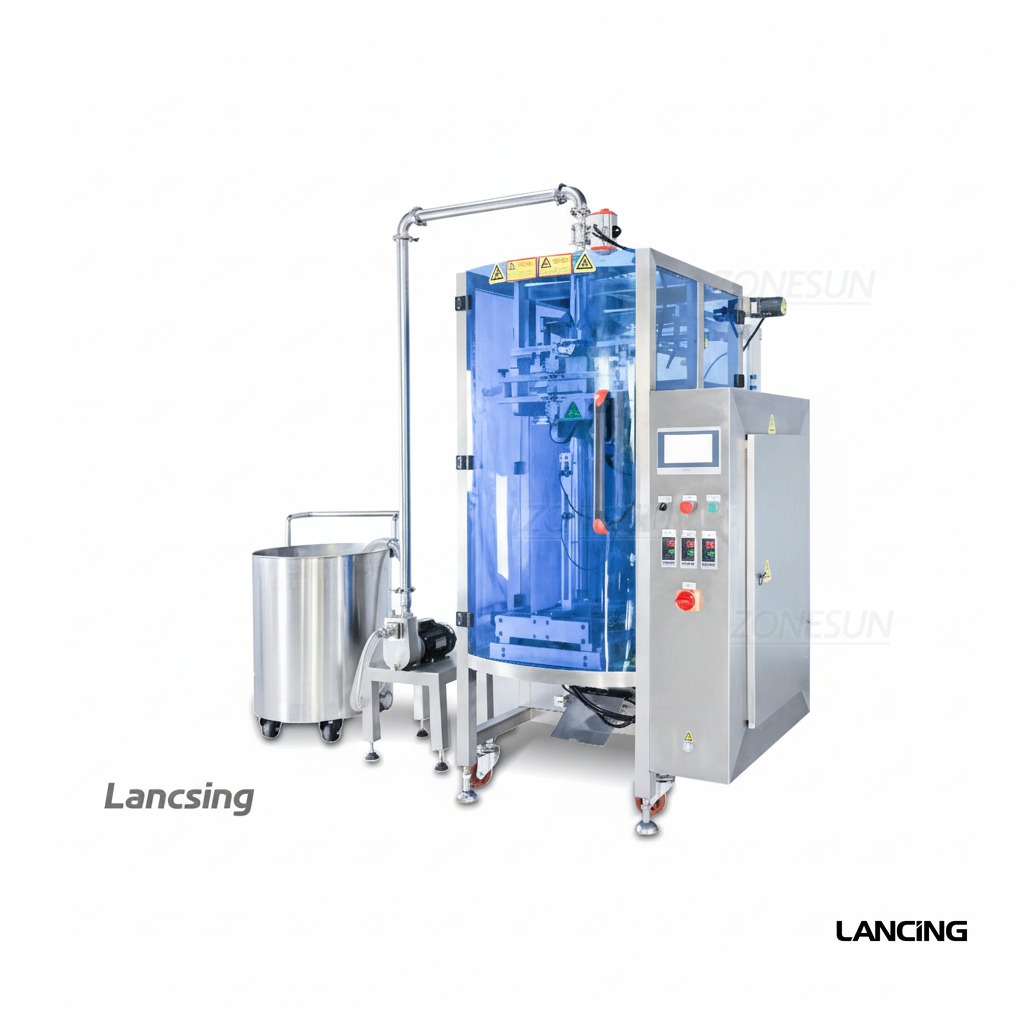
Map the changeover before judging its duration
A changeover can include product drain-down, safe isolation, removal of contact parts, cleaning, drying, inspection, reassembly, format-part replacement, film and artwork change, code change, recipe selection, line clearance, start-up and quality approval. Define the start and finish points before comparing times.
Separate product change, pack-size change and film/artwork change. They may happen together in production, but each has different controlling tasks and evidence. A quoted “tool-free” adjustment does not describe the cleaning boundary or quality release.
Base cleaning on the product and the site method
Record whether the product is water-soluble, oily, sticky, dusty, allergenic, strongly flavoured, chemically aggressive or sensitive to moisture. State the approved cleaning agents, contact time, rinse or wipe method, drying requirement and how cleanliness is verified.
Machine-specific material compatibility and cleaning instructions must come from the verified supply. Do not assume that a general stainless-steel description makes every seal, hose, gasket, pump, auger or sensor suitable for the proposed formulation or chemical.
Review access as a sequence of real tasks
Ask how operators reach the hopper or tank, dosing parts, nozzle, forming area, jaws, film guides, cutters and product traps. Parts should be identifiable and handled without creating an unsafe lift, uncontrolled spill or risk of incorrect reassembly.
Use a task-based review during trials or design approval. Photograph or video approved dismantling and reassembly where appropriate, and link each part to the correct product/format family and manual instruction.
Group products and packs into controlled families
Format families can share a forming set, jaw arrangement, nozzle or dosing component; product families can share a validated cleaning method. Grouping reduces unnecessary variation, but the family boundaries must be based on actual compatibility and quality requirements.
Maintain a change-part matrix showing what is adjusted, removed or replaced. Include upstream feed, coder, inspection and downstream guides. A bagger-only changeover time can be misleading when the rest of the line remains on the critical path.
Build line clearance and code control into the method
Remove previous film, labels, printed material, product and finished packs from the defined line area. Verify the new recipe, coder data, artwork and inspection settings before release. Record who checks and authorises the change where the quality system requires it.
For multi-lane equipment, confirm every lane has the correct dosing part, web path, code location and cut/slit arrangement. Start-up samples should be identified by lane and checked before normal output is released.
Demonstrate the most demanding agreed changeover
| Declared boundary | State the last accepted pack of the old run and the first released pack of the new run, plus whether cleaning and quality approval are included. |
|---|---|
| People and tools | Record operator count, competence, tools, lifting aids, cleaning equipment and parts available. |
| Old and new formats | Identify products, doses, film, dimensions, seal pattern, coder and downstream configuration. |
| Cleaning method | Use the approved method and record dismantling, cleaning, inspection, drying and reassembly steps. |
| Set-up evidence | Record parts, adjustments, recipe, code and checks; retain the first approved samples from each lane. |
| Exceptions | Log any repeated adjustment, damaged part, difficult access, residual product or step outside the approved sequence. |
Use changeovers to inspect wear and condition
Scheduled access can reveal worn sealing surfaces, damaged coatings, loose guides, contaminated sensors, degraded hoses or seals and product build-up. Define what operators inspect and what requires maintenance competence or isolation.
Keep approved settings and part condition records. Repeatedly compensating for wear with temperature, pressure or timing changes can hide the underlying problem and make product/film trials difficult to reproduce.
Questions to include in a supplier review
Ask for the product-contact boundary, parts removed without tools, parts requiring lifting or support, cleaning restrictions, drainage and drying points, identification of change parts, recipe controls, storage requirements and the proposed demonstration.
Supply the real product matrix and site cleaning standard. The supplier can then identify assumptions and any design options requiring confirmation before the machine is finalised.