
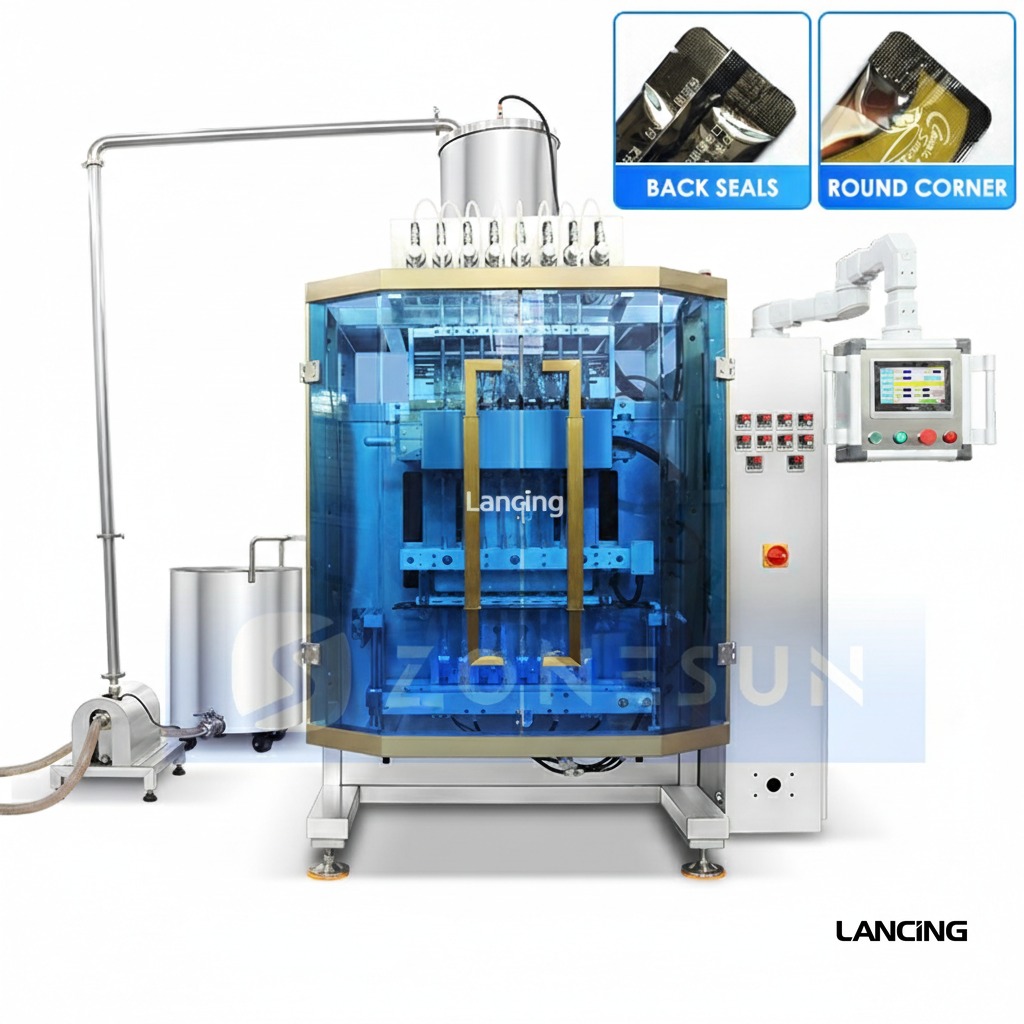
Separate print registration, variable coding and code verification
Print registration keeps a pre-printed film repeat aligned with the machine’s sealing and cutting sequence. Variable coding adds information such as a date, batch or other production data. Verification checks whether the intended mark is present and acceptable. They are related interfaces but not the same function.
Define each requirement separately in the user requirement and line sequence. A photocell can register a printed mark without proving that a variable code is correct, while a coder can print accurately on film that is being cut in the wrong position.
Engineer the artwork and registration mark for the machine
Supply the print-repeat drawing, registration-mark dimensions, colour and contrast, web direction, reel winding and the intended relationship between the mark, artwork, seals and cut line. Avoid placing critical text or variable-code areas close to seal bands or expected tracking variation.
The film converter and machine supplier should work from the same drawing revision. Changes to repeat length, web width, lane pitch or eye-mark position can affect sensors, cutters, perforation and the usable coding window.
Control the conditions seen by the photocell
Sensor performance depends on mark contrast, background, print consistency, web movement, sensor position and reflected light. Transparent, metallised or highly reflective webs may require an appropriate sensing method. The actual production film should be tested rather than assuming every printed laminate behaves alike.
Registration should be checked at start-up, after a reel or splice event, through normal speed changes and after a controlled stop/restart. Record how the machine reacts when a mark is missed or falls outside the permitted correction range.
Choose the coding method from the substrate, content and line timing
The coding technology must be compatible with the film surface and the required content. Define code area, orientation, line count, character size, contrast, permanence, dry or cure time, and whether the print is applied before or after forming.
The trigger, encoder and communication arrangement should be part of the machine design. Confirm what happens after a machine stop, film reverse/jog, recipe change or coder fault so duplicate, missing or stale codes are controlled.
Treat multi-lane coding and registration as a lane-layout project
A multi-lane web can contain one registration strategy for the whole repeat while carrying several finished packs across the width. Variable coding may need one print head, a traversing arrangement or multiple print positions depending on the artwork and line design.
Provide a lane map that identifies every code area, slit or cut line and finished-pack orientation. Verification and sampling should demonstrate that each lane receives the correct readable code without entering seals or being split by cutting.
Build a coding and registration acceptance test
| Controlled inputs | Approved artwork revision, production-intent printed film, mark drawing, code data and machine recipe. |
|---|---|
| Registration checks | Measure cut and seal relationship to the printed repeat at start-up, normal running, reel change or splice simulation, stop and restart. |
| Code checks | Confirm content, position, orientation, contrast and permanence using the agreed inspection method. |
| Fault response | Challenge missing mark, coder-not-ready or other agreed faults and record stop, alarm, reject or recovery behaviour. |
| Lane evidence | For multi-lane systems, identify samples by lane and show the code/cut/seal relationship across the full web. |
| Change control | Record authorised recipe and code changes, operator access and the method used to prevent an obsolete code remaining active. |
Information to send with a machinery enquiry
Include the film and artwork data, code content, maximum code area, production line speed conditions, desired verification, reject handling and whether coding data comes from an operator, printer database or another system. State any customer-specific record or approval requirement.
Where coding has legal or regulated significance, the packer remains responsible for confirming the applicable requirements and validating the complete process. Machinery guidance should be integrated with the business’s own label control and quality system.