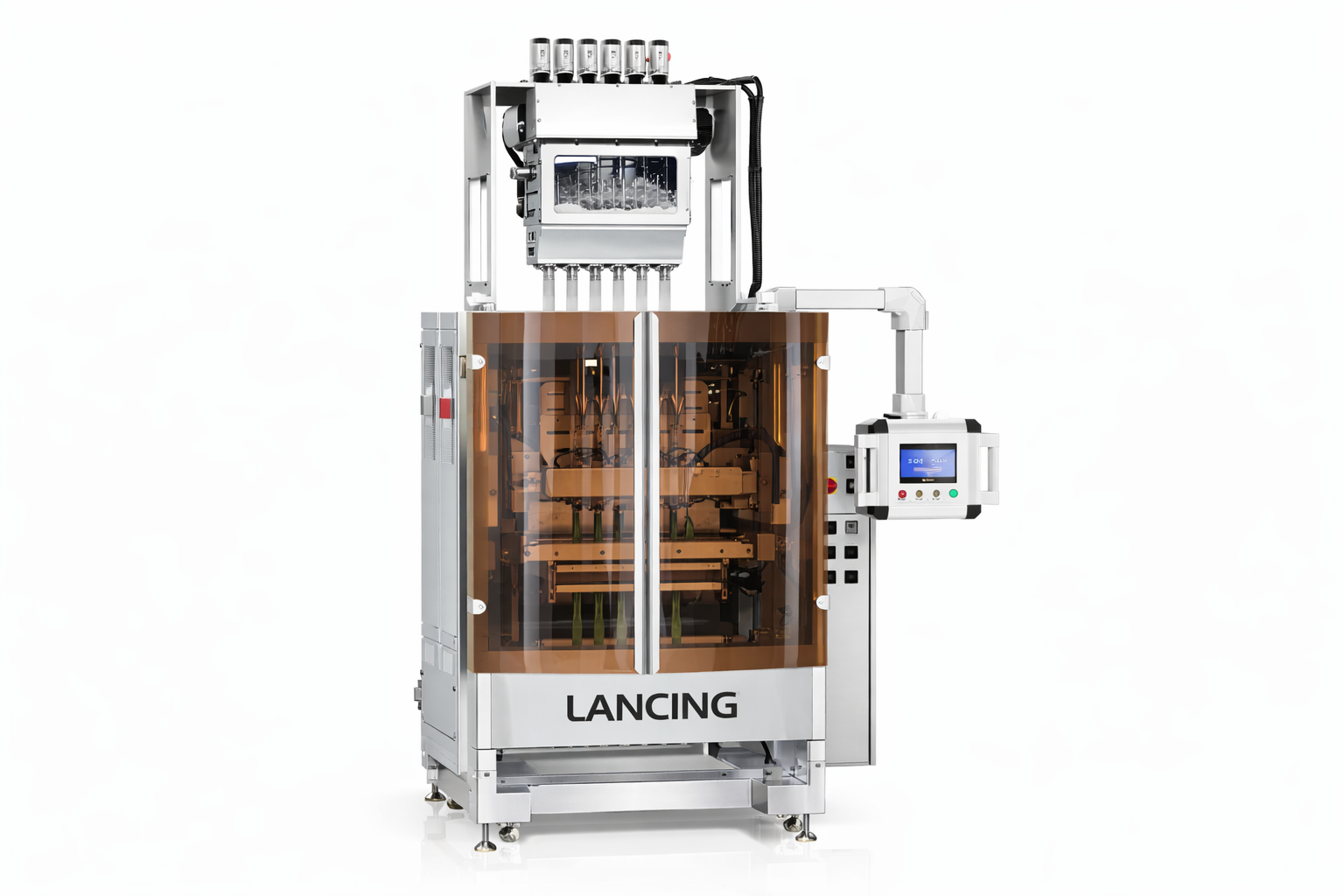
 LU-FSFM6
Multi-Lane Powder Sachet Filling Machine
Independent auger dosing across multiple lanes for high-output powder sachet production.
Independent augers20–40/min/lane600 mm
View machine details
Machine category
Powder sachet performance depends on more than target weight. Bulk density, aeration, cohesion, dust, electrostatic behaviour and the way the product settles after dosing all influence the auger, hopper, agitator, forming tube and seal cycle.
Machine options
Choose the closest starting point below. We will confirm the final model against your product, sachet, film and required output.
LU-FSFM6Independent auger dosing across multiple lanes for high-output powder sachet production.
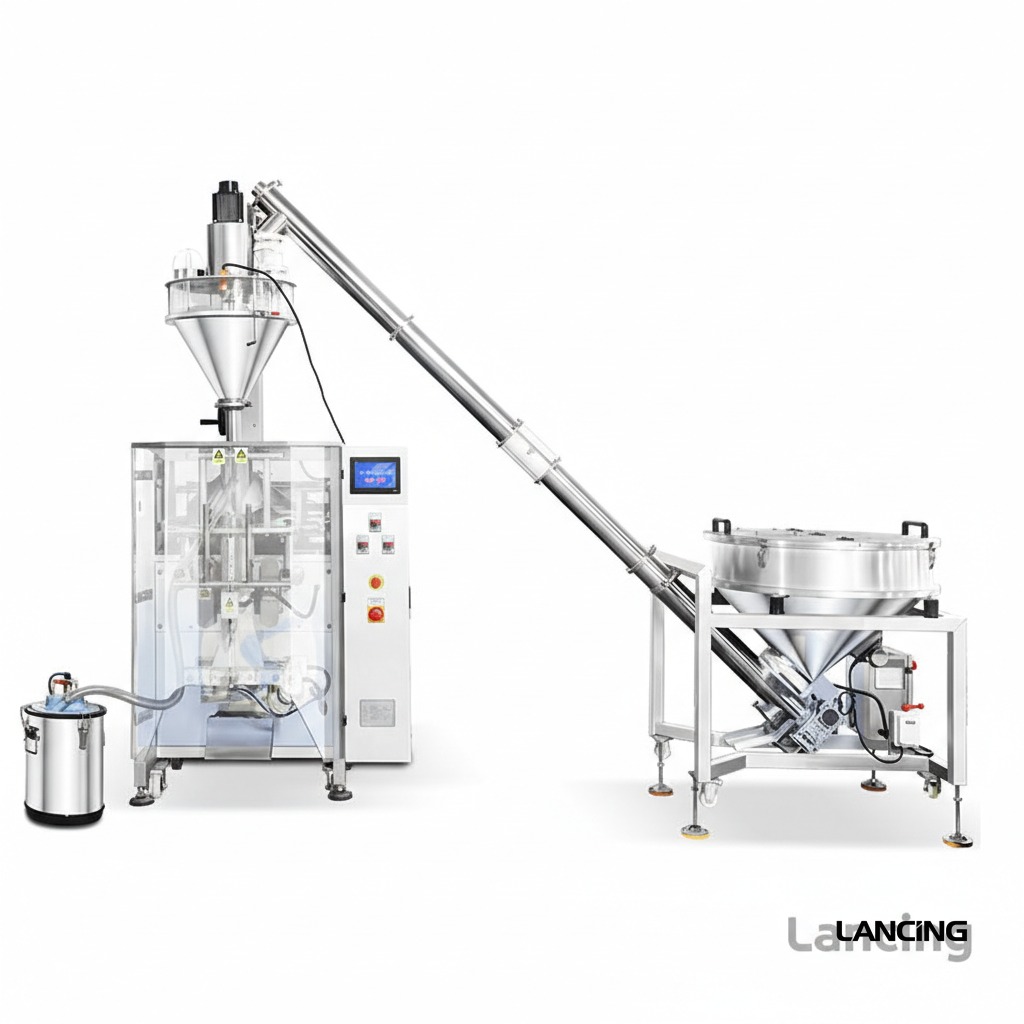 LU-FS06
Flexible single-lane auger VFFS platform for powder packs from small sachets to larger bags.
 LUFM1000
Space-efficient vertical form fill and seal machine for measured powder or granule packs.
Auger diameter, pitch, speed and number of revolutions determine the nominal dose. Cohesive products may need agitation and anti-bridging features, while easily aerated powders may need settling time or a longer pack.
Dust can contaminate seals and the work area. Enclosed transfer, extraction, short drop distances and controlled auger cut-off should be considered from the start, not added after installation.
Removable contact parts, safe access, tool-free clamps and documented procedures reduce changeover time. Allergen, active-material and cross-contamination requirements should be stated in the user requirement specification.
Specification checklist
Common questions
Most auger fillers meter by controlled screw rotation, so they are volumetric. A scale or checkweigher can provide feedback and quality verification.
A volumetric dose produces different weights when bulk density changes. Product conditioning, hopper level control and recipe adjustment help manage variation.
Some fine granules can run through an auger, but free-flowing granules are often better served by cups or weighing systems. Product trials should decide.
Tell us about your product and pack
Send the product, target dose, sachet dimensions, film and required output. Lancing Ltd will review your application and recommend a practical machinery route before a detailed quotation.
Powder dosing and pack quality
A powder sachet machine is usually limited less by the product name than by how the powder flows, aerates, compacts and creates dust. Bulk density, moisture sensitivity and the way the hopper is replenished can change dose consistency during a production run.
Provide loose and settled bulk density where available and describe cohesion, aeration, dust, static, moisture sensitivity, particle-size range and segregation. A representative production sample is more useful than a small laboratory jar because handling and storage can alter the powder condition.
Auger diameter, pitch, rotation, hopper agitation and cutoff arrangement influence the delivered dose. The settings that work for a free-flowing crystalline material may not suit a cohesive or aerated powder. Screw and tooling selection should be confirmed against the actual dose range.
Dust or product trapped across a cross seal can weaken the finished sachet. Drop height, fill timing, extraction or local dust control, static management, headspace and film movement should be reviewed during trials.
| Product sample | Supply enough representative material to fill, stabilise and run the proposed machine, including any normal variation between batches. |
|---|---|
| Dose matrix | List every nominal weight or volume, tolerance and sachet size. A broad range may require different augers, funnels or forming parts. |
| Product feed | State whether powder arrives in sacks, drums, bins or an upstream process. Define refill frequency, transfer method and controls that prevent the hopper level from disrupting the dose. |
| Cleaning and containment | Describe changeover, cross-contamination and operator-exposure requirements. Agree access, removable contact parts, extraction interfaces and safe cleaning methods. |
| Acceptance evidence | Record dose samples across the run, seal cleanliness, rejected packs, refill events, coding, registration and accepted output under the declared conditions. |
Additional buyer questions
No. Augers are widely used, but very free-flowing, fragile, highly aerated or difficult powders may need a different dosing route or a specially developed screw, agitation and cutoff arrangement.
A machine may cover a defined range through recipes and change parts, but accuracy and speed should be proved at the lowest and highest required doses. A very broad range can require more than one auger or funnel set.
Describe dust generation, product hazards, housekeeping limits and the proposed extraction connection. Dust control can affect guards, product feed, sealing, electrical selection and cleaning access.
Refilling can change powder compaction, aeration and head pressure around the auger. The trial should reproduce the intended transfer method and hopper-level control rather than running from a continuously full, hand-topped hopper.
Keep labelled sachets and dose results from stable running, after refill and around normal stops. Record the product batch, auger and recipe, film, sachet size, rejected packs and the conditions used for the accepted output.
Define the project around your product and pack
Provide representative powder, bulk-density and flow information, every required dose and sachet size, the intended product-transfer method, film and accepted output target. Lancing Ltd can then compare single-lane, multi-lane and compact VFFS routes.
Reproduce production powder handling
Powder behaviour at the auger can change with storage, transfer, aeration, hopper level and repeated refilling. A trial run from a hand-topped hopper may not represent an automatic production feed. Define the complete material route and record the powder condition at the same points where dose and seal samples are taken.
| Trial condition | Why it matters | What to record |
|---|---|---|
| Sample receipt and conditioning | Transport, settling, moisture and handling can make a production powder behave differently from a freshly mixed laboratory sample. | Batch identity, container, storage period, conditioning or mixing, loose or settled condition and the point at which the sample enters the trial. |
| Initial hopper charge | The first fill can aerate, compact or segregate the powder and may not match the condition after the machine has circulated material. | Transfer method, hopper level, agitation state, stabilisation period and the first dose samples retained or excluded. |
| Normal replenishment | A vacuum conveyor, screw feeder, manual tip or upstream process can disturb density and flow in different ways. | Refill trigger, quantity, duration, level-control response and lane or dose samples immediately before and after the event. |
| Low-level condition | Reduced material above the auger or dosing chamber can expose a feed limitation or allow inconsistent product presentation. | The low-level alarm or stop point, samples approaching that point and the procedure for preventing unaccepted packs. |
| Pause and restart | Powder can settle, bridge, absorb moisture or remain in the chute and seal zone while the machine is stopped. | Stop duration, hopper and agitator state, first packs after restart, dust or seal observations and any purge procedure. |
| Batch or product change | Residual powder and different density or flow can affect cross-contamination, recipe choice and the quantity required before release. | Clean-down steps, contact-part checks, recipe and tooling identity, first-off approval and retained samples. |
Allow product for filling the feed system, stabilising the auger, reproducing refills, running every required dose and retaining representative packs. The exact quantity should be agreed from the proposed machine and test plan rather than estimated from the nominal sachet weight alone.
Compare the LU-FS06 single-lane auger VFFS route, the LU-FSFM6 multi-lane platform and the compact LUFM1000. For standalone dosing rather than a complete sachet process, refer to Powder Fillers UK.
Powder-project control plan
Powder behaviour changes with aeration, settling, moisture, transfer and hopper level. The proposed auger and feed system should be tested as one process.
Provide bulk density in the states likely to occur, flow and cohesion, dust, moisture sensitivity, particle size and any segregation risk. Identify the upstream transfer method because vacuum or screw feeding can condition the product differently from hand filling.
Use the real nominal dose and the most demanding product/format combinations. Confirm that the pack has enough volume for product settling without contaminating the seal.
Record steady running, hopper refill, low level, stop and restart. Check bridging, ratholing, aeration and whether the agitator or auger changes product condition. For multi-lane equipment, sample each auger/lane separately.
Define safe access, dust capture, contact parts, approved cleaning method and line clearance. Include feeder, hopper, auger, forming area and downstream dust traps in the changeover review.
Powder-flow questions
Bridging occurs when powder forms a stable arch above the outlet, interrupting the supply to the auger even though material remains in the hopper.
The symptom may be intermittent low doses or empty packs rather than a permanent stop. Hopper geometry, agitation, product compaction and refill method should be assessed with the production powder, not inferred from a small hand sample.
Aeration changes bulk density and therefore the mass delivered by a given auger volume until the powder settles or reaches a stable condition.
The trial should include the intended feeder, transfer height and refill sequence. Record samples around the event instead of reporting only the later steady average.
Extraction or containment may be needed when dust escapes during transfer, dosing, sealing, cleaning or waste handling and the site assessment requires it.
The product hazard, dust behaviour and release points must be defined before an extraction connection is treated as a standard option. The final arrangement must not disturb dosing or draw film and product into unintended areas.
Use the intended production transfer and hopper-refill method so the trial includes compaction, aeration, segregation and low-level conditions.
Hand-feeding a small quantity directly above the auger can bypass the most difficult part of the process. The evidence should identify the feeder, hopper level, agitation and product condition used for each sample set.
Turn the answer into a testable machine brief
Include representative product, dose range, sachet dimensions, film or artwork data, required accepted output and any cleaning, coding, inspection or line-integration requirements. Lancing Ltd can then assess the machine route against the real production case.
Powder safety and production evidence
Powder flow, dose and seal quality must be reviewed alongside dust release, cleaning, containment and any fire or explosion risk identified by the employer’s competent assessment.
Use representative material data and reproduce the production transfer and hopper-refill method during trials. Do not infer hazardous-area suitability from a standard machine description.