 LUFS200D1
Liquid VFFS Sachet Filling Machine
Compact piston-pump VFFS platform for sauces, syrups, gels and other flowable products.
5–100 mlPiston pumpBack / 3-side / 4-side
View machine details
Space-efficient vertical form fill and seal machine for measured powder or granule packs.

Machine overview
The LUFM1000 is a narrow-footprint VFFS platform that can be paired with a powder or granule dosing system. It offers an accessible route to roll-stock automation where production output is moderate and floor space is limited.
Published specification
| Product types | Powders and granules with a suitable dosing module |
|---|---|
| Indicative output | Approximately 10–15 bags per minute |
| Reference fill range | Approximately 10–999 g |
| Indicative accuracy | Typically around ±2 g, product dependent |
| Maximum film width | Approximately 423 mm |
| Maximum sealed bag width | Approximately 200 mm |
| Seal style | Back or fin seal |
| Approximate machine size | 634 × 700 × 2042 mm |
Reference figures are configuration-dependent and must be confirmed for the product, pack and utilities.
Configure the line
Performance validation
Target output and dose repeatability are affected by product flow, environmental conditions, sachet length, film sealing window, changeover and quality-control settings. Supply representative product and production film for a meaningful test.
Related machinery
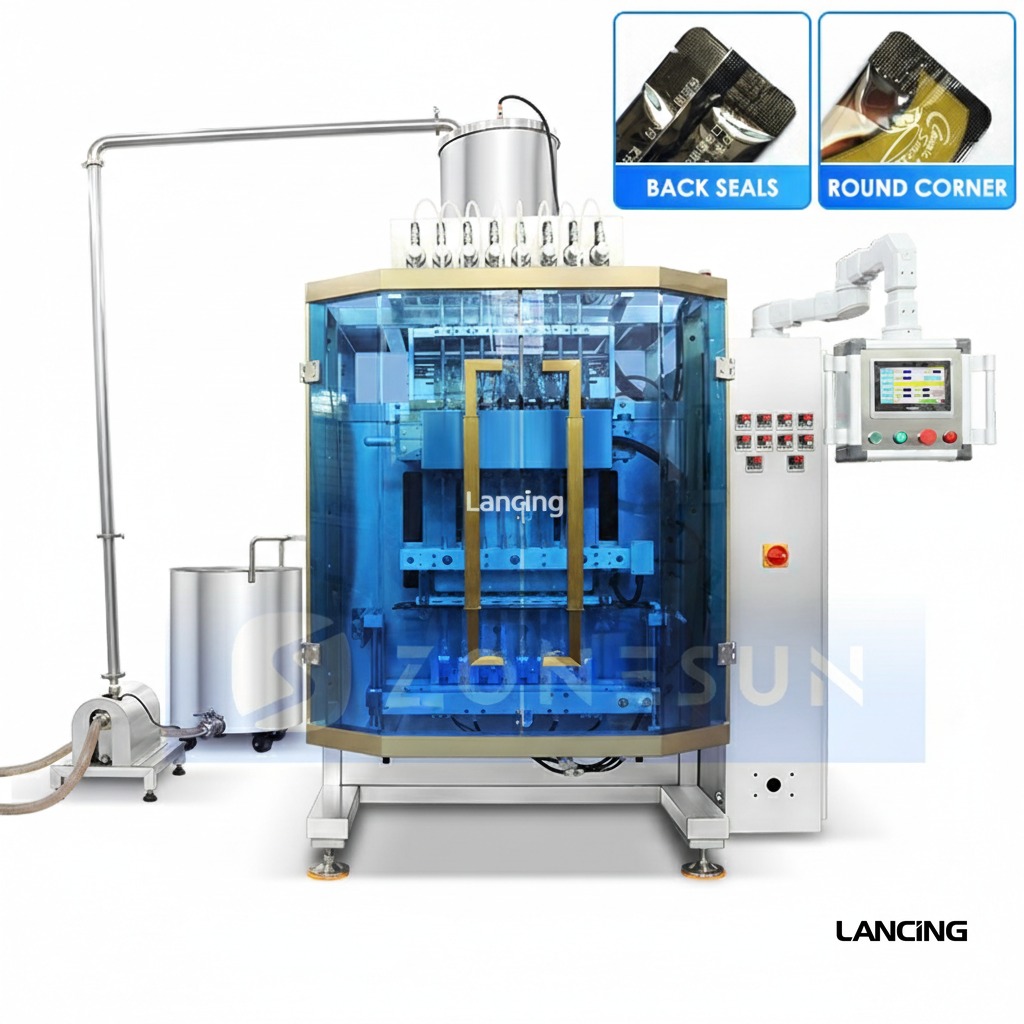
LUFS200D1Compact piston-pump VFFS platform for sauces, syrups, gels and other flowable products.
 LU-FSMP8
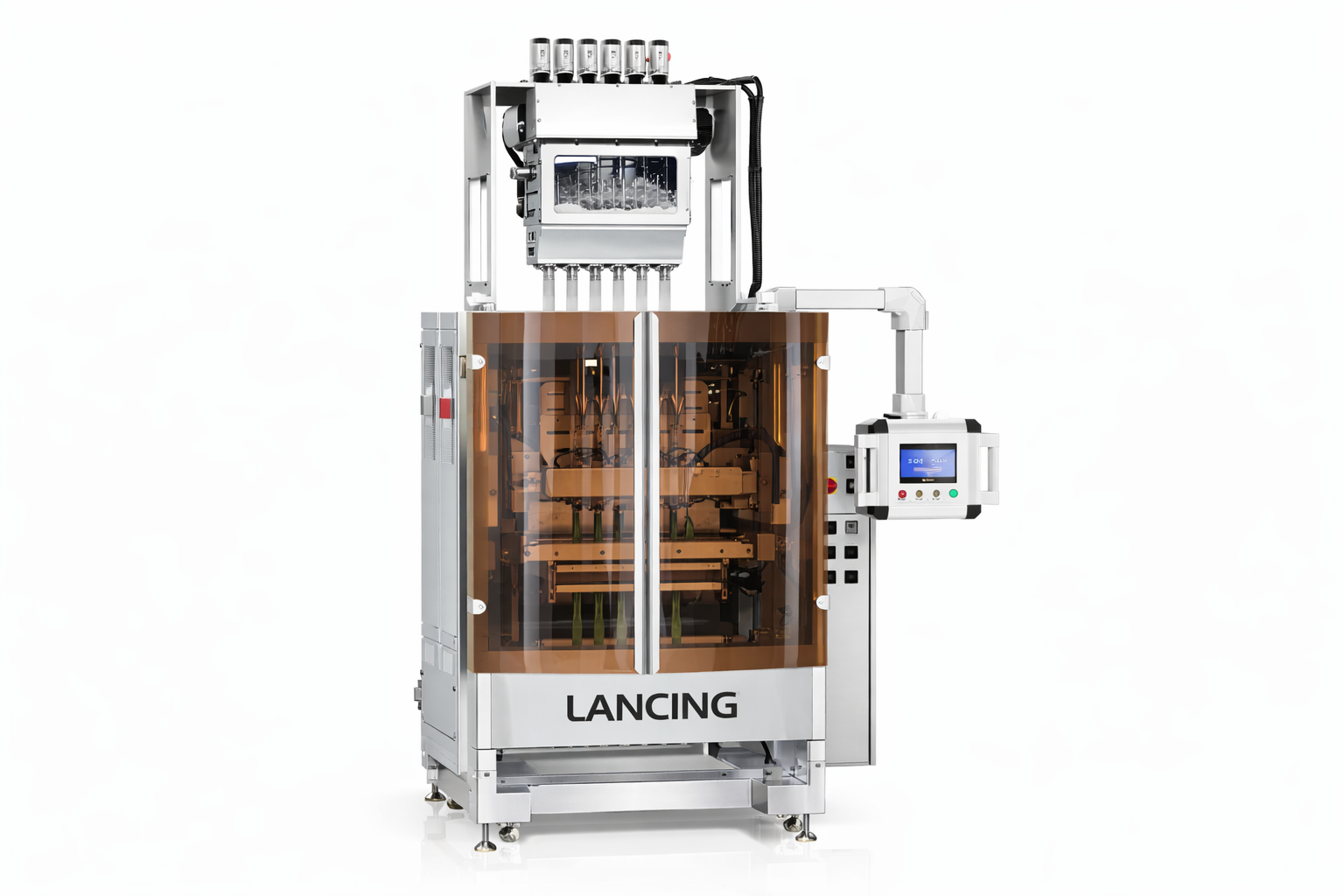
High-output multi-lane VFFS system with independent magnetic-pump dosing for narrow liquid sachets.
 LU-FSFM6
Independent auger dosing across multiple lanes for high-output powder sachet production.
Common questions
The bag-forming platform can support different dosing technologies, but the filler must be selected and configured for the product. A universal single dosing head is rarely optimal.
Bag length, dose size, product flow, sealing time and the selected dosing module all affect the achievable cycle rate.
It can be, particularly where output and floor space are constrained. Utilities, operator access, film storage and upstream product handling still need to be planned.
Tell us about your product and pack
Send the product, target dose, sachet dimensions, film and required output. Lancing Ltd will review your application and recommend a practical machinery route before a detailed quotation.
Production specification for LUFM1000
The machine is presented for powders or granules with a suitable dosing module. That distinction matters: an auger, weighing or other feeder must be selected from the product, and the combined filler and bagger should be accepted as one system.
Powders that need an auger and granules that need weighing place different demands on hopper, feed control, cleaning and cycle time. The proposed module should be named in the quotation and demonstrated with the actual product rather than described only as a generic filler.
A compact footprint can be valuable, but access for change parts, film, cleaning and maintenance must still be checked against the site layout. The installed envelope should include operator position, doors, electrical panels and product loading, not only the machine frame.
| Dosing module | Identify the exact filler and product-feed arrangement and prove the required low and high doses. |
|---|---|
| Bag formation | Run the critical width and length with the intended film, back or fin seal, coding and cut position. |
| Product quality | Check dust, breakage, segregation, trapped product and the effect of normal refill. |
| Access and changeover | Demonstrate film change, product-contact cleaning and any forming or dosing change parts in the available floor space. |
| Accepted output | Count conforming bags under the declared dose, format, refill, coding and inspection conditions. |
A demanding cohesive powder can justify a larger dedicated auger arrangement, while high-volume narrow sachets can justify parallel lanes. Larger irregular pieces may need a wider weighing and drop path.
A useful trial record identifies the product and film batches, dose setting, sachet dimensions, forming and sealing parts, coding setup, operating speed, stops, rejected packs and quality checks. Retained samples should be labelled so results can be traced to the lane, recipe or test condition where relevant.
The final quotation and acceptance schedule should distinguish indicative catalogue references from the values that will be demonstrated with the agreed product, pack and utilities.
Additional buyer questions
No. The page identifies powders and granules with a suitable module. The actual auger, weigher or other dosing arrangement must be specified for the product.
It is indicative and product dependent. Final tolerance must be demonstrated with the selected filler, product, dose, feed and test method.
It can reduce the frame footprint, but product loading, film access, guards, doors, electrical panels, cleaning and operator space still need a site-layout review.
Potentially with different dosing equipment and change parts, but every product and format should be declared. The cleaning and conversion scope must be quoted rather than assumed.
Define the project around your product and pack
Provide representative product, every required dose and sachet size, film details, accepted output, utilities, cleaning and inspection requirements. Lancing Ltd can then confirm whether the LUFM1000 is the correct starting point and define the trial scope.