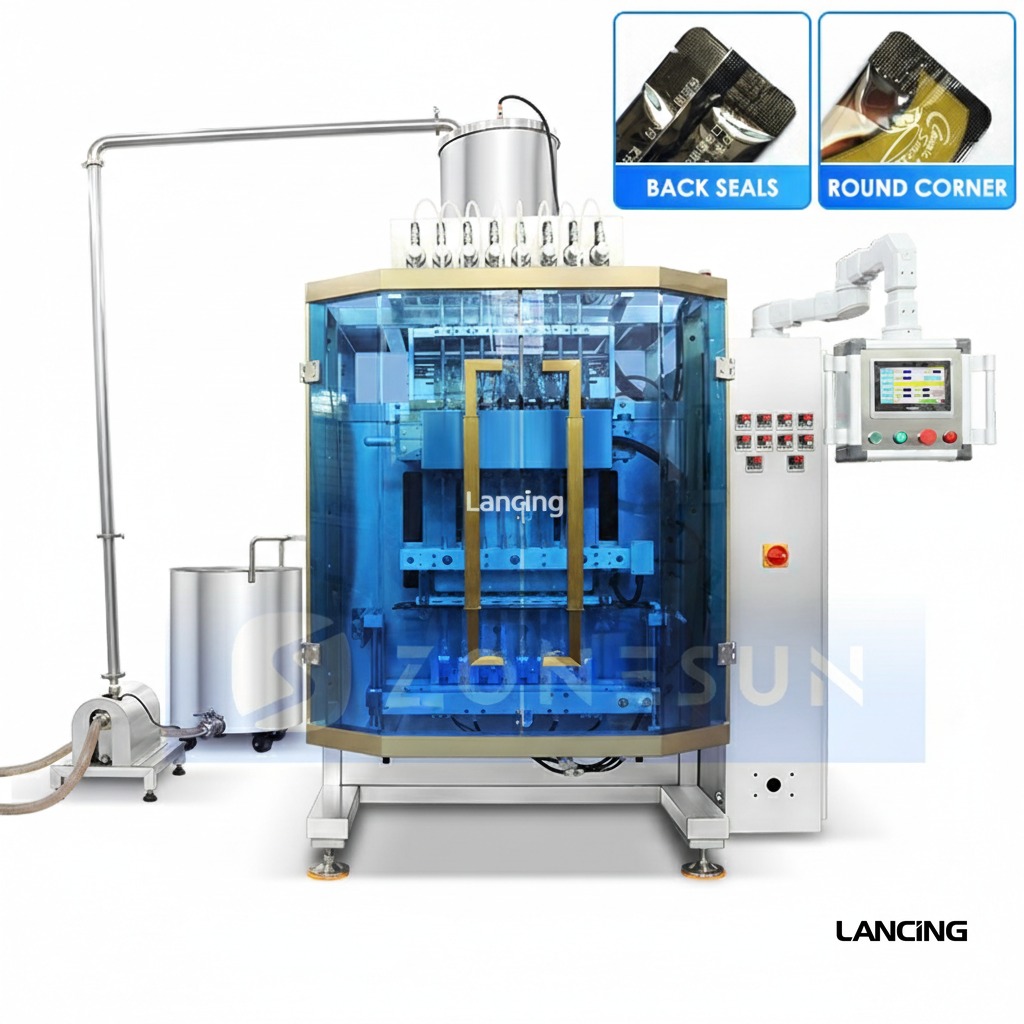
 LU-FSMP8
Eight-Lane Liquid Sachet Filling Machine
High-output multi-lane VFFS system with independent magnetic-pump dosing for narrow liquid sachets.
825–40/min/lane500 mm
View machine details
Compact piston-pump VFFS platform for sauces, syrups, gels and other flowable products.

Machine overview
The LUFS200D1 is a compact vertical form fill and seal platform configured for small liquid and semi-liquid sachets. Roll stock is formed into a sachet, a piston pump meters the product, and the machine closes and cuts the pack in one automatic sequence.
Published specification
| Recommended fill range | Approximately 5–100 ml |
|---|---|
| Dosing system | Piston pump |
| Indicative accuracy | Typically ±1–2 ml, product dependent |
| Hopper | Approximately 80 litres with agitation; heating option available |
| Sachet styles | Back seal, three-side seal or four-side seal |
| Approximate machine size | 580 × 1100 × 1750 mm |
| Typical products | Sauces, honey, syrups, gels, lotions and detergent gels |
Reference figures are configuration-dependent and must be confirmed for the product, pack and utilities.
Configure the line
Performance validation
Target output and dose repeatability are affected by product flow, environmental conditions, sachet length, film sealing window, changeover and quality-control settings. Supply representative product and production film for a meaningful test.
Related machinery
LU-FSMP8High-output multi-lane VFFS system with independent magnetic-pump dosing for narrow liquid sachets.
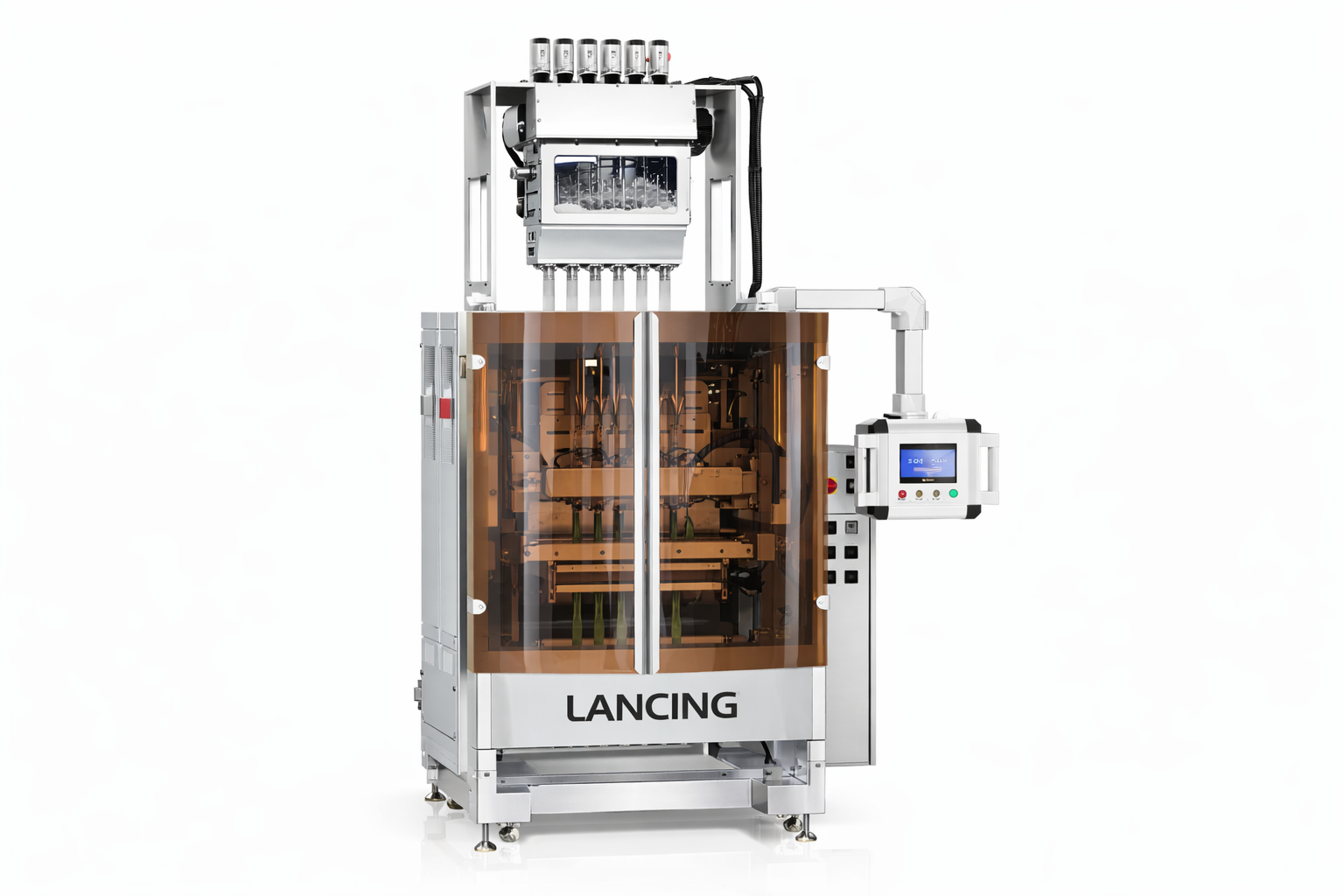 LU-FSFM6
Independent auger dosing across multiple lanes for high-output powder sachet production.
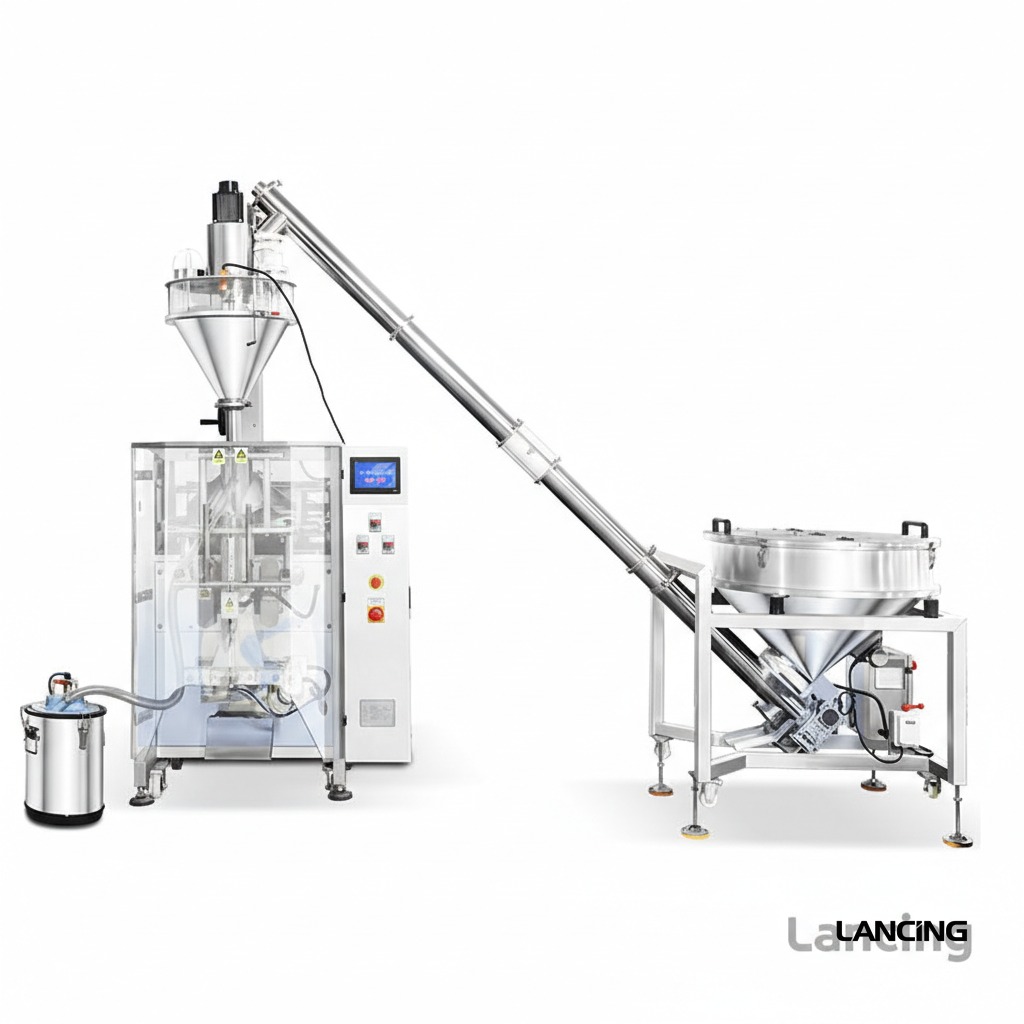 LU-FS06
Flexible single-lane auger VFFS platform for powder packs from small sachets to larger bags.
Common questions
Small suspended particles may be possible, but valve size, piston geometry and product consistency must be reviewed. A representative product trial is recommended.
It is the recommended reference range for this configuration. The final usable range depends on piston size, product viscosity, sachet dimensions and required accuracy.
The film must be heat-sealable and compatible with the product, fill temperature and required shelf life. Film reels should be tested on the final machine specification.
Tell us about your product and pack
Send the product, target dose, sachet dimensions, film and required output. Lancing Ltd will review your application and recommend a practical machinery route before a detailed quotation.
Production specification for LUFS200D1
The published 5–100 ml range is a useful starting reference, but the practical configuration depends on piston size, product behaviour, sachet geometry and the required verification method. The product path, nozzle and sealing sequence should be proved together.
A piston system meters a defined displacement, but product compressibility, entrained air, valve response and temperature can change the delivered quantity. The selected piston and valve must also pass any suspended particles without blockage or inconsistent closure.
For sauces, syrups and gels, the nozzle should stop the product cleanly before the cross seal closes. Drip, tail and splash behaviour should be observed at the fastest intended condition and after normal stops, because seal contamination may appear only when the cycle is disturbed.
| Dose verification | Sample the lowest, typical and highest required doses using the agreed test method. Record product temperature and any hopper agitation or heating used. |
|---|---|
| Sachet and film | Run every critical seal style and width with production-representative laminate, registered print, tear notch and coding where required. |
| Seal integrity | Inspect for product in the seal, wrinkles, channel leaks and cut position, then apply the pack owner’s agreed integrity or leak-test method. |
| Changeover | Demonstrate the declared recipe and change-part sequence and confirm that the machine returns to an approved setting. |
| Accepted output | Measure saleable packs over a defined period after normal start-up, checks and stops, not only the instantaneous cycle rate. |
A high-volume narrow sachet project may justify parallel lanes, while a larger viscous pack may need a different product-feed and forming arrangement. A premium converted pouch is a separate process and should be selected only when the pack feature requires it.
A useful trial record identifies the product and film batches, dose setting, sachet dimensions, forming and sealing parts, coding setup, operating speed, stops, rejected packs and quality checks. Retained samples should be labelled so results can be traced to the lane, recipe or test condition where relevant.
The final quotation and acceptance schedule should distinguish indicative catalogue references from the values that will be demonstrated with the agreed product, pack and utilities.
Additional buyer questions
The published configuration references an agitated hopper and a heating option. The required arrangement, temperature control and cleaning method must be specified for the actual product.
A defined range may be possible, but width, seal style and film can require different forming, sealing or cutting parts. List every proposed size before tooling is agreed.
Product supply can be engineered, but pressure, level control, transfer pump, temperature and cleaning responsibilities must be defined so the piston receives a stable feed.
Use the same product, dose, sachet, film and accepted-pack definition. Ask each supplier to state test duration, rejected packs, normal checks and any stops excluded from the figure.
Define the project around your product and pack
Provide representative product, every required dose and sachet size, film details, accepted output, utilities, cleaning and inspection requirements. Lancing Ltd can then confirm whether the LUFS200D1 is the correct starting point and define the trial scope.
Model-specific evidence schedule
The reference range on this page must be confirmed against the actual liquid or paste, dose, sachet and film. Record the complete configuration that produces an accepted pack.
Test the declared viscosity and temperature range, particles, foaming or stringing, hopper agitation or heating where proposed, and the normal product-refill method. Include a planned pause and restart to expose drips, tails or pressure changes.
Sample the lowest, normal and highest commercial doses using the agreed measurement method. Retain time-identified packs and note the piston, valve and nozzle configuration.
Use production-intent film for every critical seal format. Check product clearance before the jaws close, registration, cut, code position and the agreed pack-integrity method.
Define accepted output as saleable packs under the declared case, including normal refill, inspection, stop/restart and downstream handling.