Liquid detergents and gels
A piston or compatible pump meters the product. Nozzle cut-off and film selection are critical to leak prevention.

Sachet application
Chemical sachet projects begin with a full product safety and compatibility review. The formulation, hazard classification, vapour, dust, temperature and cleaning method influence materials, enclosure, extraction, electrics and the decision whether automated flexible packaging is appropriate.
Project requirements
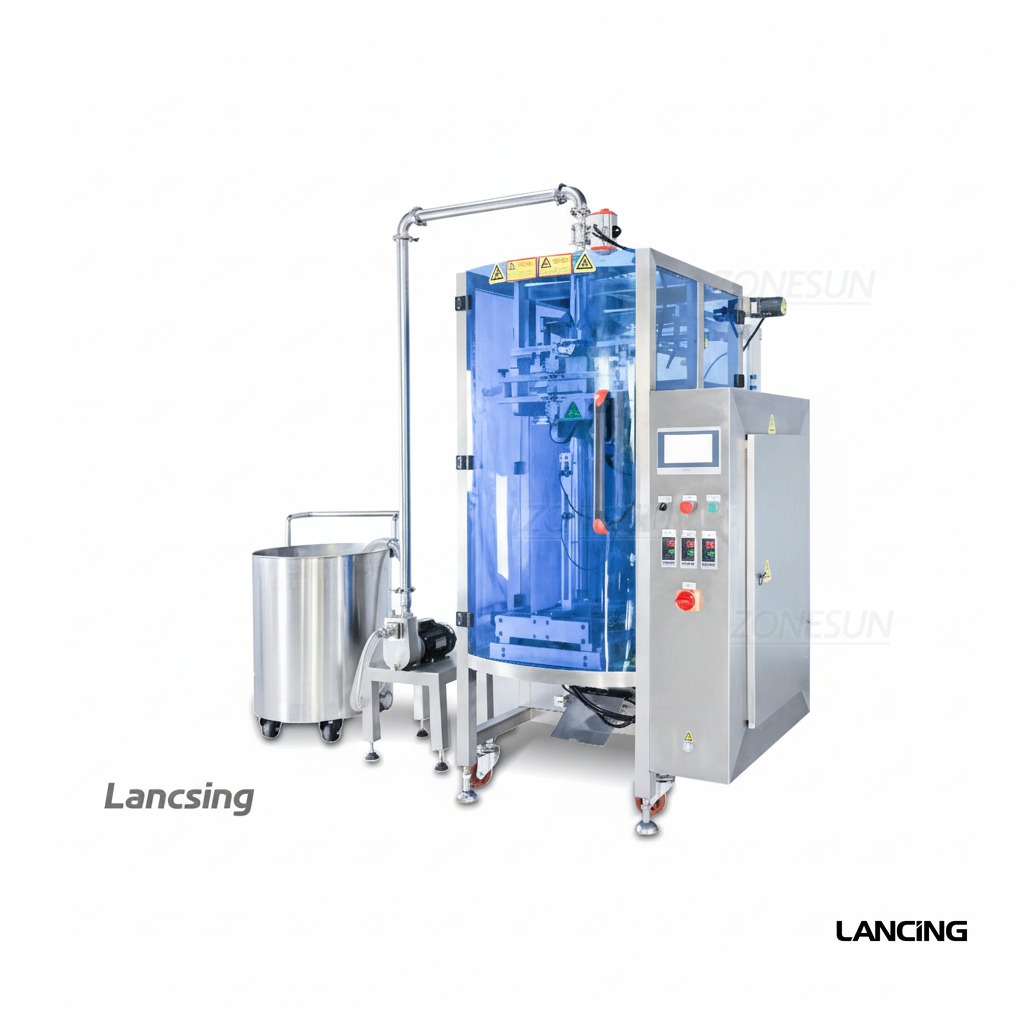
A piston or compatible pump meters the product. Nozzle cut-off and film selection are critical to leak prevention.
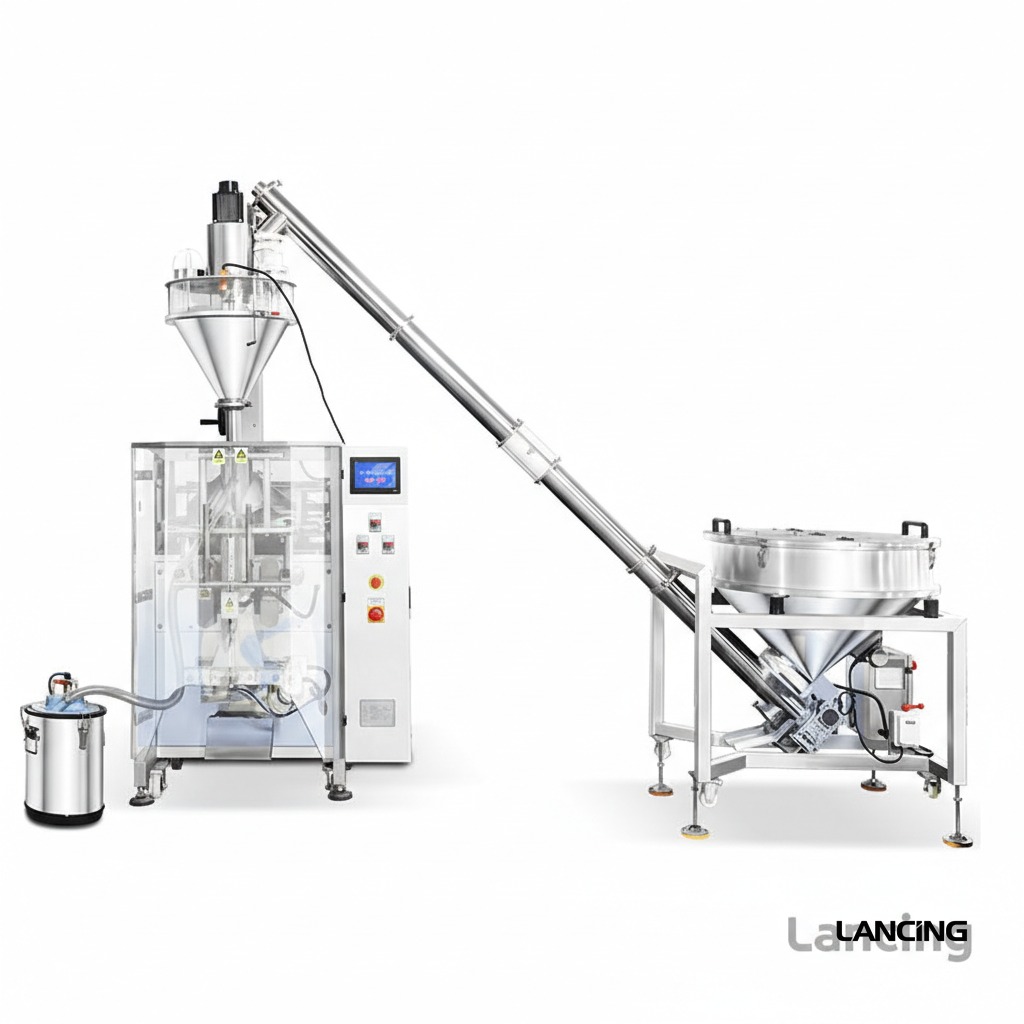
Auger dosing can control cohesive powders, with dust extraction and enclosed transfer considered during line design.
These require project-specific materials and safety engineering. Standard machine assumptions should never be applied without review.
Suggested machinery
 LUFS200D1
Compact piston-pump VFFS platform for sauces, syrups, gels and other flowable products.
LU-420GSYAutomatic pump-fed VFFS machine for larger liquid and paste sachets or bags.
 LU-FS06
Flexible single-lane auger VFFS platform for powder packs from small sachets to larger bags.
Common questions
No. Suitability depends on compatibility, hazards, legislation, film and safe operation. A detailed engineering review is mandatory.
Provide the current safety data sheet, formulation properties, viscosity or bulk density, temperature, target dose and cleaning method.
Potentially, where a documented hazardous-area assessment defines the zone, gas or dust group, temperature class and equipment requirements. This must be established before quotation.
Tell us about your product and pack
Send the product, target dose, sachet dimensions, film and required output. Lancing Ltd will review your application and recommend a practical machinery route before a detailed quotation.
Compatibility-led specification
Detergent and compatible chemical sachet projects require a documented review of the product, concentration, temperature, vapour, dust, corrosion, seals, hoses and cleaning or disposal method. The machine should not be described as universally chemical resistant.
State viscosity, temperature, foaming, stringing, particles and whether the product attacks metals, elastomers or plastics. Pump and nozzle selection should provide a controlled dose and keep the seal area clean without exposing operators to avoidable drips or open handling.
Provide dust, particle-size, static, moisture, segregation and hazard information. Product transfer, extraction, enclosure, cleaning and waste collection can be as important as the auger or weighing method.
| Product information | Supply current safety and compatibility information, concentration, operating temperature, physical properties and any restrictions on materials or cleaning agents. |
|---|---|
| Containment and ventilation | Define extraction, enclosure, local ventilation, spill or drip management and the interface with the site system. |
| Product-contact materials | Agree metals, coatings, hoses, valves, seals and gaskets from documented compatibility review and trial where required. |
| Film and pack test | Confirm laminate compatibility, seal pattern, fill temperature, product migration concerns and the appropriate integrity or leak-test method. |
| Cleaning and waste | Define flushing, strip-down, neutralisation or disposal responsibilities and how contaminated parts, film and trial product are handled. |
Additional buyer questions
Use product information and documented review of every product-contact material, hose, seal and cleaning agent. Representative exposure or trials may be needed for the final configuration.
Potentially, but the complete range must be reviewed for compatibility, cleaning, cross-contamination, temperature and different dosing behaviour. The most demanding product should be included in trials.
Describe the substance, release points, site extraction, required enclosure and safe maintenance and cleaning boundaries. The final controls should follow the site risk assessment.
The pack owner should choose a method suitable for the product, laminate, seal and distribution risk. Test handling and disposal should also be included in the procedure.
Define the project around your product and pack
Provide representative product, current safety information, dose, sachet and film, output, materials, extraction, cleaning, coding and integrity-test requirements. Lancing Ltd can assess whether the project and proposed machine route are compatible.