Tell us what you need to pack — product, dose, sachet size and target output.

Machine category

Stick Pack Machines for Narrow Single-Serve Packs

A stick pack is a narrow reel-fed pack whose product, lane pitch, film web, longitudinal seal, cross seal, registration, cut and code must work as one system. Select the dosing route first, then prove the final pack across every lane.

Product-led starting points

Compare liquid, powder and granule multi-lane routes

The machines below are verified products in the current source. Their suitability for a particular stick pack depends on representative product and film trials, approved dimensions and the required quality checks.

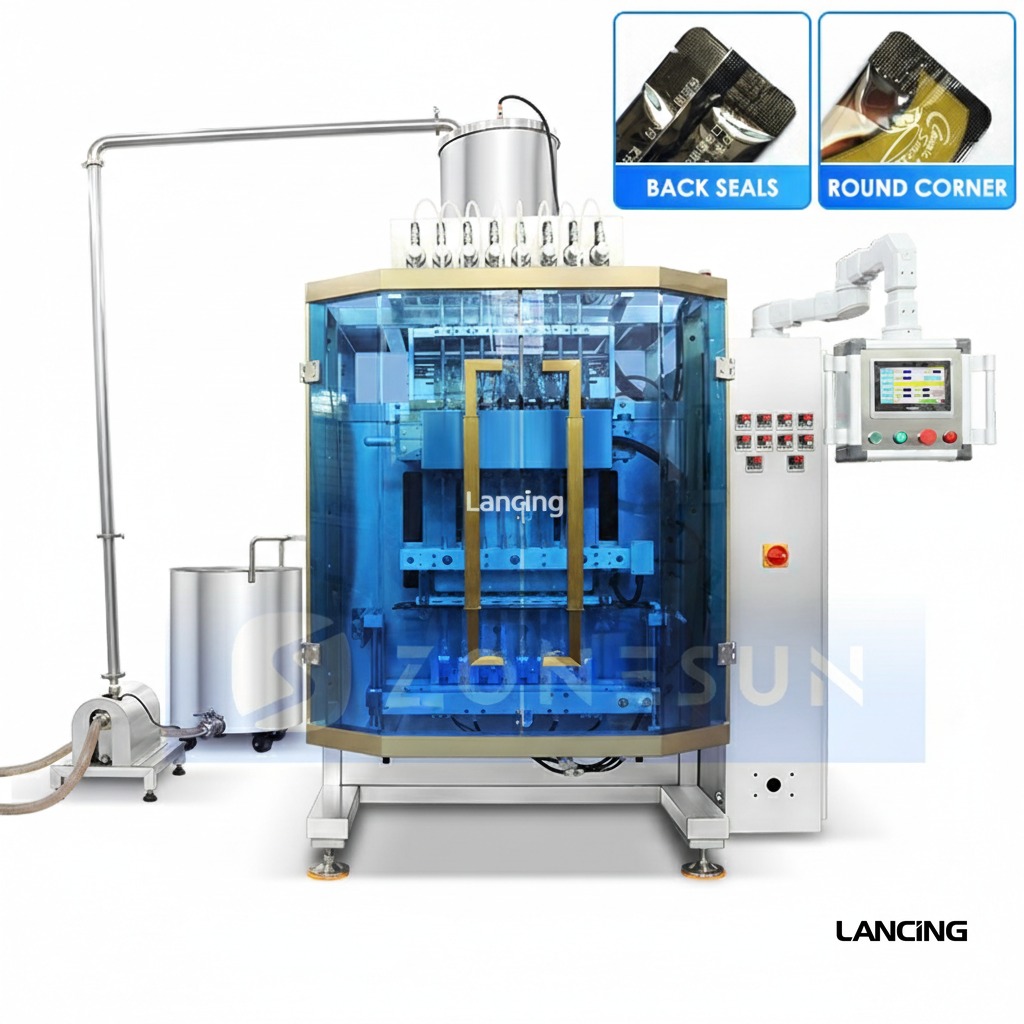
Eight-lane magnetic-pump machine for narrow liquid sachets and compatible stick-pack formatsLU-FSMP8

Eight-Lane Liquid Sachet System

A multi-lane magnetic-pump VFFS platform to assess for compatible low-viscosity liquid stick packs, subject to the final film, lane pitch, dose and seal trial.

8 lanesMagnetic pumpsNarrow liquid packs
View machine details
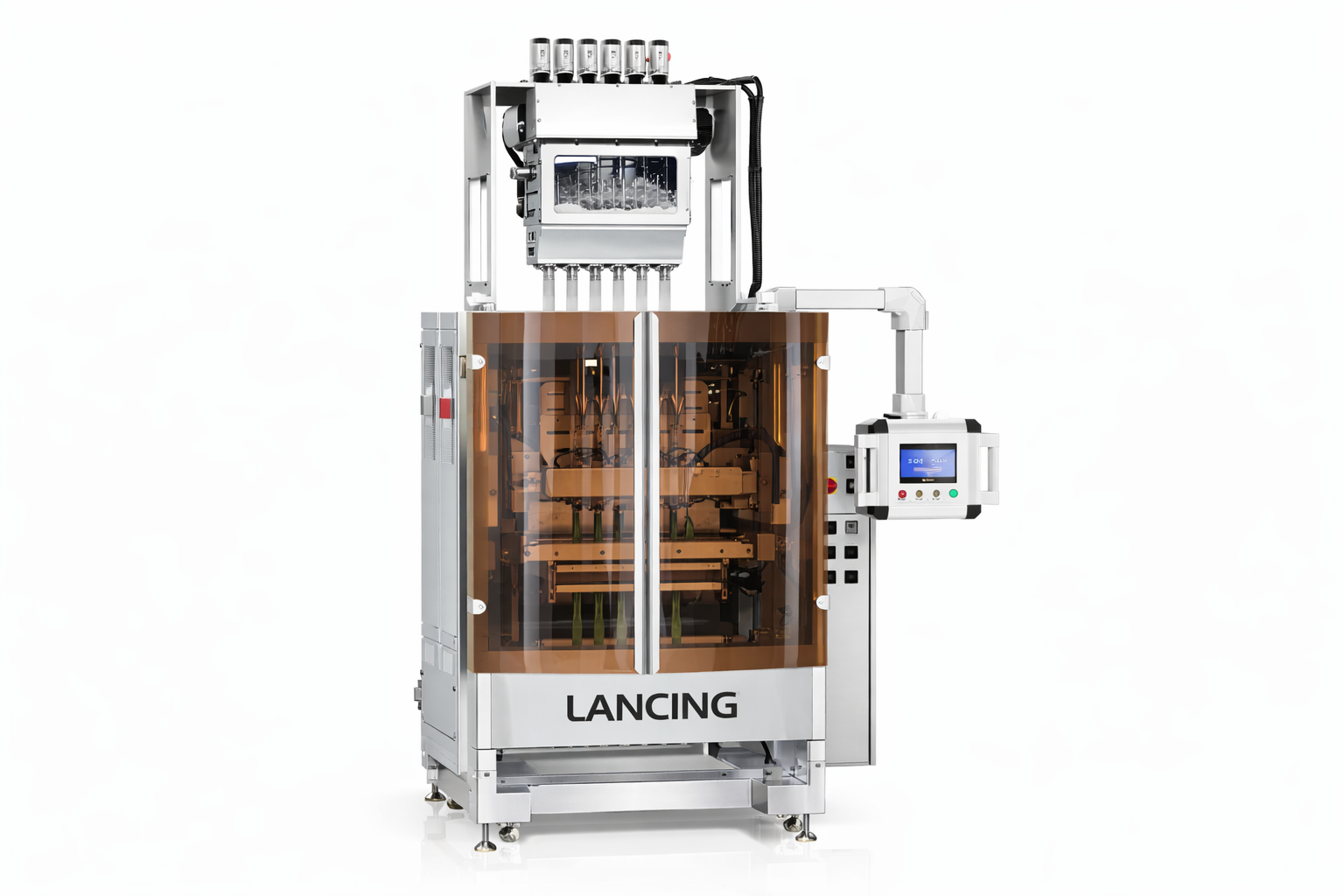
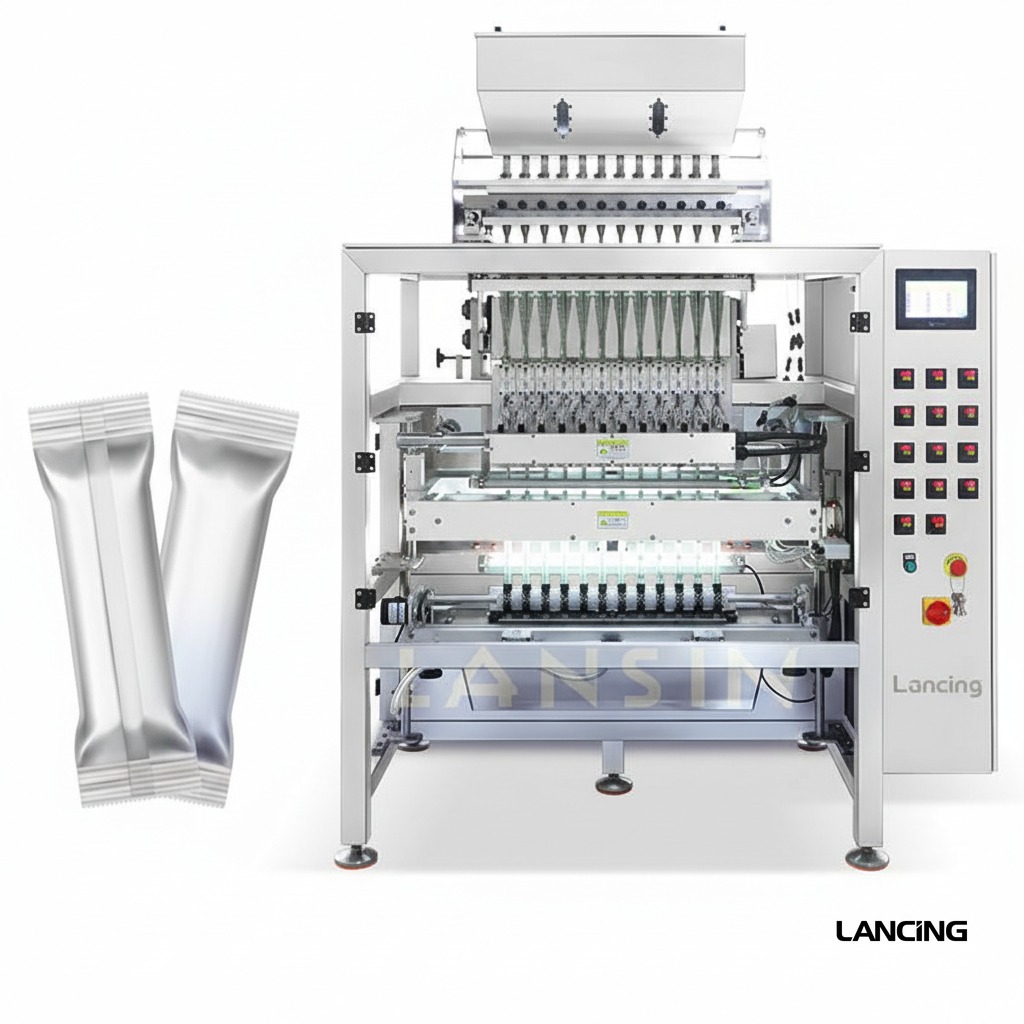
Multi-lane auger powder sachet machine for narrow roll-stock packsLU-FSFM6

Multi-Lane Powder Sachet System

An independent-auger multi-lane platform to assess for compatible powder stick packs where flow, dust, lane balance and dose checks are proven with representative material.

Independent augersMulti-lanePowder dosing
View machine details

Web, pack and lane definition

Translate the finished stick pack into a tooling specification

Finished width alone does not define a multi-lane web. The design needs lane pitch, longitudinal seal allowance, cut or perforation, cross-seal pitch, artwork repeat and registration marks, together with the space needed for coding and opening features.

Film web and registration

Provide reel width, core, winding direction, laminate, thickness, print repeat and eye-mark drawing. Registration correction, seal position and cut position should be checked against the approved artwork rather than judged from an unprinted trial film alone.

Lane-specific dosing

Each lane needs a defined dose path and a sampling identity. Pumps, augers or granule devices should be assessed for lane balance, refilling effects, product distribution and the risk of one lane drifting while the total average appears acceptable.

Opening, coding and handling

Locate the tear notch, code and cut so they do not weaken critical seals or interfere with opening. Confirm whether packs leave individually, in connected strips or perforated, and whether downstream counting or cartoning can accept that presentation.

Stick-pack project inputs

Define the conditions behind output and quality

Product and dosingPhysical properties, representative sample, nominal dose, tolerance, dosing method and the lane-specific sampling procedure.
Finished packWidth, length, usable fill space, longitudinal and cross-seal geometry, tear notch, cut or perforation and the approved pack drawing.
Film webLaminate, seal layer, thickness, reel width and core, winding direction, artwork repeat, registration mark, lane pitch and web drawing.
Coding and inspectionCode content and position, print-area limits, code check, registration check, seal or leak test and reject or segregation method.
Accepted outputState whether output is per lane or total accepted packs, the test duration, operating condition, product and film replenishment and treatment of stops and rejects.

Buyer questions

Stick pack machine FAQs

What makes a stick pack different from a conventional sachet?

A stick pack is normally a narrow, elongated roll-stock pack with a longitudinal seal and cross seals. The exact dimensions, seal pattern and opening feature still need to be defined on the approved pack drawing.

How is the number of lanes selected?

Start with the required accepted output, product dosing behaviour, web width, pack pitch, changeover and downstream handling. More lanes increase total potential output but also increase sampling, tooling and lane-balance requirements.

What film information is needed for a stick pack machine?

Provide laminate construction, thickness, reel width and core, winding direction, print repeat, registration-mark position, seal layer and an approved web and finished-pack drawing.

How is dosing checked across a multi-lane stick pack machine?

Use a sampling plan that identifies each lane and the operating condition. The plan should prevent acceptable averages from hiding a lane-specific dosing or feeding problem.

Can coding be added to each stick pack?

Coding can be considered, but content, orientation, position, available print area, web speed, lane arrangement and the method used to check code presence or readability must be agreed.

What should a stick-pack acceptance trial prove?

It should prove representative product and film handling, dose results by the agreed method, seal and cut quality, registration, coding, lane balance, accepted output and stable operation under recorded conditions.

Define the project around your product and pack

Send the product, stick-pack drawing and film-web details

Provide the product, dose and tolerance, finished pack and web drawings, lane and output requirement, film, coding, opening feature, downstream presentation and acceptance checks. Lancing Ltd can define the correct multi-lane route without assuming that every narrow sachet is identical.

Plan changeover before tooling approval

Group stick-pack formats into confirmed changeover families

A list of pack sizes does not show which formats can share a web layout, forming set or dosing arrangement. Ask the supplier to classify each product and stick-pack combination as a recipe change, a change-part set, a separate tooling or web configuration, or outside the proposed machine. That classification should be confirmed before artwork and production film are released.

Format variableWhat the supplier should classifyEvidence required before release
Product and doseWhether the same pump, auger or granule device covers the required range, and which recipes, contact parts or dosing tools are needed.Representative dose results at the lowest, highest and technically difficult declared cases.
Stick lengthWhether length is handled by the proposed film advance and cross-seal cycle and whether the artwork repeat and code position remain valid.Finished samples measured against the approved pack drawing at each required length.
Stick width and lane pitchWhether the width shares the same forming and longitudinal-seal arrangement or needs a different web, lane layout, cutter or seal tooling.An approved multi-lane web drawing showing total width, lane pitch, seals, trim, cut and registration marks.
Laminate and seal layerWhether the material can run within a confirmed operating window without changing jaws, surface treatment, tension or other film-handling settings.Identified film trial, settings record, seal and integrity results, plus retained filled packs.
Print repeat and eye markWhether every artwork repeat can be tracked within the correction range and remains aligned with seals, tear feature, code and cut.Production-intent printed film or a clearly documented remaining validation step before approval.
Tear, cut and strip presentationWhether packs leave as singles, perforated strips or another arrangement and which notch, perforation or cutter parts change.Samples handled through the intended counting, collating, cartoning or manual packing process.

Use one product-format matrix

Give each combination a unique reference and record product, dose, stick dimensions, film, lane count, code and downstream presentation. Link that reference to the trial result and to the included tooling in the quotation.

Stick-pack engineering brief

Control narrow-pack geometry from dose volume to strip discharge

A stick pack is not simply a sachet made narrower. Dose shape, longitudinal seal, lane pitch, print repeat, cut or perforation and downstream handling must work together.

Pack and web definition

Provide finished width and length, usable volume, longitudinal and transverse seal bands, tear feature, print repeat, eye mark, code area and whether sticks leave individually or in linked groups.

For multi-lane machinery, issue a numbered lane map. Confirm slit lines and how each finished stick is identified during dose, code and seal sampling.

Product and line definition

Check that the dose can settle into the narrow format without entering the seal. Define product feed, lane dosing, accepted output, static or overlap behaviour at discharge, counting and secondary packing.

Use production-intent printed film for final registration and coding evidence. Include normal refill, reel change and stop/restart in the acceptance case.

Pack-format decision

Compare a stick pack with a flat sachet and premade pouch

A stick pack is a narrow sachet, but lane pitch, back-seal position, registration, lane-specific dosing and downstream collation make it a distinct machinery decision.

Use the three-format comparison to decide whether the customer task needs a conventional roll-stock sachet, a narrow stick or a converted pouch before the web and tooling are specified.

Call 01494 623015 Get my machine recommendation