
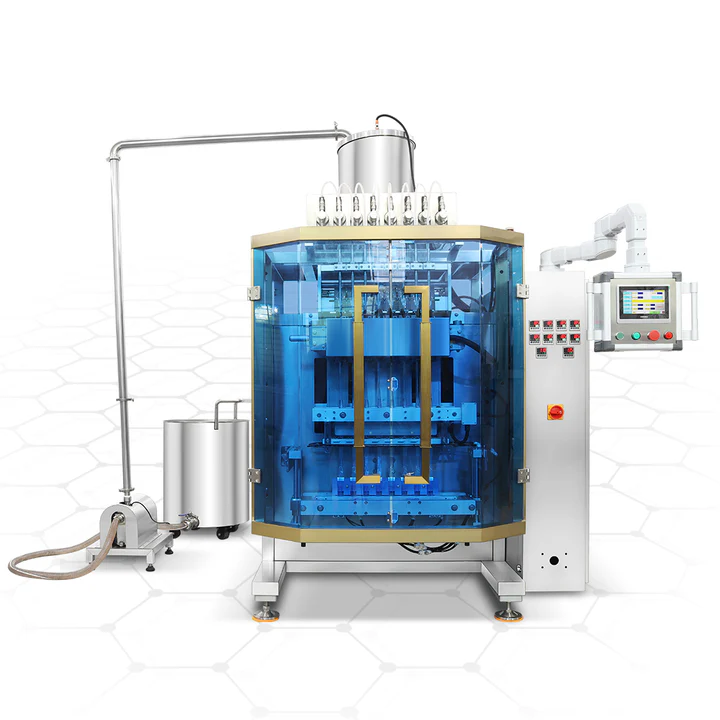
Single lane and multi-lane describe pack paths, not quality levels
A single-lane machine forms and fills one sachet path per machine cycle. A multi-lane machine splits a wider film web into several parallel pack paths and coordinates multiple dosing channels. Either architecture can be automated and either can produce an acceptable pack when it is correctly specified and controlled.
The useful comparison is therefore not “basic versus advanced”. It is whether the required accepted output, product consistency, format range, changeover pattern and downstream process are better served by one path or several.
Compare accepted output under the same conditions
State the number of saleable sachets required over a defined period and list what the period includes: normal product replenishment, reel changes, in-process checks, code changes, planned pauses and rejects. A multi-lane total is the sum of several paths, so the declared lane count and the conditions under which all lanes remain accepted must be clear.
For a fair comparison, use the same product batch or product characteristics, dose, film, print repeat, seal checks and quality method. Do not compare one quotation at a nominal mechanical cycle rate with another at accepted output after inspection.
Treat every format family as an operating case
One lane may reduce the number of dosing channels and make the web path easier to observe. Several lanes may require lane-specific nozzles, augers, tubes, forming components, guides, slitters or cut settings. The actual difference depends on the machine design and declared format range.
Ask the supplier to map recipe changes, manual adjustments, tooling and replacement parts for each product/pack family. Include cleaning and line clearance. A fast format adjustment is of limited value when product-contact cleaning or downstream changeover remains the controlling task.
Define how lane-to-lane quality will be demonstrated
Multi-lane acceptance should not rely only on a combined average. The sampling plan needs to reveal lane-specific dose, seal, registration and code performance. Identify each lane in the records and agree how a faulted lane affects machine operation and released output.
Single-lane production still needs a representative sample plan, but there is no risk of a good aggregate masking a weak individual lane. In both cases, define the reject rule, retained samples and evidence before the test begins.
Balance concentration of output against production resilience
One high-output multi-lane line can concentrate production into a smaller number of machines. Several single-lane lines can provide campaign separation or the ability to continue some production during a stop. The stronger route depends on demand, product segregation, maintenance support, labour and the commercial consequence of lost availability.
Include upstream product preparation and downstream counting, collation or cartoning. A sachet machine can only deliver its accepted output when those interfaces can receive and control the flow.
Use a weighted decision matrix rather than one headline figure
| Demand pattern | Stable long campaigns can favour parallel output; frequent short campaigns can increase the value of flexible set-up and line separation. |
|---|---|
| Product consistency | Parallel dosing requires the feed and product condition to be controlled across every lane. Record refill and low-level conditions. |
| Format family | Compare changes to film web, lane pitch, forming parts, dosing parts, jaws, cutters, coder and downstream guides. |
| Quality sampling | Multi-lane plans should identify lanes and prevent an aggregate result from hiding one weak path. |
| Redundancy | Consider the production consequence of a stop, available spares, engineering support and whether products can move between lines. |
| Installed scope | Include product feed, extraction, coder, inspection, discharge, collation, guarding, controls, utilities and documentation. |
| Commercial measure | Compare cost and capacity against accepted saleable output, campaign economics and the complete line boundary. |
Give both suppliers the same comparison brief
Provide a product and format matrix, representative samples, film and print data, required accepted output, line layout, utilities, cleaning method and inspection requirements. Ask each supplier to state exclusions, assumptions, change parts and the exact trial case.
The resulting comparison should separate machine architecture from evidence quality. A credible proposal explains how suitability will be tested and what happens when product, film, lane or downstream conditions move away from the agreed case.