
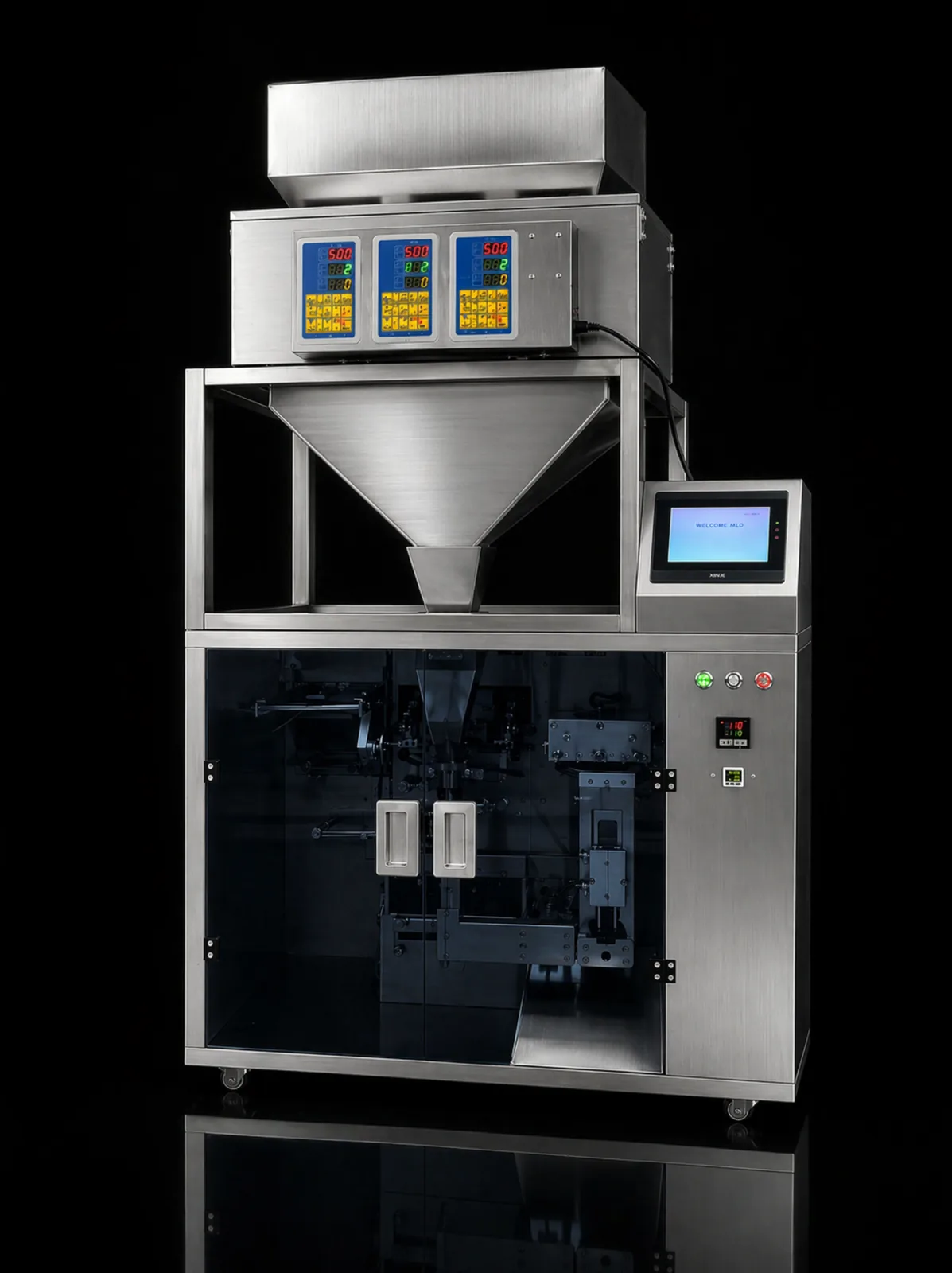
Freeze the line boundary and scaled layout before delivery
A sachet machine rarely works as an isolated box. Define product preparation and feed, the bagger, coder, inspection, discharge, counting, collection and any cartoning or case-handling equipment. Give each item a reference on a scaled layout and show the direction of product, film, packs, operators and waste.
Record columns, walls, doors, ceiling restrictions, drainage, extraction routes, traffic aisles and fire or emergency access. Leave space to open guards and cabinets, load reels, remove contact parts and bring maintenance equipment to the line. A footprint drawing alone does not prove service access.
Confirm utilities at the machine connection point
Use the supplier’s final machine documentation to confirm electrical supply, isolation, phase, frequency, protective arrangement, compressed-air pressure and quality, extraction, product supply, drainage and network interfaces. Do not size services from a generic page or a similar machine.
Record the connection responsibility, termination position and test method. Check whether upstream and downstream machines have separate isolators and whether any safety or control circuits cross the equipment boundary.
Control the product and film environment
Temperature, humidity, dust, washdown practice and air movement can affect product flow, film handling, seals, coding and electrical equipment. The proposed installation should reflect the real production and cleaning environment, including any segregation or hygiene zoning applied by the site.
Film needs suitable storage and conditioning so the trial material and production material behave consistently. Powders may need dust capture or controlled transfer; liquids may need a defined feed temperature and recirculation or agitation arrangement.
Plan delivery, unloading and movement into position
Confirm packed dimensions and mass from the final shipping information, then survey doors, corridors, turns, floor loading, lifts and overhead restrictions. Define who provides unloading equipment, lifting accessories, competent operators and temporary protection.
Do not improvise lifting points or remove guards and assemblies without an approved method. Any disassembly required for access should be agreed before dispatch, with instructions for reassembly and verification.
Integrate machinery safety and site responsibilities
The supplier’s machine documentation and the user’s site risk assessment perform different roles. The final installation must consider access, interfaces, surrounding work, product hazards, cleaning, maintenance and how operators use the complete line.
In Great Britain, employers and others controlling work equipment have duties under PUWER. HSE guidance covers selection, safe use, inspection and maintenance. Product marking and supply obligations should be checked against the current official rules for the specific machinery and market; do not rely on a logo or a generic statement alone.
Separate installation, commissioning and site acceptance
Installation places and connects the equipment. Commissioning checks services, directions, settings, signals, guarding and controlled operation. Site acceptance then demonstrates the agreed product, film, pack and line conditions at the customer’s premises.
Prepare approved product and film, calibrated or suitable test equipment, operators, quality staff and downstream capacity before the visit. Record open actions, ownership and retest criteria rather than accepting an incomplete test on verbal assumptions.
Site-preparation checklist
| Final layout | Machine references, dimensions, line direction, access, guards/cabinets open, reel loading, maintenance removal routes and future interfaces. |
|---|---|
| Building access | Delivery route, door and corridor sizes, turns, floor capacity, unloading area and agreed lifting/movement method. |
| Electrical | Final documented supply, local isolation, connection point, protective arrangement, earth/bonding review and responsibility. |
| Compressed air | Required pressure, quality, connection, capacity under simultaneous demand and isolation. |
| Process services | Product feed, tanks/hoppers, extraction, drainage, temperature control, network/data and waste handling. |
| Safety interfaces | Line stop philosophy, emergency stops, guard boundaries, upstream/downstream signals and site risk-assessment actions. |
| Acceptance material | Approved product, production-intent film, code data, sampling tools, methods and sufficient volume for the agreed run. |
| People and documents | Installation contacts, competent trades, production and quality representatives, training attendees, drawings and action log. |
Build a controlled handover package
Retain the final manuals, drawings, declarations, approved settings, parts lists, maintenance plan, training record, test evidence and outstanding-action closure. Record any site modifications and keep the machine identification linked to the correct documentation revision.
Maintenance and inspection arrangements should be established before routine production. HSE guidance states that work equipment must be maintained in an efficient state, in efficient order and in good repair, with maintenance carried out safely. A competent site-specific assessment remains essential.
Official references: HSE equipment and machinery guidance, HSE PUWER guidance and GOV.UK product-marking guidance. Requirements depend on the machinery, market and complete installation; obtain competent project-specific advice.