Powder sticks and sachets
Auger systems can meter nutritional powders, with lane-by-lane control used on high-output platforms.

Sachet application
Nutraceutical and regulated-product sachet lines should be specified against the manufacturer’s quality system, contamination controls and validation plan. The packaging machine is one element in a controlled process that also includes material handling, coding, inspection and batch records.
Project requirements
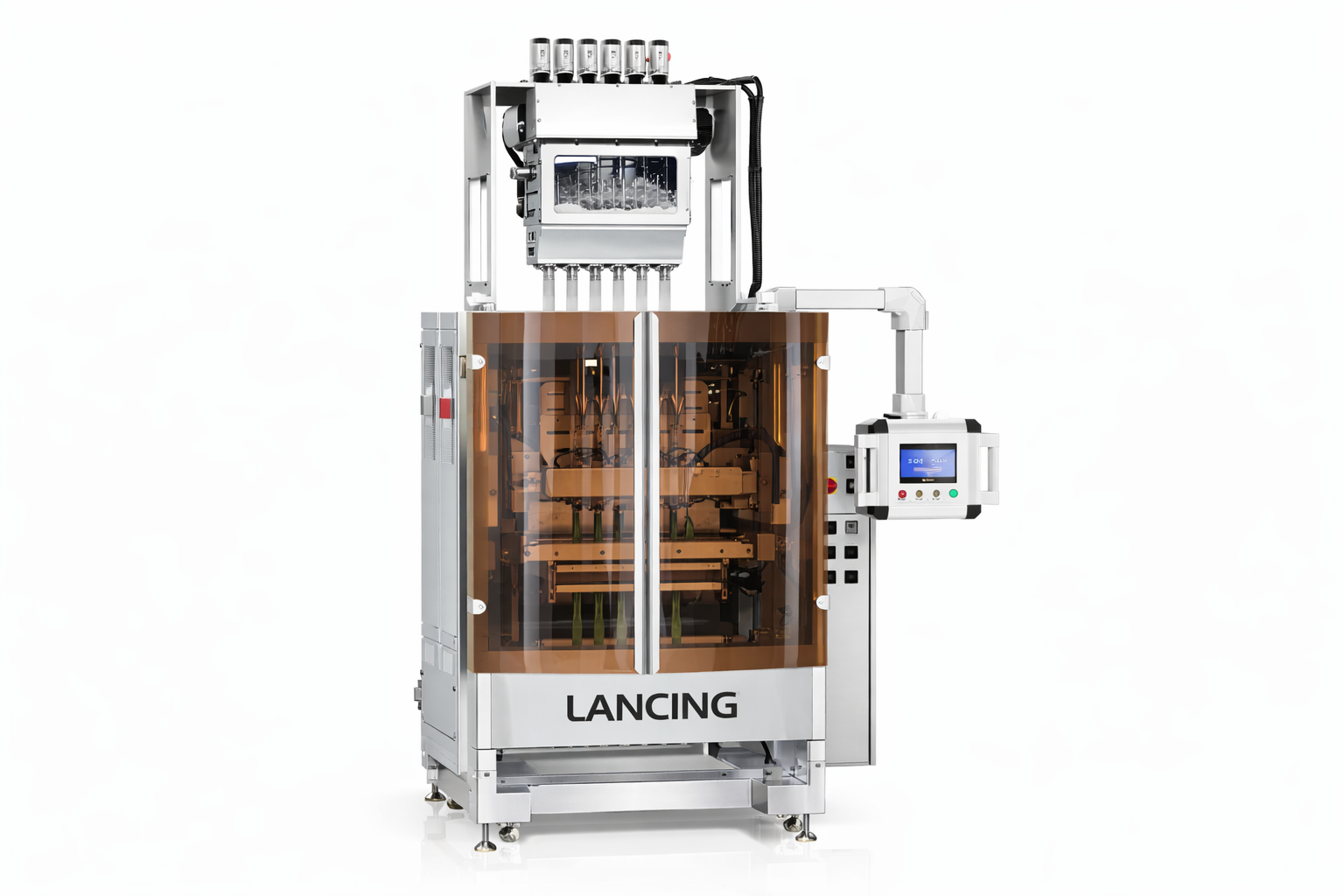
Auger systems can meter nutritional powders, with lane-by-lane control used on high-output platforms.
Weighing or volumetric dosing may be appropriate, depending on particle size, target tolerance and friability.
Pump selection considers viscosity, shear, temperature and product-contact compatibility.
Suggested machinery
LU-FSFM6Independent auger dosing across multiple lanes for high-output powder sachet production.
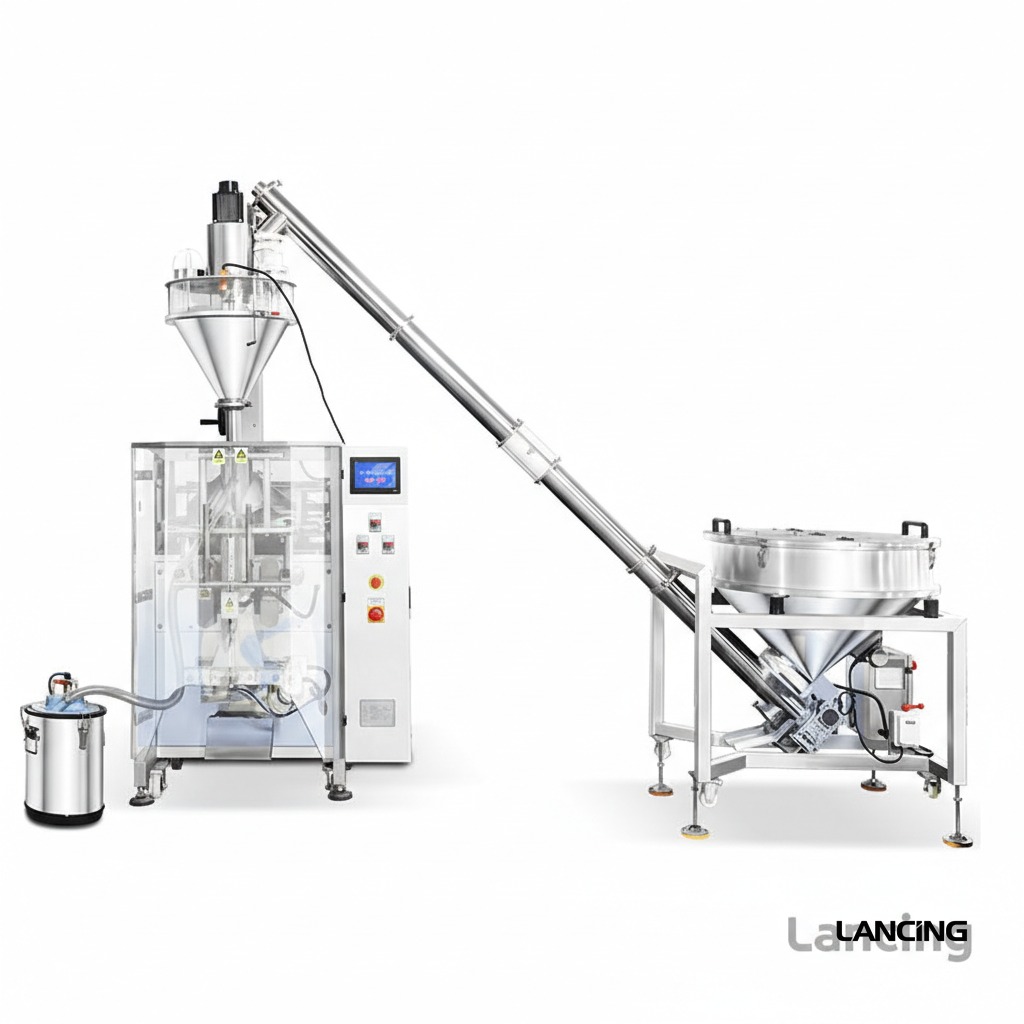 LU-FS06
Flexible single-lane auger VFFS platform for powder packs from small sachets to larger bags.
 LUFM1000
Space-efficient vertical form fill and seal machine for measured powder or granule packs.
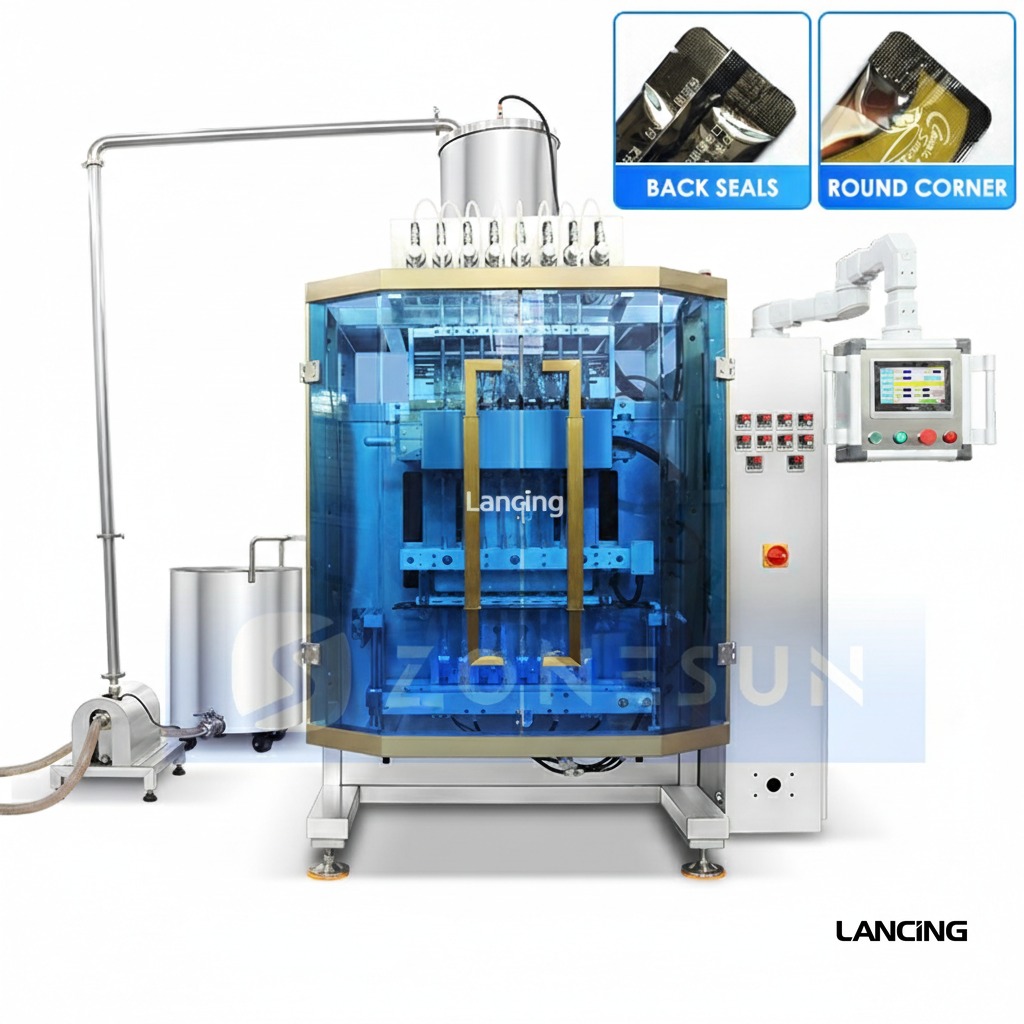 LU-FSMP8
High-output multi-lane VFFS system with independent magnetic-pump dosing for narrow liquid sachets.
Common questions
GMP suitability is project-specific and depends on the machine specification, documentation, installation, procedures and intended use. Requirements must be defined contractually.
Control and data functions can be specified, but the required audit trail, user levels, backup and system validation scope must be stated before controls are designed.
A documented FAT is strongly recommended, using agreed products or simulants, films, acceptance tests and sample sizes.
Tell us about your product and pack
Send the product, target dose, sachet dimensions, film and required output. Lancing Ltd will review your application and recommend a practical machinery route before a detailed quotation.
Controlled production environment
Nutraceutical and pharmaceutical-adjacent projects can involve powders, granules or liquids, but machine suitability cannot be inferred from the sector name. The manufacturer should issue the intended-use, quality, documentation and validation requirements that the supplied equipment must support.
Describe potency, dust, flow, moisture sensitivity, allergen or active-material controls, batch size and the required cleaning or line-clearance method. Product-contact access, removable parts, extraction and segregation should be reviewed from that risk assessment.
State recipe access, user levels, batch or lot code, time and date, audit or electronic-record expectations, backup, data interface and rejection requirements. These functions should be specified before the controls are designed rather than added as an assumed compliance label.
| User requirements | Intended use, product and format matrix, output, environment, utilities, safety, cleaning, controls, documentation and acceptance responsibilities. |
|---|---|
| Materials and access | Required product-contact materials and finishes, seals, hoses, tool-free or controlled removal, inspection points and cleaning boundaries. |
| Dose and inspection | Target and tolerance, sample or checkweigh method, code and print checks, metal detection or other inspection and reject handling where required. |
| Qualification support | State the documents, drawings, test records, calibration or traceability information and supplier support needed by the manufacturer’s own qualification plan. |
| Change control | Define approval of software, recipes, parts, materials and drawings and how later changes will be documented and backed up. |
Additional buyer questions
Include intended use, products, doses, sachets, film, output, environment, utilities, cleaning, controls, data, coding, inspection, documentation and acceptance criteria.
No. Suitability depends on the final specification, product risk, installation, procedures, documentation and the manufacturer’s own quality and validation process.
The manufacturer should define containment, extraction, cleaning and line-clearance requirements. Those controls then inform machine access, materials, guarding and product transfer.
Traceable product and film batches, dose data, lane identification, seal and code checks, rejected packs, machine settings, retained samples and recorded deviations provide a clearer basis for later protocols.
Define the project around your product and pack
Provide the product, dose, sachet, film and output together with quality-system, cleaning, data, coding, documentation, inspection and acceptance requirements. Lancing Ltd can identify the machine and support scope that must be quoted.