Creams and lotions
Piston or positive-displacement dosing can provide controlled small volumes. Nozzle shut-off is especially important for stringing products.

Sachet application
Cosmetic sample sachets combine tight dose expectations with strong presentation requirements. Viscosity, fragrance, foaming, product sensitivity and film appearance all need to be translated into a machine and validation specification.
Project requirements
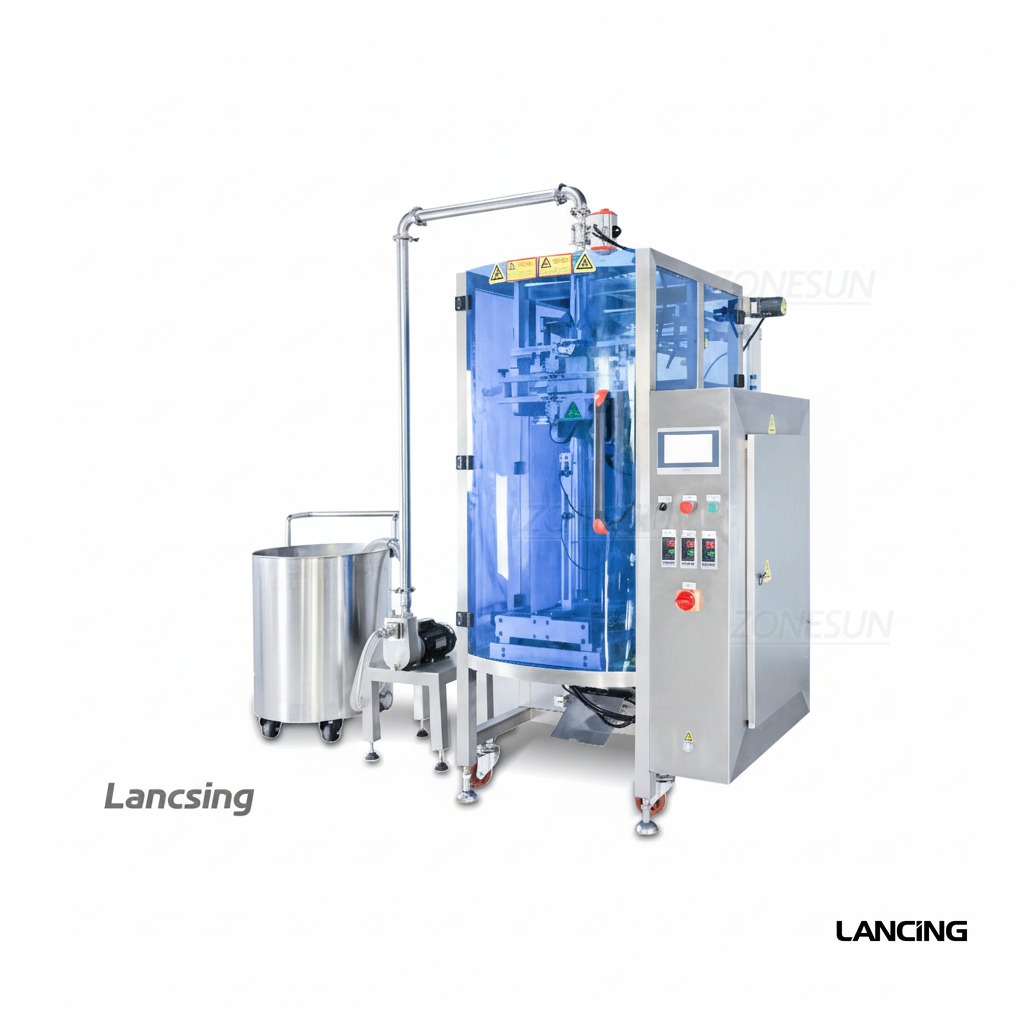
Piston or positive-displacement dosing can provide controlled small volumes. Nozzle shut-off is especially important for stringing products.
Pump choice is based on viscosity, foaming and chemical compatibility. Multi-lane dosing may suit very high sample volumes.
Auger dosing and dust management are used where the formulation is a dry powder rather than a liquid or cream.
Suggested machinery
 LUFS200D1
Compact piston-pump VFFS platform for sauces, syrups, gels and other flowable products.
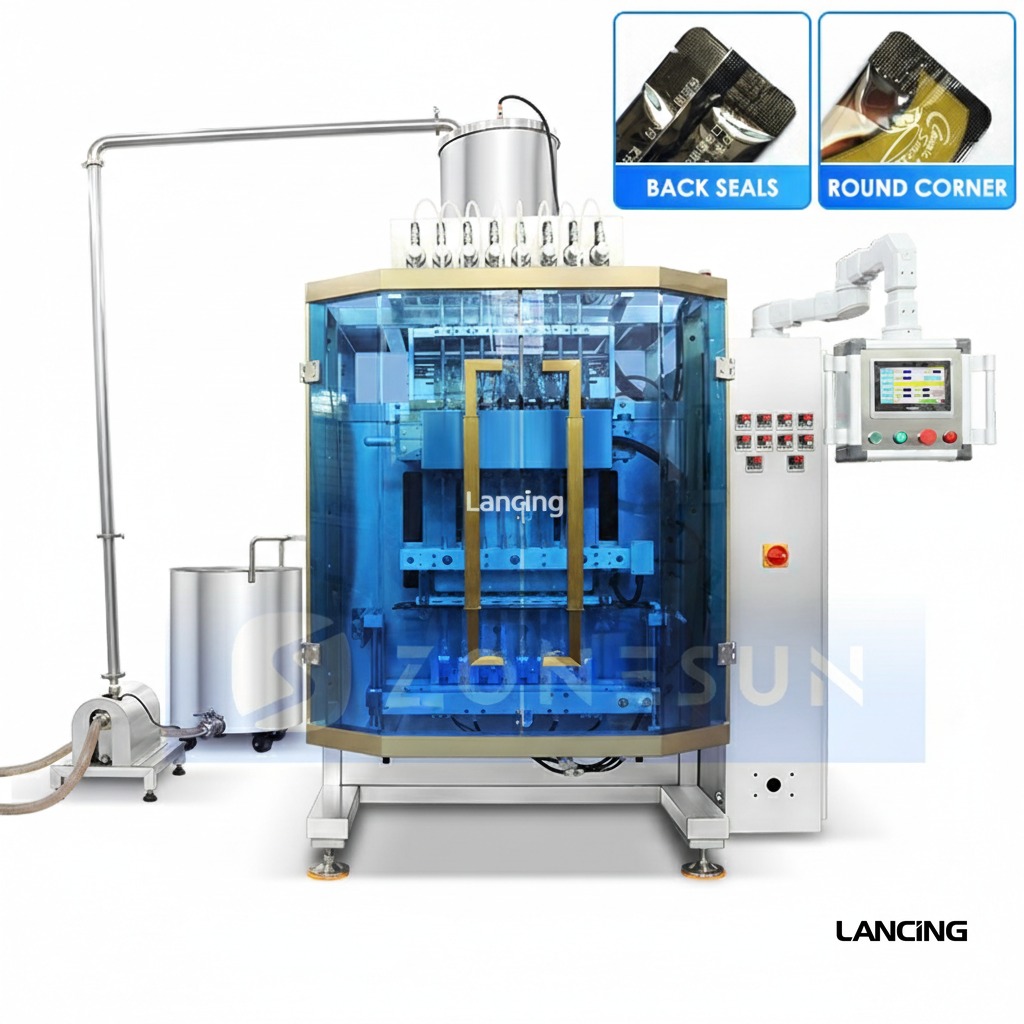 LU-FSMP8
High-output multi-lane VFFS system with independent magnetic-pump dosing for narrow liquid sachets.
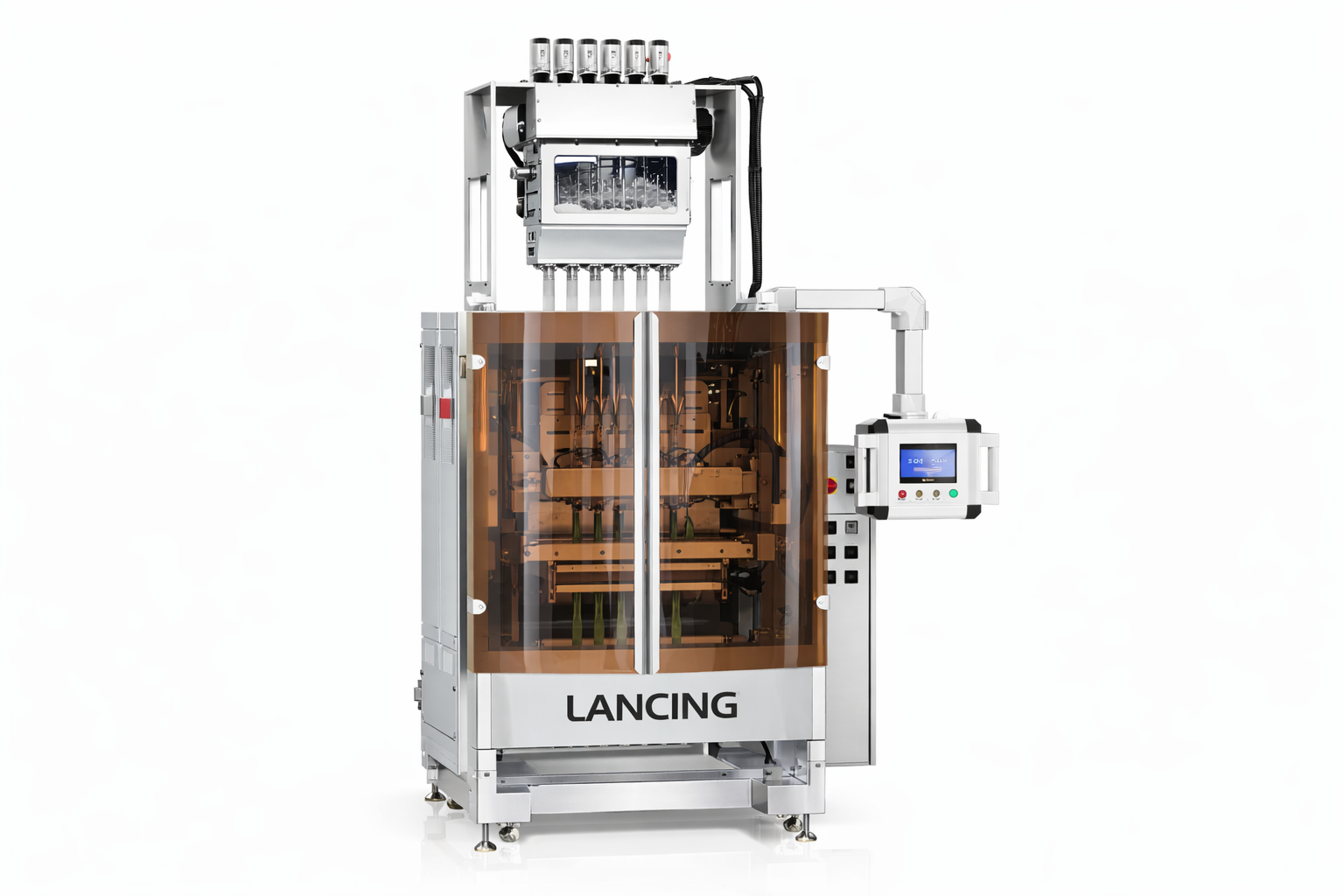 LU-FSFM6
Independent auger dosing across multiple lanes for high-output powder sachet production.
Common questions
Many machines can run compatible foil laminates, provided the structure, thickness and seal layer match the sealing system.
The dosing device is sized to the target volume, with product trials used to confirm repeatability and clean cut-off.
A registration sensor reads print marks and adjusts film feed. Artwork repeat length and mark design must follow the machine and film supplier requirements.
Tell us about your product and pack
Send the product, target dose, sachet dimensions, film and required output. Lancing Ltd will review your application and recommend a practical machinery route before a detailed quotation.
Cosmetic sample-pack specification
Cosmetic samples are judged by presentation as well as dose. Creams, gels, lotions and serums can contain air, string, change viscosity with temperature or leave a film across the seal. The product-contact path and cleaning method must also support frequent colour or fragrance changes where required.
State viscosity range, temperature, air sensitivity, separation, particles and whether gentle agitation, heating or deaeration is used before filling. The trial sample should match the production preparation method.
Define whether the commercial requirement is mass, volume or another criterion and how very small doses will be measured. Piston size, pump response, nozzle hold-up and product remaining in the pack opening can become significant.
Agree acceptable print registration, cut position, seal appearance, contamination, wrinkles and code. Tear notch and opening behaviour should be reviewed on the approved laminate and finished sample.
| Compatibility | Provide formulation or compatibility information needed to select metals, hoses, seals, gaskets and cleaning agents. |
|---|---|
| Changeover | List colour, fragrance and product changes and define cleaning, line clearance, inspection and waste expectations. |
| Artwork and coding | Supply print repeat, eye mark, front/back orientation, code content and position, tear notch and finished-cut drawing. |
| Trial evidence | Retain labelled samples and dose data and record product temperature, air, nozzle cut-off, seal checks, code and accepted output. |
Additional buyer questions
Entrained air can change volume, compressibility and cut-off. The sample preparation and product feed used in trials should match production so the dose method is assessed fairly.
A very wide viscosity range may need different pumps, nozzles or settings and can change cleaning and output. Declare the full product matrix before specification.
Check print registration, seal width and texture, wrinkles, cut, corner shape, tear notch, code, product smear and whether the sachet opens as intended.
Define the cleaning and line-clearance procedure, then demonstrate that the next product meets the agreed visual, contamination and dose criteria.
Define the project around your product and pack
Provide representative formulations, dose, sachet and film, appearance criteria, changeover and cleaning needs, coding and accepted output. Lancing Ltd can assess the pump, nozzle, forming and seal requirements together.
Cosmetic sample sachets represent the product and brand in a compact pack. Agree the position of artwork, opening features and variable information before the machine trial, then inspect the filled production-intent sample. Include the way the sachet will be distributed or placed in a secondary pack. The dosing result, exterior cleanliness and printed presentation should be reviewed as separate outcomes so a good result in one area does not conceal an unresolved requirement elsewhere.
It can answer limited forming and dosing questions. Ask for the final printed film and intended product to be reviewed against artwork position, coding, opening and finished appearance before treating the retail sample as approved.