Tell us what you need to pack — product, dose, sachet size and target output.

Flexible machinery for changing customer work

Sachet Filling Machines for Contract Packers

Contract packers need machinery that can be qualified against a realistic range of products, doses, films and customer evidence requirements. The best line is not simply the one with the largest headline output; it is the one that can produce accepted work predictably across the declared portfolio.

Define the commercial operating case

Build the line around real customer work, not a single ideal sample

A contract-packing sachet line must be assessed against the products, pack formats, changeovers, records and acceptance rules that will actually be sold to customers.

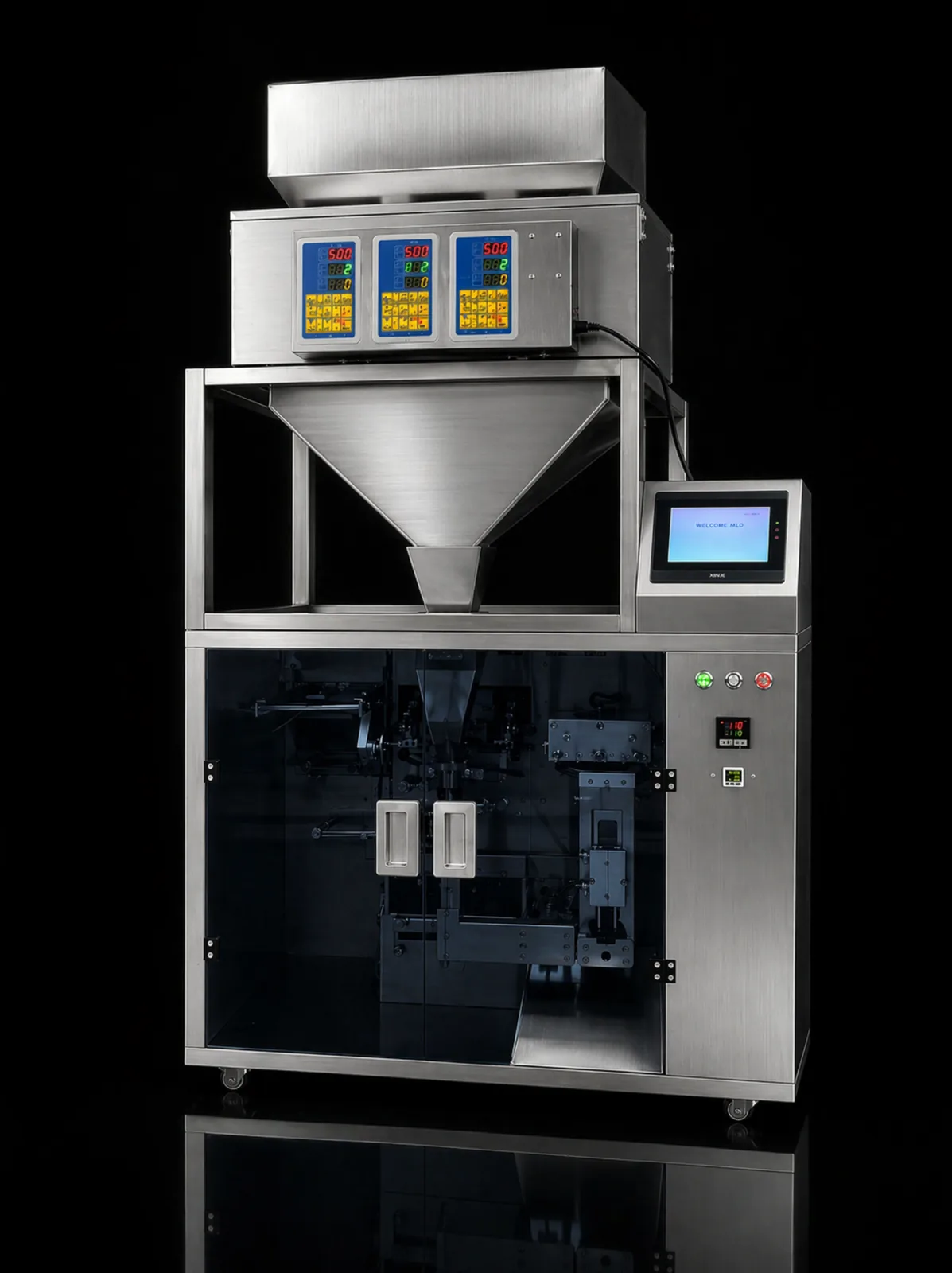
Integrated vertical form fill and seal packaging line for contract packing work

Build a product-and-format matrix

List current work, committed launches and credible future opportunities separately. For every item, record product behaviour, target dose, pack dimensions, film, seal pattern, coding, quality checks, campaign length and cleaning boundary.

Do not collapse that matrix into one minimum and maximum. The difficult combinations often sit between the extremes: a fine powder at a small dose, a stringing liquid at a high fill temperature, or a printed repeat with little registration margin.

Protect changeover economics

Contract-packing margins can be lost during cleaning, format changes, film set-up and start-up waste. Ask the supplier to identify recipe changes, manual adjustments, tools and replacement parts for each format family. Include product feed and downstream equipment in the review.

A useful acceptance exercise demonstrates at least one representative changeover and records the time boundary and steps. The result is not a universal promise; it is evidence for the declared product, parts, cleaning method and operator conditions.

Plan customer evidence and traceability

Different customers may require retained samples, weight records, code verification, line-clearance records, batch reconciliation or approval of printed film. Define which records are created by the packaging machine, which come from separate inspection equipment and which remain manual quality-system activities.

Where a line serves several customers, recipe access, user permissions, code control and change approval should be considered during specification. These controls need to fit the contract packer’s own quality system rather than being assumed from generic software features.

Select capacity without losing resilience

A multi-lane system can suit stable, high-volume programmes; a single-lane line can be easier to redeploy across short campaigns. Multiple machines may provide redundancy or product segregation, while one larger line can reduce duplicate equipment and labour.

Compare accepted output, campaign length, clean-down demand, planned utilisation, maintenance resources and the consequence of a line stop. The commercial model should include upstream product preparation and downstream counting or cartoning, not only the bagger.

Qualify unfamiliar enquiries before promising them

Samples and technical data should be reviewed before a new format is committed to a customer. Product safety information, food-contact requirements, film compatibility and site-specific risk assessment remain the responsibility of the relevant businesses and competent people.

Use trials to establish whether the product can be fed and dosed, whether seals stay clean, whether registration and coding remain controlled, and whether the finished pack survives the agreed integrity checks.

Specify support around the operating model

Record expected operating hours, internal engineering capability, planned maintenance, critical-spares philosophy and the response needed for production-critical work. Training should cover normal operation, set-up, cleaning, safe access, fault response and the checks required before a format is released.

Keep approved settings, change-part lists, maintenance records and test evidence under revision control. That information becomes especially valuable when work returns after a long gap or moves between shifts.

Project qualification

Contract-packing information to include in an enquiry

Customer portfolioSeparate confirmed, forecast and speculative work. Identify any confidentiality, allergen, hazard or segregation constraints.
Product dataViscosity or bulk density, flow, particles, dust, temperature, foaming, stringing, moisture sensitivity and representative samples.
Pack dataDose, dimensions, seal pattern, notch, perforation, film structure, print repeat, coding content and finished-pack presentation.
Campaign profileTypical and minimum batch length, campaign frequency, seasonal peaks, shift pattern and required accepted output.
Changeover boundaryProduct-contact change, clean-down method, film/format change, code change, line clearance, inspection and approval.
Quality recordsSampling plan, dose method, seal and leak checks, code verification, retained samples, reconciliation and reject records.
IntegrationProduct preparation/feed, conveyors, coder, checkweigher or inspection, counting, collation, cartoning and data interfaces.
Commercial acceptanceFactory trial case, sample approval, run evidence, training, documentation, site acceptance and agreed responsibilities.

Related planning pages

Move from opportunity list to an accepted production method

Buyer questions

Frequently asked questions

Should a contract packer buy for current work or possible future enquiries?

Prioritise confirmed work and clearly defined near-term opportunities. Future flexibility should be assessed as a declared product and pack family, not an unlimited promise.

Is one multi-lane line better than several single-lane machines?

Neither is universally better. Compare output stability, campaign length, changeover demand, redundancy, labour, floor space and the impact of one line being unavailable.

How can quotation comparisons be made fairly?

Give each supplier the same product/format matrix, accepted-output definition, line boundary, trial materials and evidence requirements. Separate included scope from assumptions and options.

What should be tested for a new customer product?

Test representative product and production-intent film for feed, dose, seal cleanliness, registration, coding and the agreed pack-integrity method. Record the exact conditions and retained samples.

How are short campaigns affected by changeover?

Set-up, cleaning, line clearance and start-up waste can dominate a short run. Group compatible work into format families and ask which steps can be recipe-led versus part-led.

Can one line serve food, cosmetic and chemical work?

That decision requires product compatibility, contamination-control, cleaning, regulatory and site risk review. Shared use should never be assumed from pack size alone.

What information helps Lancing review a contract-packing project?

Provide the complete work matrix, representative samples, film and artwork data, campaign profile, site utilities, downstream requirements and the evidence your customers expect.

Prepare a useful machinery enquiry

Build a contract-packing line around your confirmed product and format matrix

Send the product, target dose, sachet dimensions, film details, required output and site constraints. Lancing Ltd will review the application and identify the practical machine route and trial inputs needed before quotation.

Call 01494 623015 Get my machine recommendation