Sauces and syrups
Piston or other positive-displacement pumping is commonly evaluated for viscous foods. Agitation or heat may be needed to maintain consistent flow.

Sachet application
Single-serve food sachets need accurate dosing, clean seals and materials selected for the product, fill temperature and intended shelf life. The machinery route differs for sauces, powders and free-flowing portions, even when the finished pack looks similar.
Project requirements

Piston or other positive-displacement pumping is commonly evaluated for viscous foods. Agitation or heat may be needed to maintain consistent flow.
Augers meter powders while controlling dust and bulk-density effects. Product trials establish the correct screw, agitation and dose settings.
Weighing or volumetric systems can feed single-lane or multi-lane packers, depending on target output and tolerance.
Suggested machinery
LUFS200D1Compact piston-pump VFFS platform for sauces, syrups, gels and other flowable products.
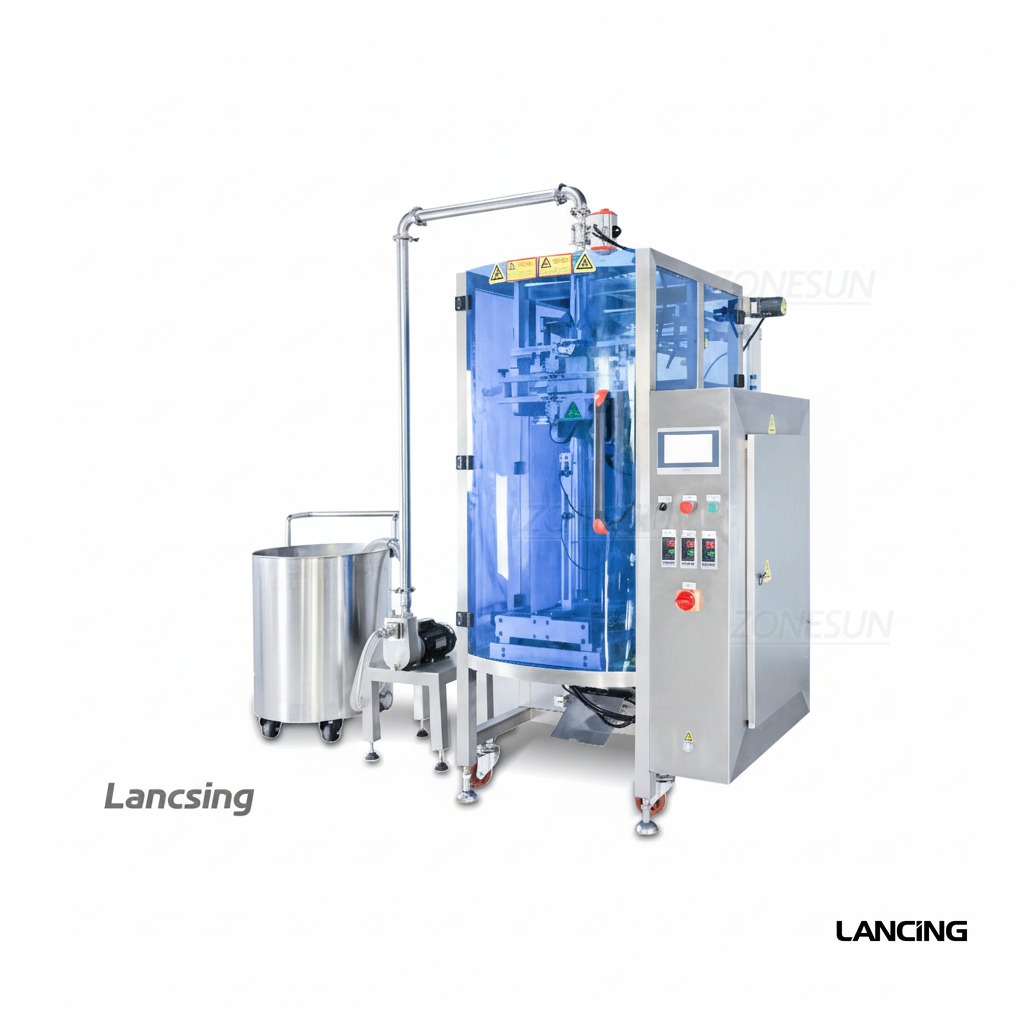 LU-420GSY
Automatic pump-fed VFFS machine for larger liquid and paste sachets or bags.
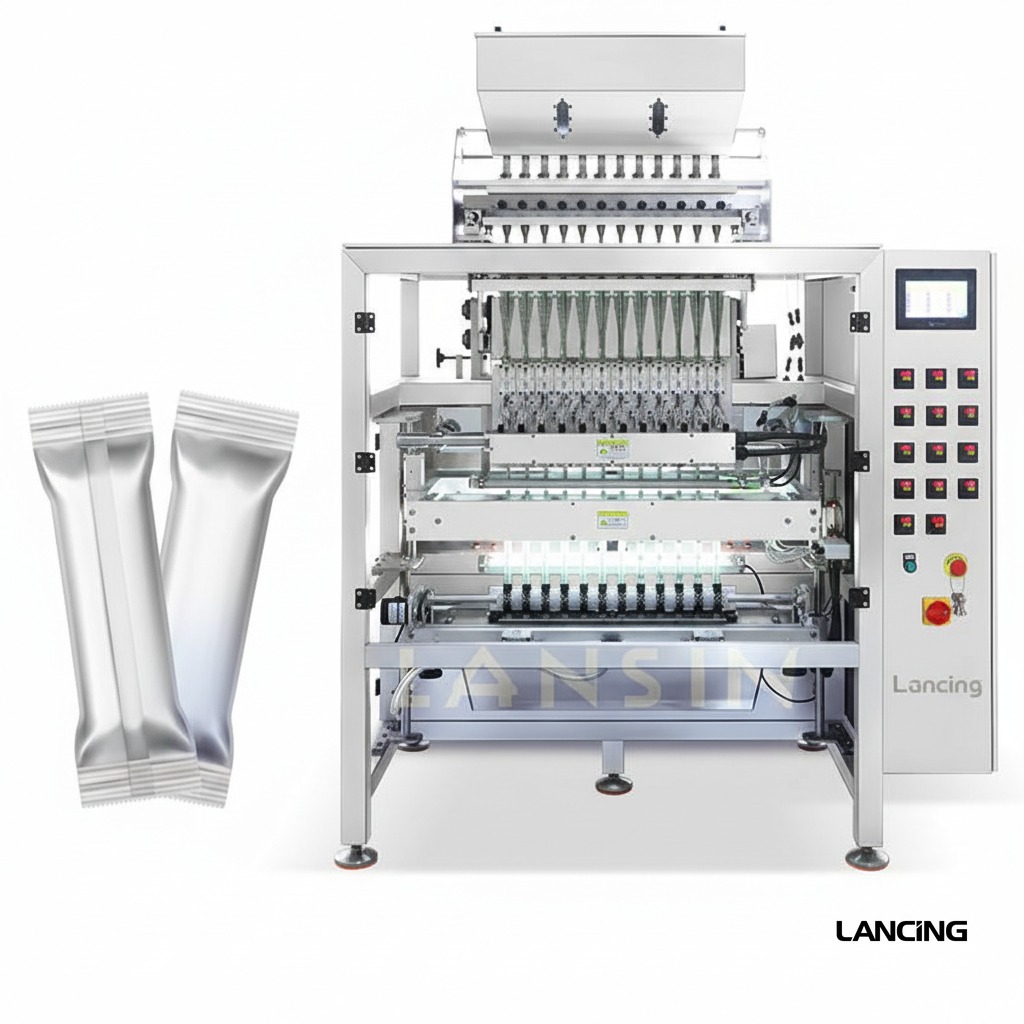 LU-FSL12
Twelve-lane VFFS system for compact, high-volume granule and small particulate sachets.
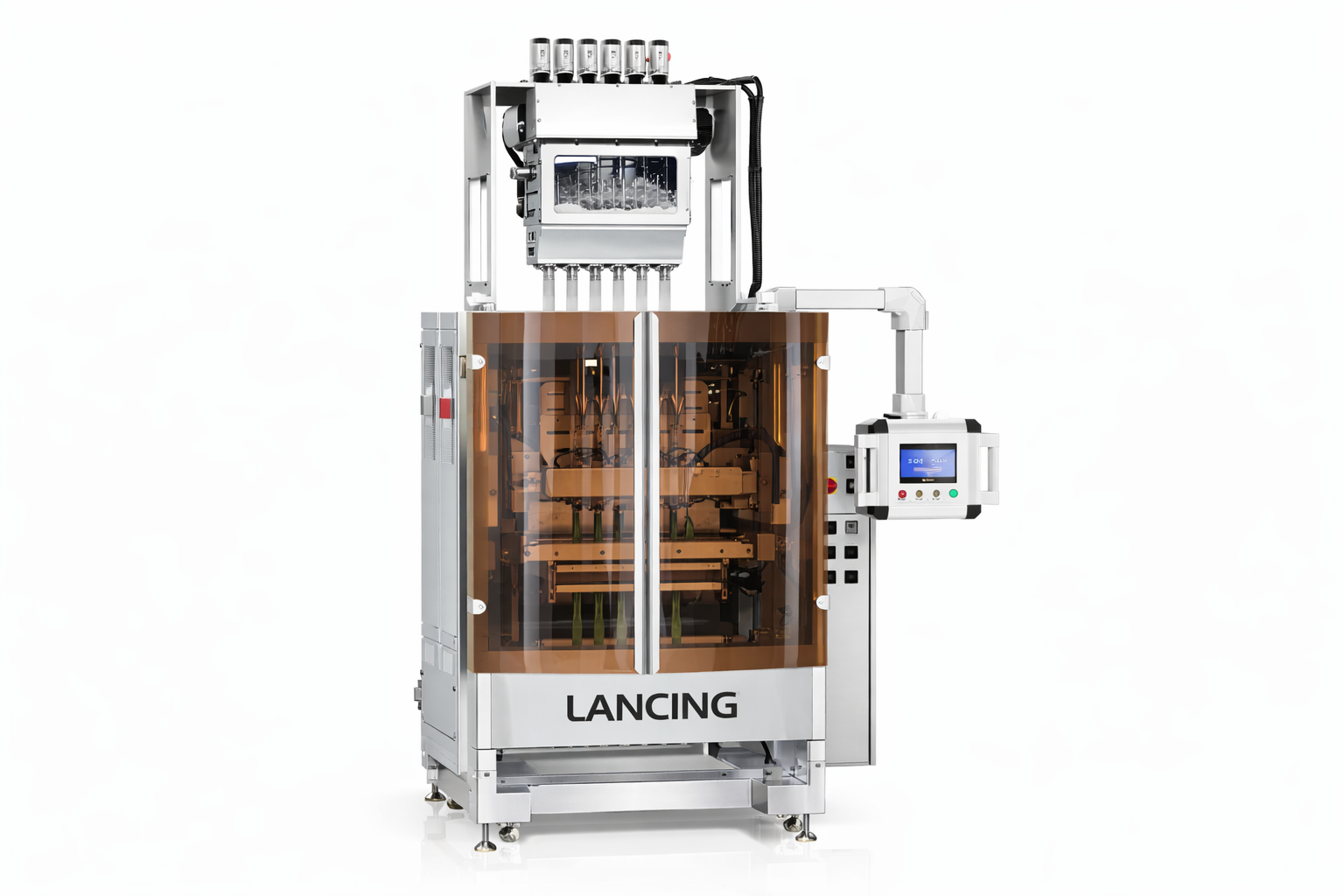 LU-FSFM6
Independent auger dosing across multiple lanes for high-output powder sachet production.
Common questions
Yes, subject to a hot-fill specification covering tank, hoses, valves, guards, film and seal performance.
Cut-off nozzle design, suck-back, fill timing, headspace and film control are coordinated to keep the transverse seal clean.
Not with the same dosing equipment in a practical standard configuration. The product-contact path and filler technology are fundamentally different.
Tell us about your product and pack
Send the product, target dose, sachet dimensions, film and required output. Lancing Ltd will review your application and recommend a practical machinery route before a detailed quotation.
Food and condiment specification
A food sachet project should reproduce the product condition used in production. Sauces can change with temperature, mixing, particle distribution and residence time, while powders and granules can create dust or segregation that affects dosing and sealing.
Record fill temperature, viscosity range, foaming, stringing, suspended pieces and separation. The pump, valve and nozzle should pass the product and stop cleanly before sealing. Heated or agitated tanks, transfer pumps and clean-down responsibilities should be included in the line boundary.
Provide bulk density, flow, dust, moisture sensitivity, particle-size range and normal variation. Auger, weigh or volumetric dosing should be selected from the target dose and product behaviour, with enough headspace and timing to protect the cross seal.
| Hygiene and cleaning | Define product-contact materials, surface expectations, strip-down or flushing, allergen and flavour change, cleaning method, inspection access and responsibility for validation. |
|---|---|
| Pack and shelf-life inputs | Provide the laminate approved by the pack owner, seal pattern, oxygen or moisture barrier needs, fill temperature, coding and the selected pack-integrity test. |
| Foreign-body and code controls | State any metal detection, checkweighing, code presence, date or batch data and reject handling required within the line. |
| Trial conditions | Use representative food and film, normal mixing and feed, production temperature, refill, registered print and the declared quality checks. |
Additional buyer questions
It may be possible, but the largest particle, concentration, valve, nozzle and cleaning method must be checked. The particulate product should be included in trials as the more demanding case.
The food manufacturer should define segregation, cleaning, inspection and validation requirements. Those needs affect product-contact parts, access, changeover and documentation.
Temperature can change viscosity, dose, nozzle cut-off, film behaviour and seal performance. Test the intended range rather than a convenient ambient sample.
Keep labelled packs from stable running, refill, stop-start and the upper intended output, together with dose, seal and code results and the relevant product and film batches.
Define the project around your product and pack
Provide the product in production condition, dose, sachet and film, output, cleaning and allergen controls, coding, inspection and pack-integrity method. Lancing Ltd can compare the dosing and forming routes and define the trial scope.
Hot and warm sauces
A sauce can change significantly between the process vessel and the filling nozzle. Record heat loss, viscosity, particles, foaming, stringing, hold time and the condition after a planned stop. The film and sealed pack should then be checked after cooling.
Define transfer, heating, insulation, agitation, recirculation, level control and how the line will be safely emptied or cleaned after an interruption.
Use production-intent film and agree dose, seal/leak, code, cut, appearance and accepted-output checks at the actual filling condition.